Most people come to Gechuanjian (搁船尖) for the gorge: a waterfall dropping into a stone bowl, walkways pinned to the cliff face, and a staircase that climbs through gates cut in the limestone. This walk does that first (waterfall, gorge, cliff stairs) and then keeps going, down over the ridge into Zaotai, the village below the cliffs that no longer has anyone living in it.
Combining the two makes a great half-day hike: first the canyon waterfalls and cliffside stairs, then a quiet, empty mountain village above.
On-Site Video Record
One continuous first-person walk: the waterfall and gorge at the bottom of the scenic area, the climb up the cliff stairs, then the empty lanes of Zaotai. Natural sound only.
If the player does not load, watch it directly on YouTube.
The Scenic Area: Waterfall, Gorge and Ten Gates
Gechuanjian is the main peak of the Baiji range, on the Anhui-Zhejiang border. Its signature is the “Ten Gates, Nine Unlocked” (十门九不锁) formation: a series of natural limestone gates strung along a ridge, so that the trail passes through opening after opening. Below them, water has cut a narrow gorge with waterfalls, pools and cliffs, and a boardwalk and stone stairs carry you through it.
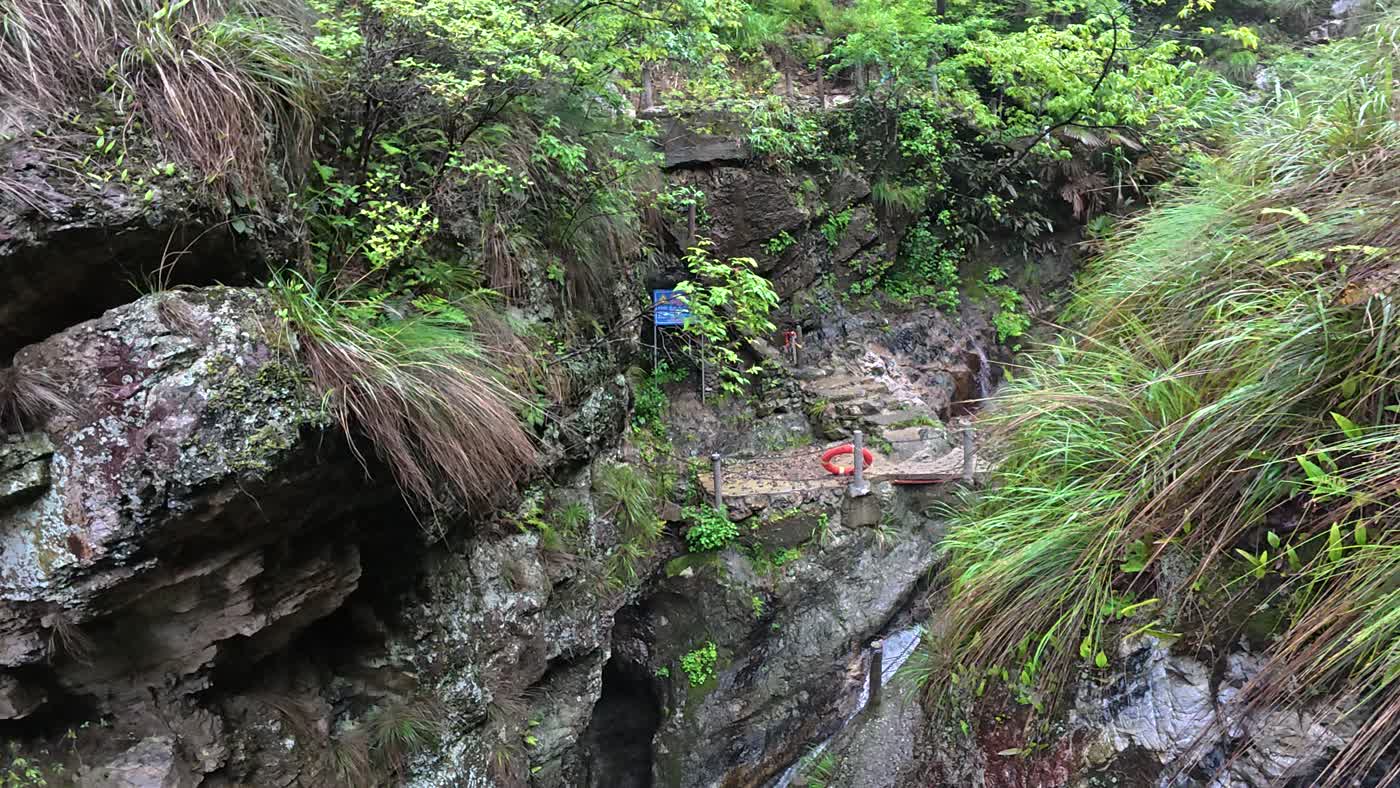
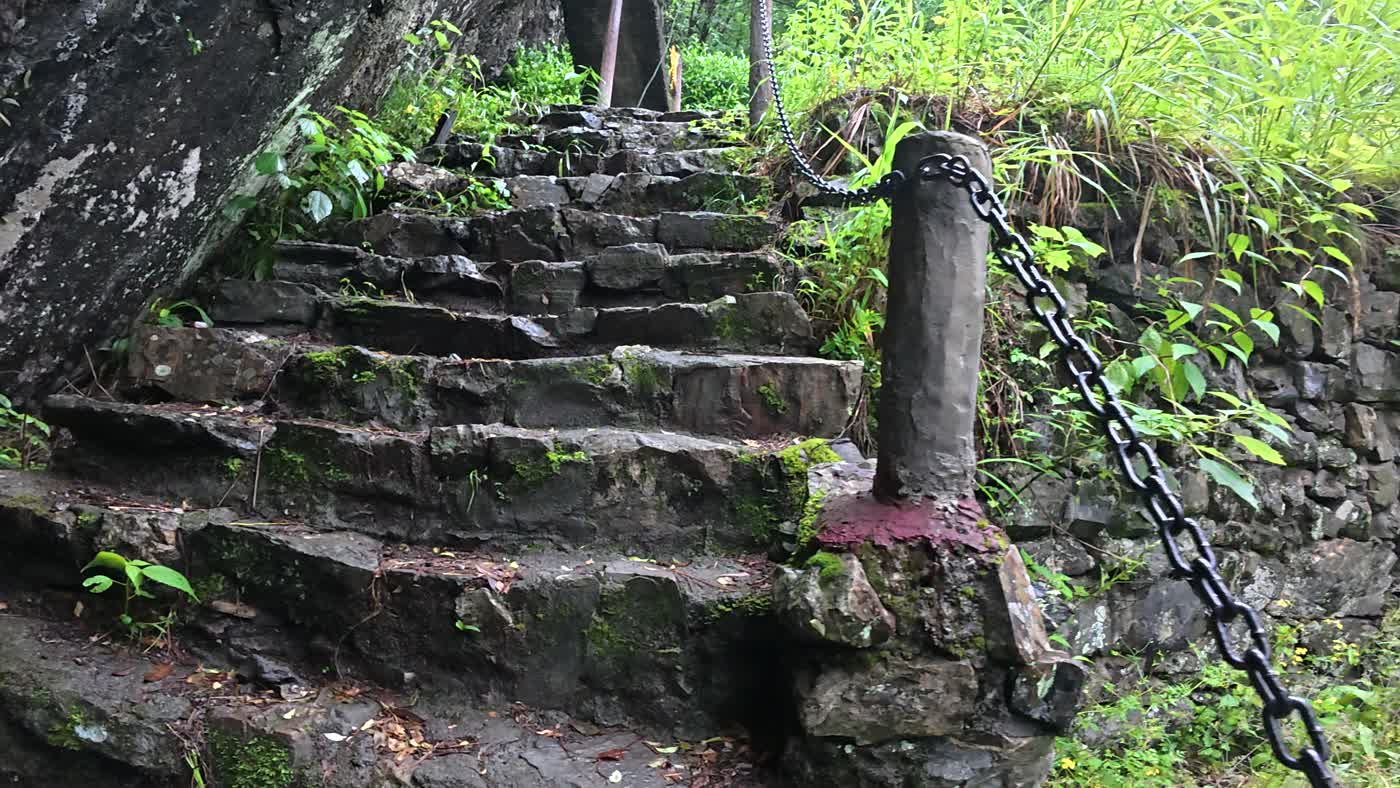
The climb is the part most visitors remember. Iron chains bolted into the rock serve as handrails, the steps are cut stone, and everything is wet: moss on the treads, water running down the cliff, ferns growing out of the joints.
Above the gorge the landscape opens into the ridge, with the limestone gates and, at the summit, a high grass meadow that people compare to Wugong Mountain. The full crossing is a serious half-day; the walk in this article takes the lower route and drops into the village instead.
Where It Is
Both the scenic area and the village sit in Jinchuan township, in the far east of She County, Huangshan. Over the ridge to the left is Lin’an in Zhejiang; Chun’an is about ten kilometres south. It is a two-province, three-county corner, and it has always been remote.
There is no public transport to Zaotai. Visitors drive to Jinchuan township or the Gechuanjian trailhead and walk in from there.
The Village Below the Cliffs
Zaotai appears after the last set of stairs: a scatter of white walls among trees, below a cliff. It has been a settlement for the better part of a thousand years, and it is now, in all but name, empty.
The name is worth explaining. Locally, “tai” (汰) is a pronunciation substitute for a character that means a terrain shaped like an armchair: a hill at your back, ridges like armrests on either side. Zaotai was originally Zaojia Tai, “the armchair where the soapbean trees grow”. Almost every village with that character in its name in this region has been classified as a geological hazard site, and relocated.
Why the Village Is Empty
Zaotai is not abandoned because people stopped wanting to live there. It is abandoned because the mountain moved.
Storms in 1996 and 1999 triggered large-scale landslides across the village slopes. With more than 300 households and roughly 900 residents exposed, the county began relocating people in stages: about 156 households (580+ people) in the first two rounds, resettled near the county town. Zaotai was listed as a key geological hazard site in Anhui, and relocating the remaining households became official policy.
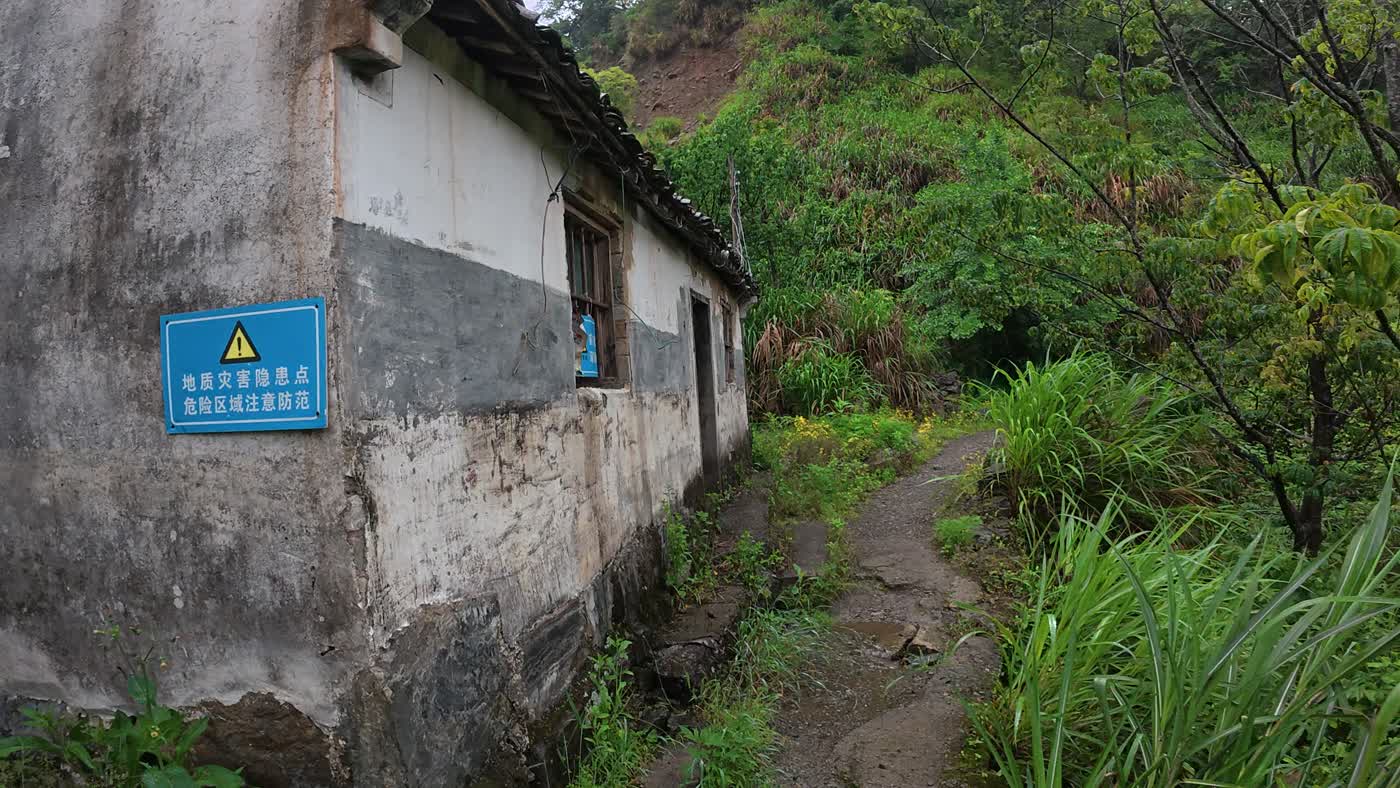
A few elderly residents stayed. Some had land here; some had nowhere else to go. The result is the state you see in the photographs: houses that are neither lived in nor quite given up.
The Village Today
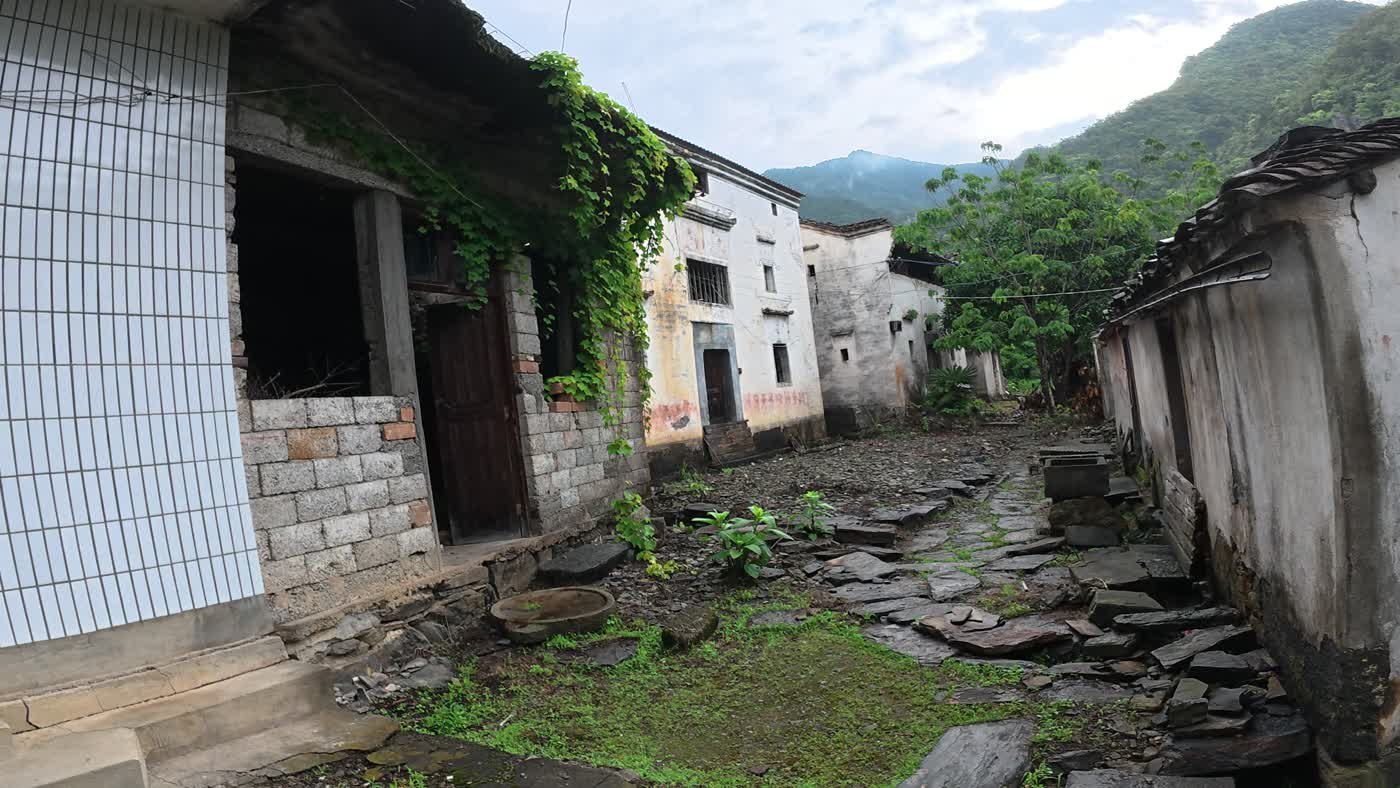
The main lane runs the length of the village as a broken ribbon of slate, grass pushing through, whole sections lifted out of place. On one side, tiled roofs and whitewashed walls; on the other, brick buildings from a later era, several with their upper floors collapsed.
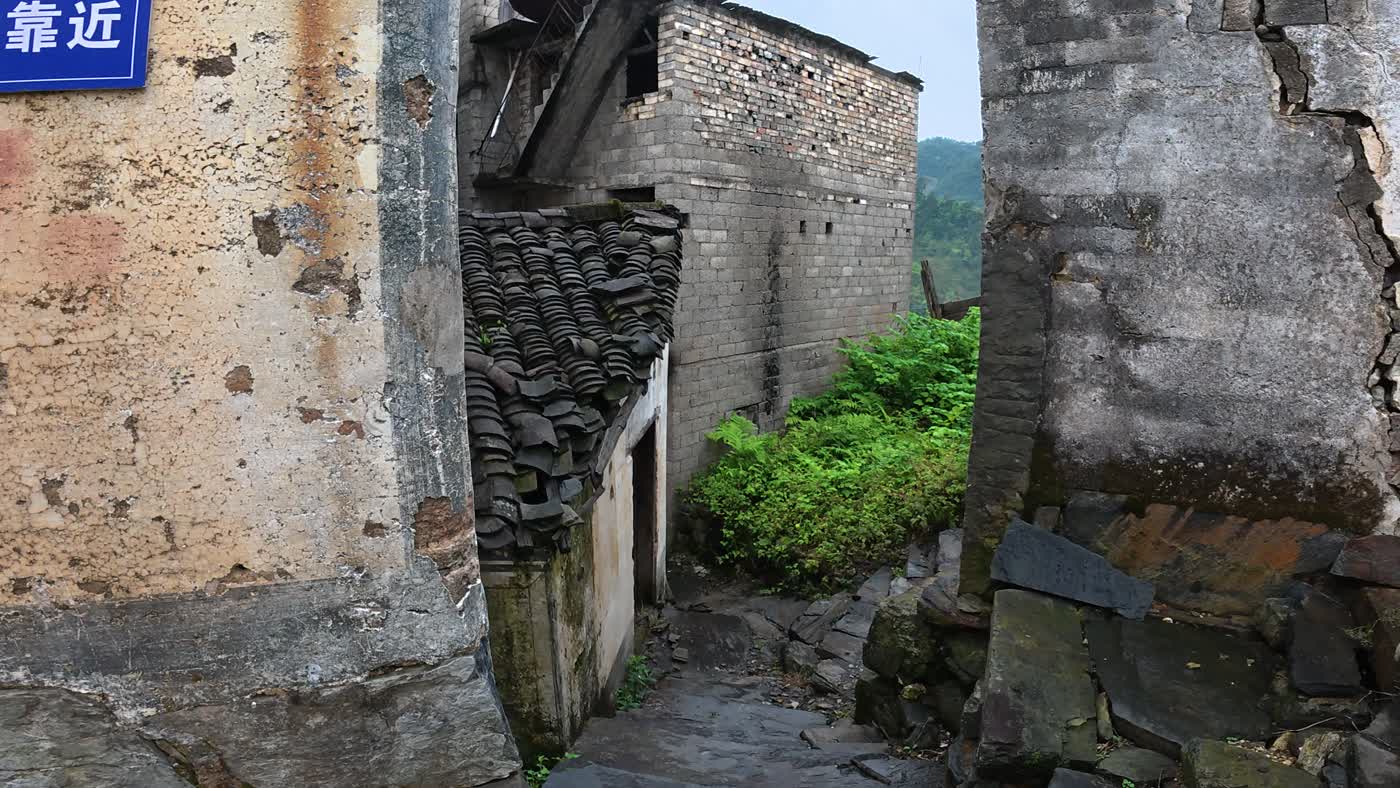
Inside the houses, furniture and household goods are still there: cupboards, a bed frame, a calendar on the wall. Doorways are open. Roofs have holes. Everything is damp.
Do not enter damaged buildings. The ground here is the reason the village is empty, and it has not become safer since. Stay on the stone lanes and look at the houses from the outside rather than stepping indoors.
Old Stories in a Quiet Place
Local accounts give Zaotai an unusual history for a village this small. The valley is associated with Chen Shuozhen, who led a rebellion in 653 and declared herself emperor a generation before Wu Zetian, and with Fang La, whose 1120 uprising left behind the Manichaean (Mingjiao) network that later fed into Zhu Yuanzhang’s rise. Shrines and place names around the ridge are still read as traces of that period.
Treat these as local lore rather than verified history, but they explain why this valley, now silent, has always been talked about as somewhere with a secret.
Is It Worth Visiting
Yes, and the combination is the point. You get the scenic-area payoff (waterfall, gorge, cliff stairs, gates) and then something most scenic areas do not offer: a village that has genuinely been left behind.
It is not suitable for small children, for anyone unsteady on steps, or for wet weather. The hazard that emptied the village is still there, and the stairs are slippery when it rains.
Practical Information
| Item | Details |
|---|---|
| Location | Gechuanjian scenic area and Zaotai village, Jinchuan township, She County, Huangshan, Anhui |
| What you walk | Waterfall and gorge boardwalk, cliff stairs with chains, then the abandoned village below the ridge |
| Scenic area | Gechuanjian: “Ten Gates, Nine Unlocked” limestone gates, gorge, waterfall, high meadow at the summit |
| Village status | Zaotai is a geological hazard site; most residents relocated, a few elderly remain |
| Getting there | Drive to Jinchuan township / Gechuanjian trailhead; there is no public transport to the village |
| Tickets | The scenic area may charge an entrance or maintenance fee, so confirm locally; the village itself has no ticket office |
| Walking | Steep stairs and wet rock; the village has a small shop and a noodle house |
| Best paired with | The Gechuanjian ridge crossing: about 11 km, 5-6 hours, ending at Zaotai |
Visiting Tips
- Start early: the gorge is in shade and the stairs are quieter before mid-morning.
- Go in dry weather: the stone stairs are treacherous when wet.
- You do not need to carry everything in. There are restaurants and a shop at the Gechuanjian entrance, and Zaotai has a small shop and a noodle house.
- Wear boots with good grip, as the wet moss on the stone steps is very slippery.
- Do not enter damaged houses in Zaotai, and do not move anything.
- Arrange your return transport in advance; there is no signal and no taxi at the village end.
Zaotai pairs naturally with the Gechuanjian ridge and with the hillside villages of She County. See Wancun for a village on a similar slope that is still lived in.
Yangchan, a cliff village of rammed-earth houses, sits in the same county; Zhaji is further east in Jingxian.
Written on site and checked against public reporting. Access conditions in abandoned villages change; landslide terrain is dangerous and should be treated as such.