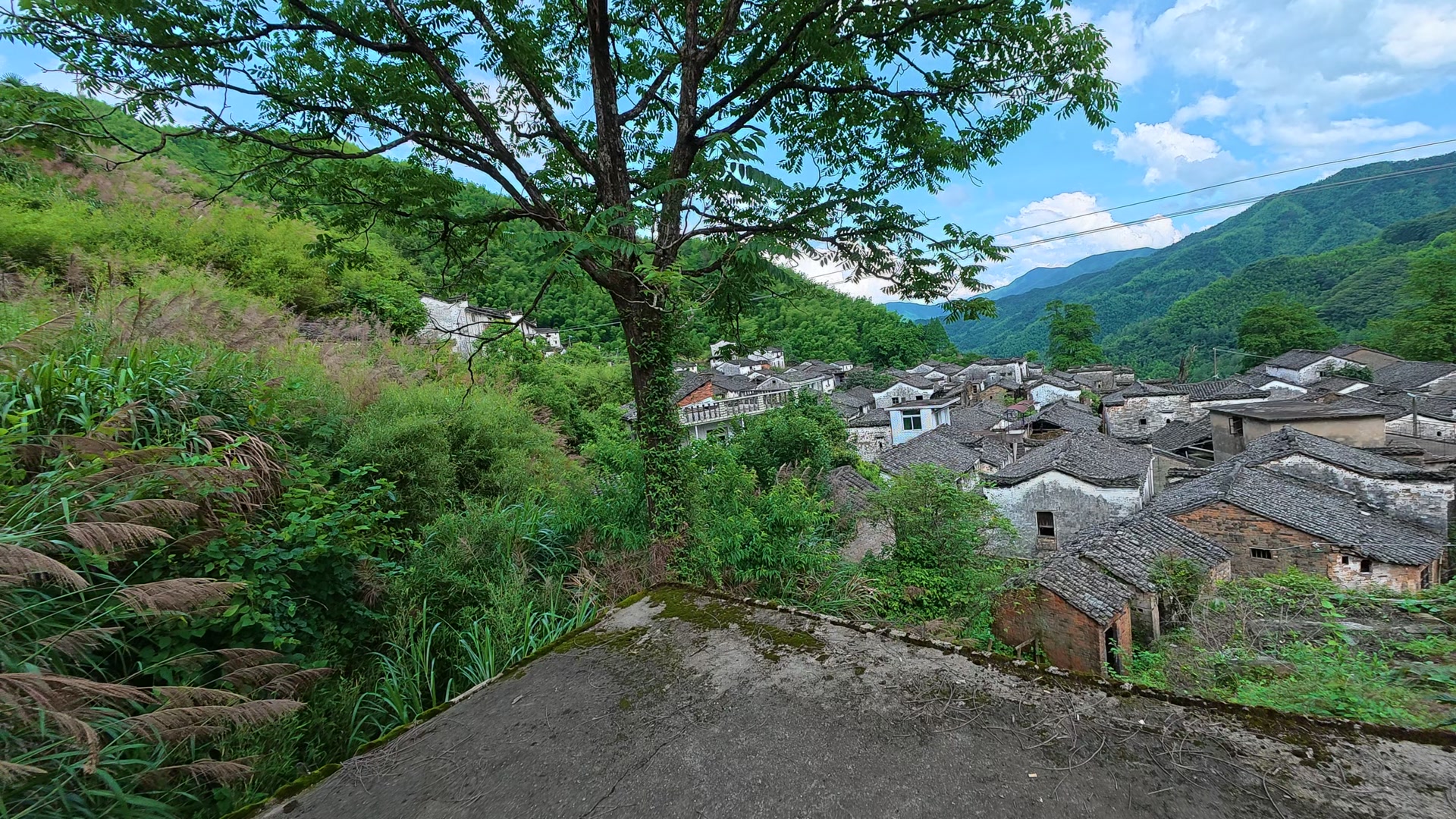
Yangtai sits at about 650 metres on the southern slope of the Wulong range in Xiuning county, Huangshan. The ground in front of it is a broad, gentle shelf facing south, which is where the name comes from: a natural balcony.
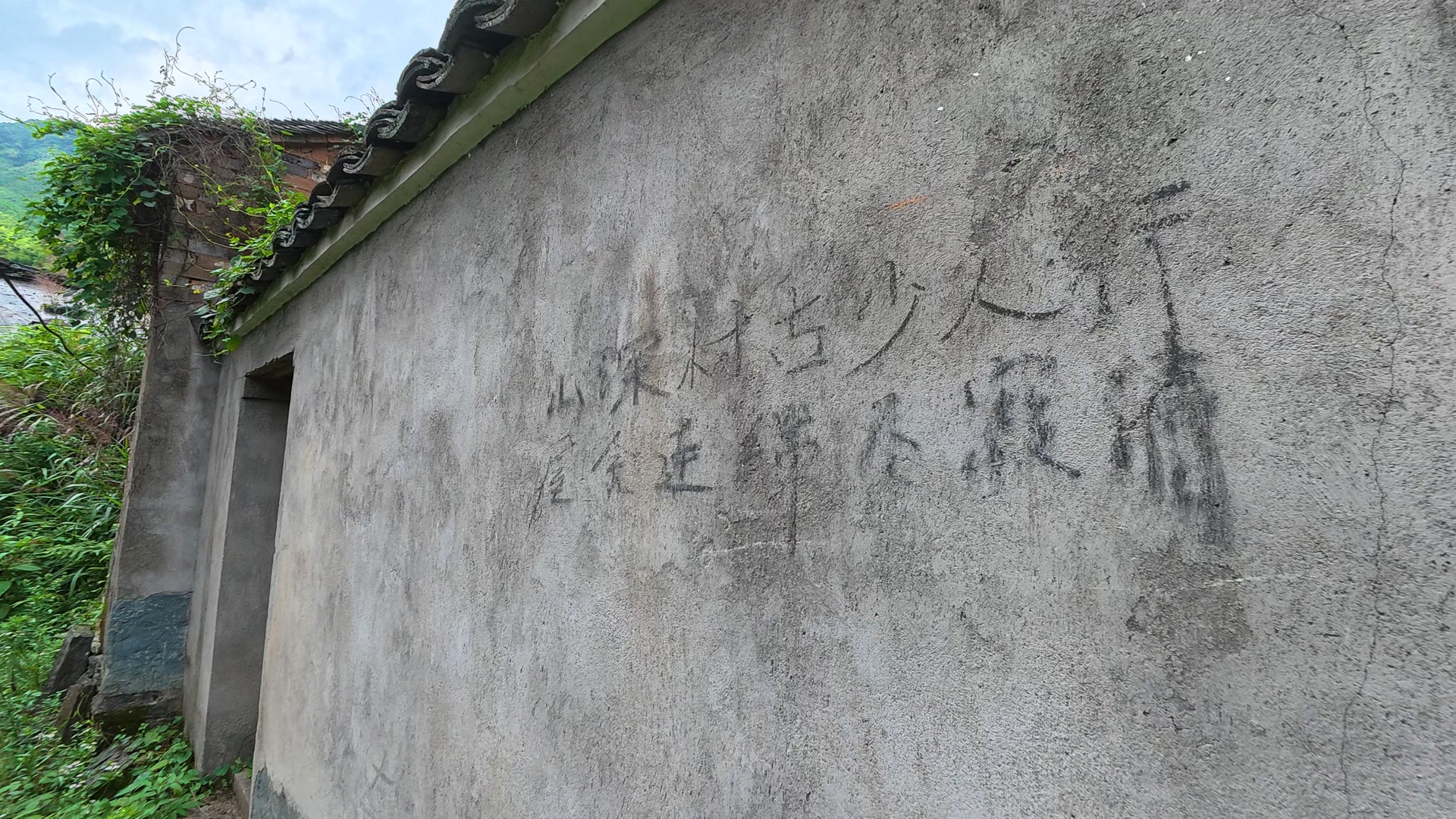
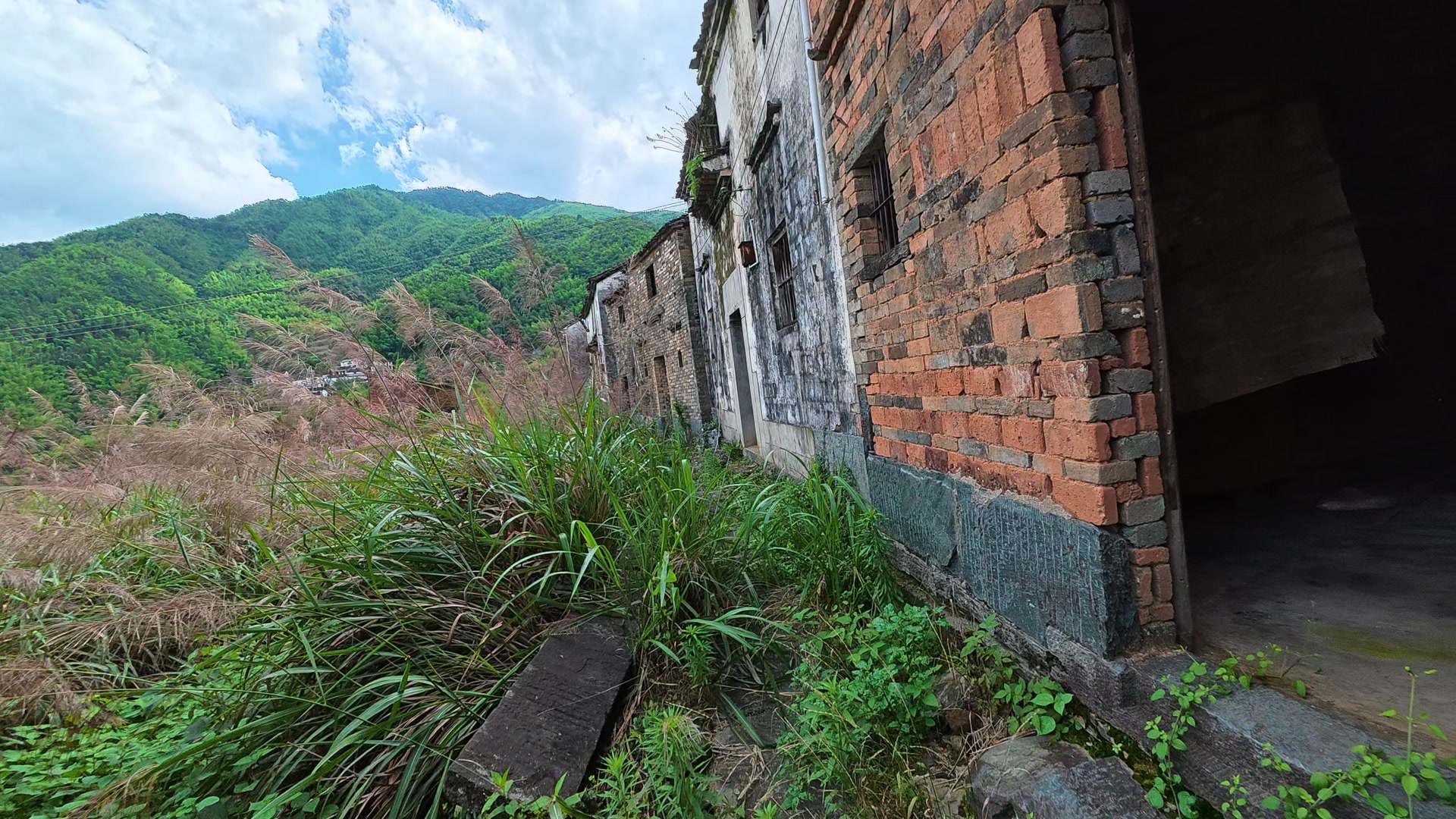
Nobody lives there now. In 2012 the entire village was moved down the mountain after a landslide group was judged a danger to the site, and the houses have been standing empty for fourteen years. What is left is a tight pack of Huizhou houses, stone lanes, and a great deal of green coming in through every gap.
On-Site Video Record
Twenty-five minutes of walking through Yangtai in June: the entrance steps, the lanes between the empty houses, the interiors, and the long path back down to the road. Ambient sound only, no commentary.
If the embed fails, the original is on YouTube.
Where It Is and How to Get There
Yangtai belongs to Wucheng town in Xiuning county, about 16 km from the town government and roughly 36 km from the county seat. Coming from Tunxi, leave the expressway at Longwan, take the Wucheng ring road toward the Yangtai resettlement village, then follow the stream up the mountain road.
The road surface is concrete the whole way. There is no gate, no ticket office and no charge. The last stretch is narrow and steep, and the parking is whatever the road edge gives you.
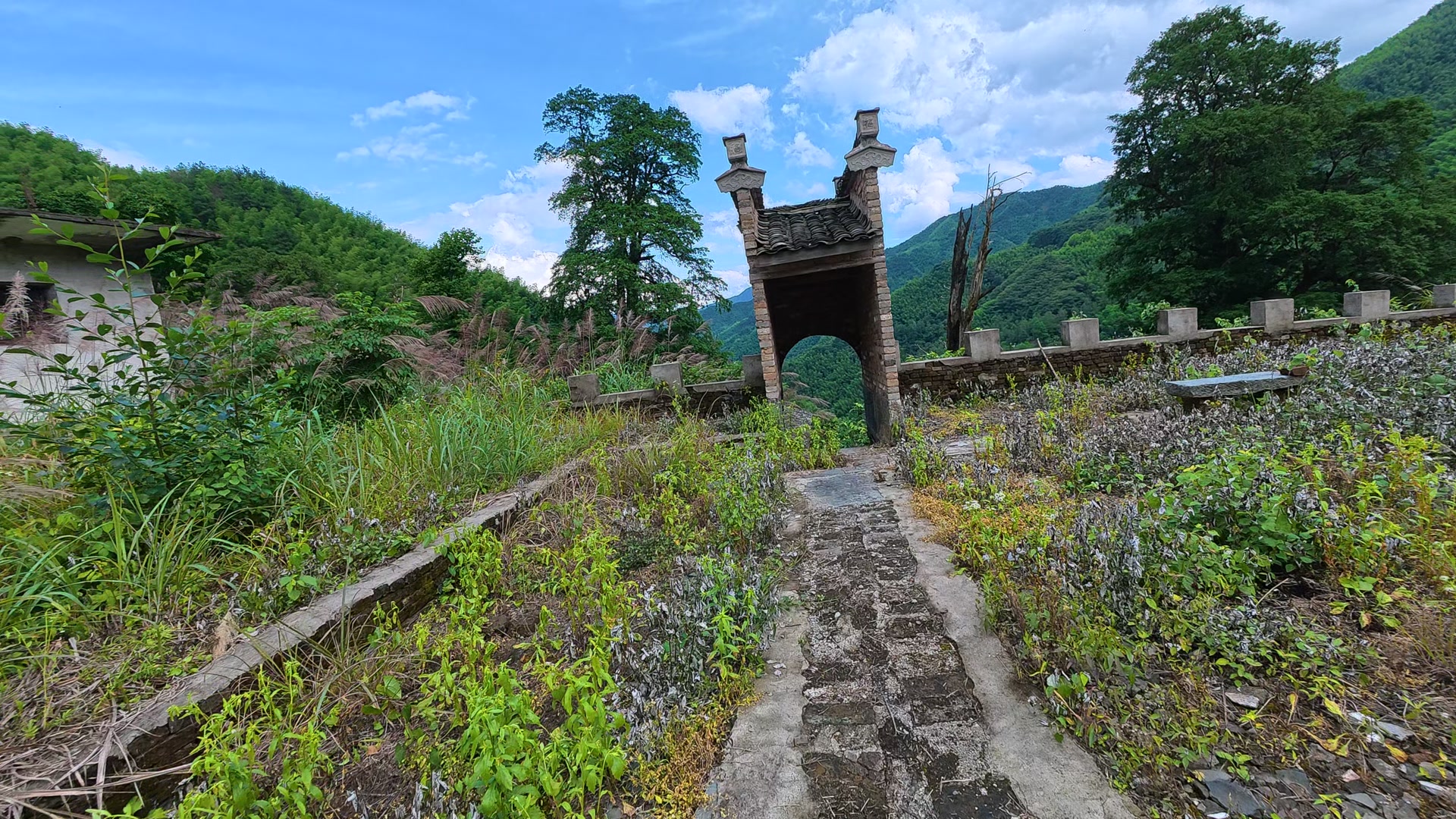
A Village Shaped Like a Balcony
The first settlers came from Xiang village in Wuyuan at the end of the Ming, and they picked well. The site faces south on a shelf of the mountain, with the slope falling away in front and the ridge rising behind.
Everything is packed tight. Lanes are two people wide at most, houses share walls, and the stone steps turn every few metres. The local description for this kind of layout is a fortress village, and walking it you can see why.
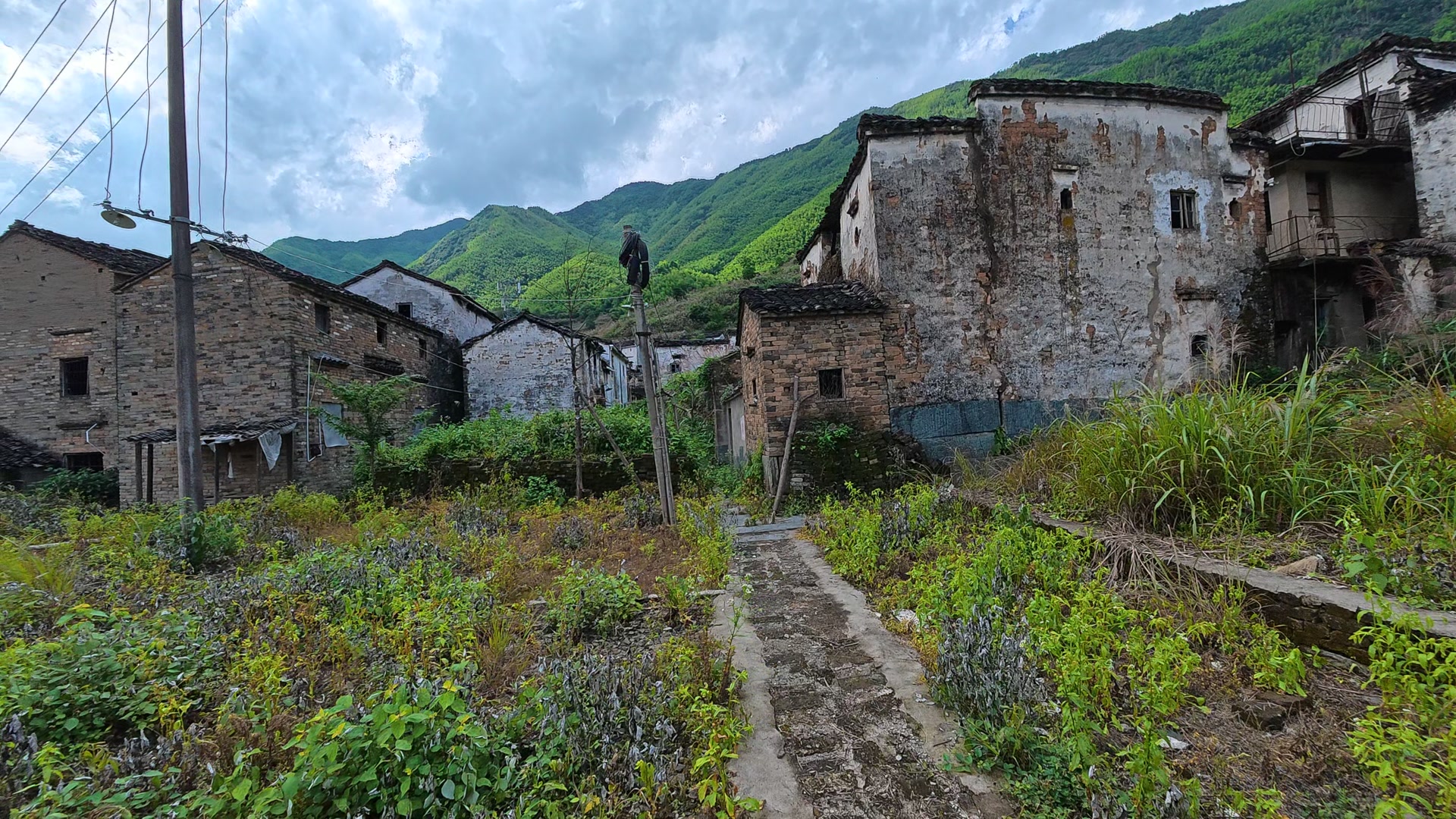
2012: The Year Everyone Left
The problem was the ground itself. In 2008 the site was listed as a provincial key landslide point, and in 2012 the Yangtai landslide group forced a full evacuation. The whole village was relocated to a new settlement about 15 km away, built with 203 houses, and the old site was left to close on its own.
After fourteen years sitting empty, the changes are easy to see. Ceilings have come down in the wet rooms. Roofs have opened. Bamboo and grass have taken the courtyards, and the lanes that people swept every morning are now paths through vegetation.
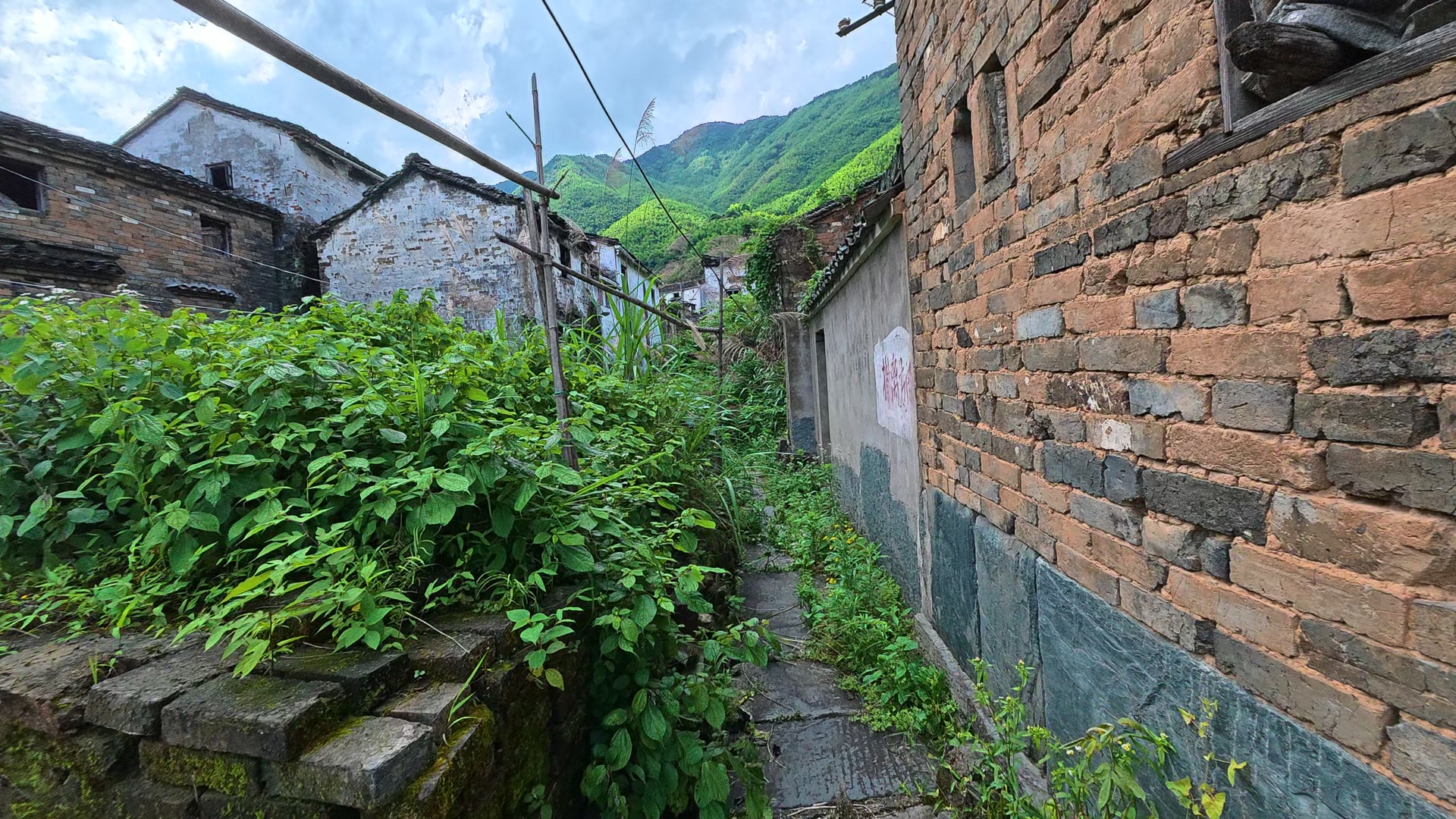
What the Houses Look Like Now
Huizhou houses were built to last, and the shells are mostly intact: stone bases, timber frames, white plaster on the outside, grey tile above. Most of the damage is in the roofs, gutters and wooden windows that needed regular upkeep.
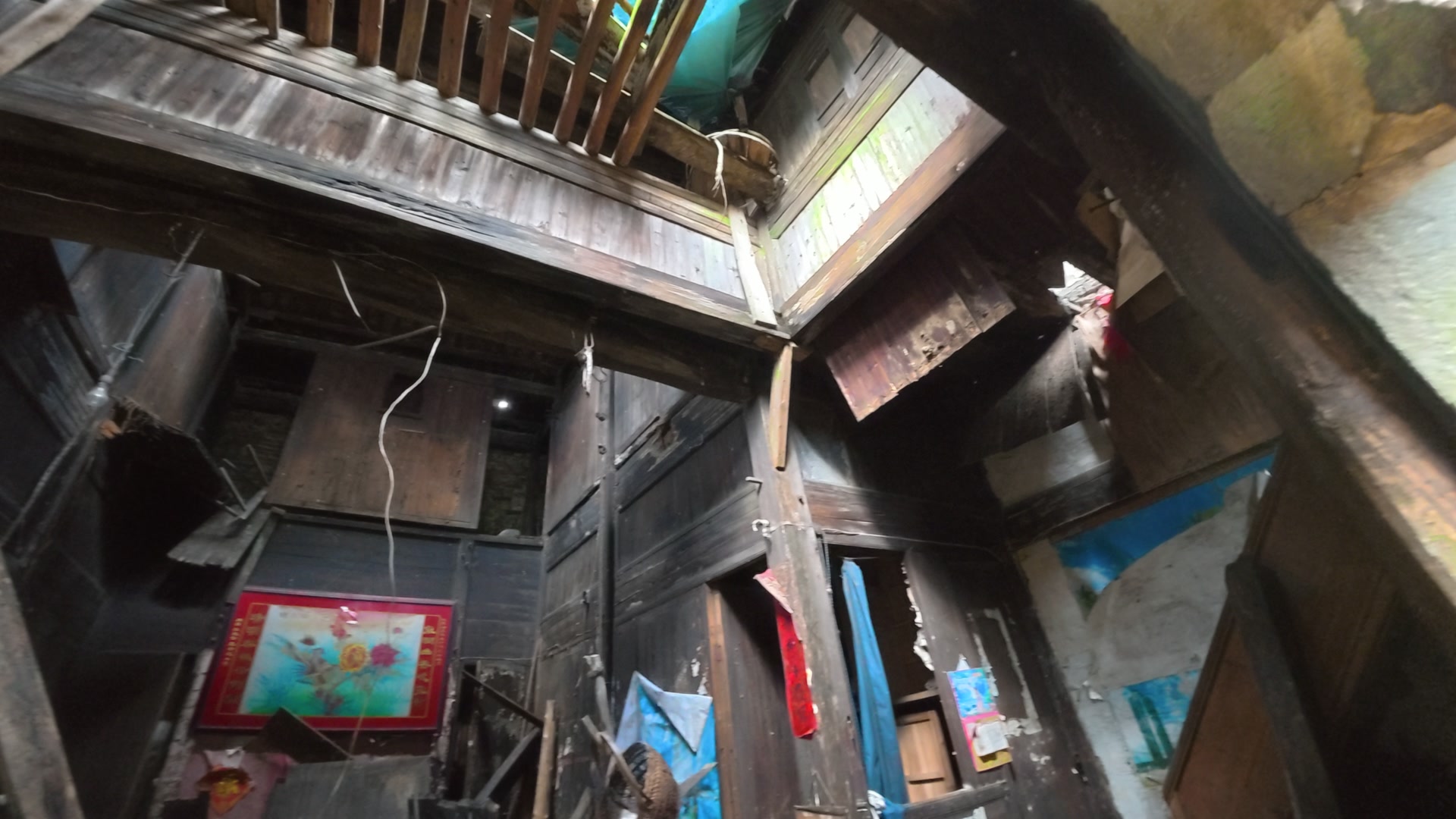
Some interiors still hold what was left behind, because there was no reason to carry it down the mountain. Old furniture, picture frames and wall calendars are still inside, showing everyday village life just before the 2012 move.
The Yews at the Entrance
At the village entrance stands a grove of yew trees, some of them close to a thousand years old, along with magnolia and kuding tea trees. These ancient yew trees give the village entrance a deep, shaded canopy taller than any of the houses.
The Terraces Below
Terraces run from the foot of the mountain up to the midslope, and photographers who come here call Yangtai the Yuanyang of Huizhou, after the famous rice terraces in Yunnan. In June the terraces are green and the rhododendron slope above them is being planted up.
Is It Worth Visiting
Yes, if an empty village interests you more than a restored one. Yangtai is not a ruin and not a museum: the houses are sound, the lanes are walkable, and the emptiness is total. Photographers come for the terraces, and people who grew up in villages like this come to look at one again.
Skip it if you want facilities, interpretation, or a place to sit down. There is no grocery shop, no restaurant and no guesthouse in the village, and nobody lives on site. Bring water and eat before you drive up.
Practical Information
| Item | Details |
|---|---|
| Location | Yangtai village, Wucheng town, Xiuning county, Huangshan, Anhui |
| Type | Abandoned Huizhou village on a south-facing shelf of the Wulong range |
| Elevation | About 650 m |
| Founded | Late Ming, by settlers from Xiang village in Wuyuan |
| Emptied | 2012, after the Yangtai landslide group was classified as a geological hazard |
| Status | National Forest Village; known locally as the Yuanyang of Huizhou for its terraces |
| Entry | Free. No ticket office, no gate |
| Facilities | None. No shop, no restaurant, no guesthouse, nobody living on site |
| Distance | About 16 km from Wucheng town, about 36 km from the Xiuning county seat |
| Roads | Concrete mountain road the whole way; last stretch narrow and steep |
| Time needed | One and a half to two hours on foot |
Visiting Tips
- Wear long trousers and boots. The lanes are overgrown and the grass is chest high in places.
- Bring drinking water, as there are no shops or restaurants in the village.
- Do not go into houses with a sagging frame or a fallen ceiling. The shells look solid and are not always.
- The steps are mossy after rain, and it rains often here. Grip matters more than speed.
- Go in the morning if you want the terraces lit. The slope faces south and the light goes flat by mid afternoon.
- Leave any furniture and household items untouched inside the old houses.
Yangtai is the second empty village on this site. Zaotai in She county was left for a different reason, and Changkeng nearby is the opposite case: still lived in, and just as quiet.
Drawn from the on-site walk published in June 2026.