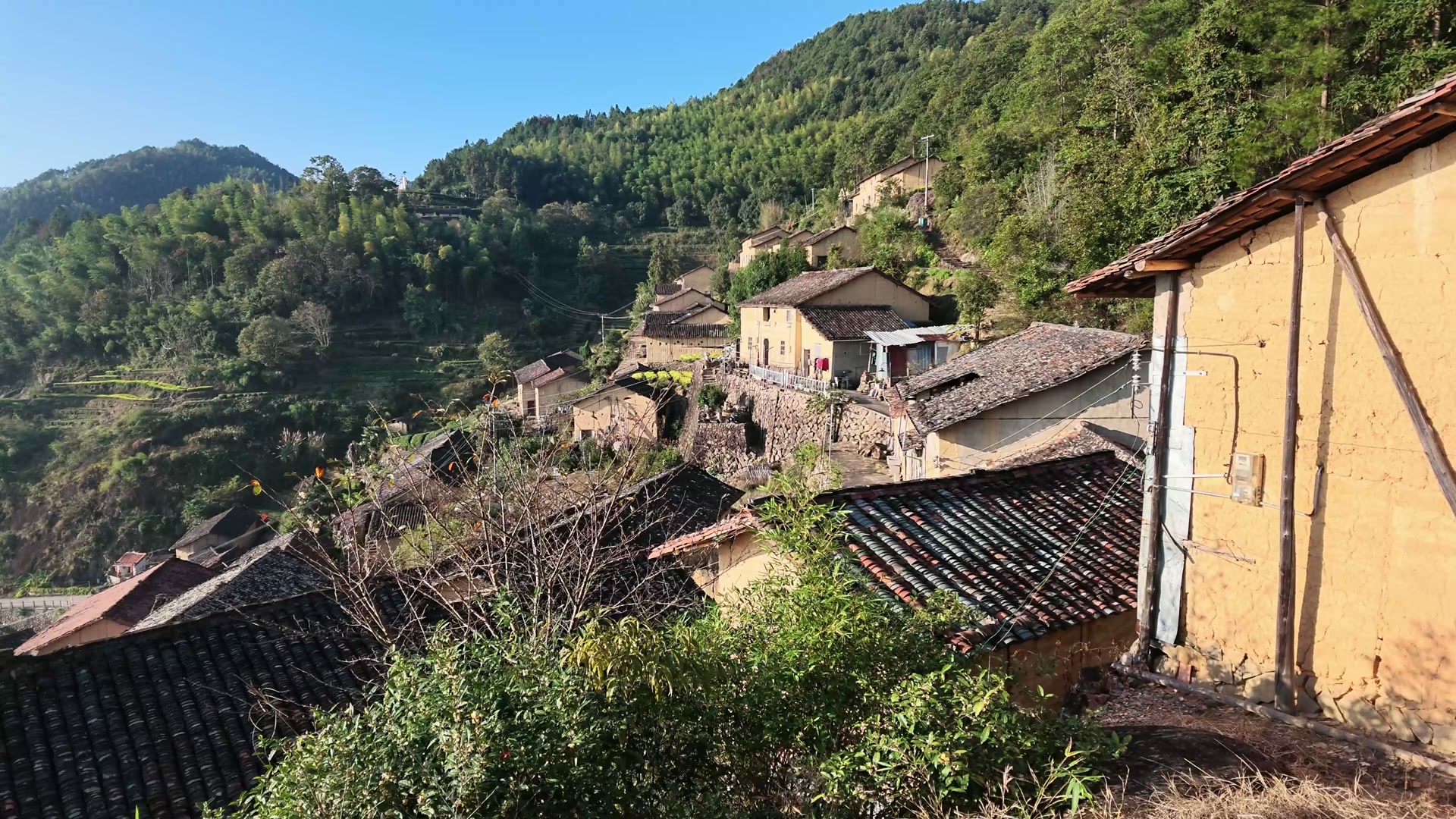
Huangtian sits at 600 metres on a hillside in Zhangxi township, Songyang county, at the southern end of Zhejiang. From the road below it reads as one long yellow band of earth walls and grey tile roofs, with the wooded slope of Maoshan standing behind. Fifty-three households live up there, just over 180 people in all.
The layout of the village follows the steep terrain directly. Each house stands one step higher than the house in front, so every family looks out over the rooftop below. Climb the stone steps and the roofs climb with you, row after row, until the whole village is stacked under your feet.
On-Site Video Record
Thirty minutes of walking up through Huangtian in October: the entrance steps, the earth-walled lanes, the drying yards at the top and the ridge above the village. Ambient sound only, no commentary.
If the embed fails, the original is on YouTube.
Where It Is and How to Get There
Huangtian belongs to Zhangxi township, Songyang county, Lishui, in the mountains of southwest Zhejiang. The township seat is about 1.5 km away in a straight line and 5 km by the mountain road. The nearest motorway access is the Gushi exit of the Longli expressway.
A small car park sits at the foot of the village and parking is free. The walk starts from there. There is no gate, no ticket office and nothing to pay.
A Village Built Like a Flight of Stairs
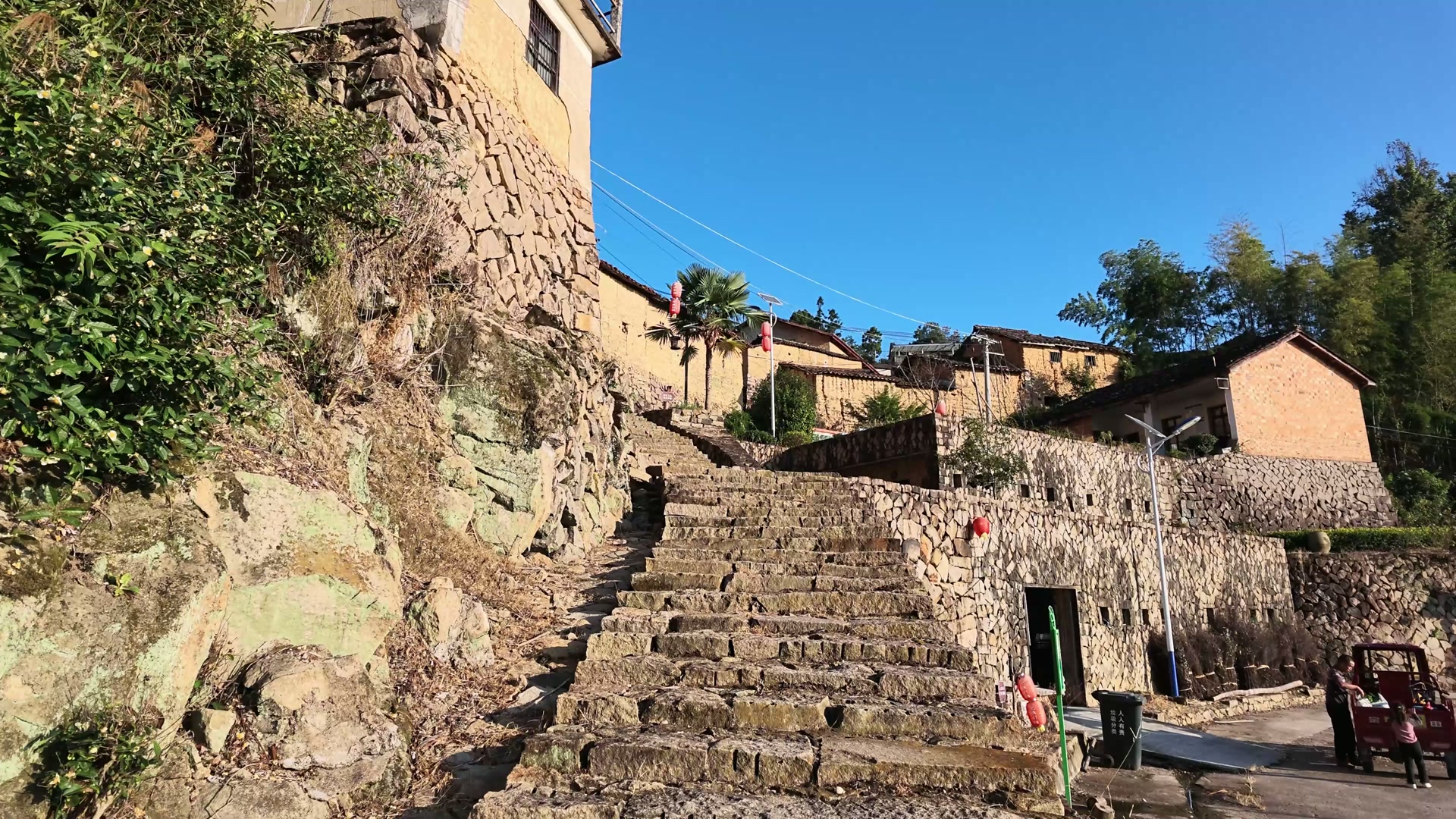
The name and the shape are two separate things. Huangtian means yellow field, and it comes from the yellow-earth terraces below the houses. The shape is a staircase.
Nothing here is level. Lanes run as steps, retaining walls step down beside them, and courtyards sit at four or five heights within fifty metres of each other. Stone revetments hold up each terrace, and the houses stand on top of the revetments.
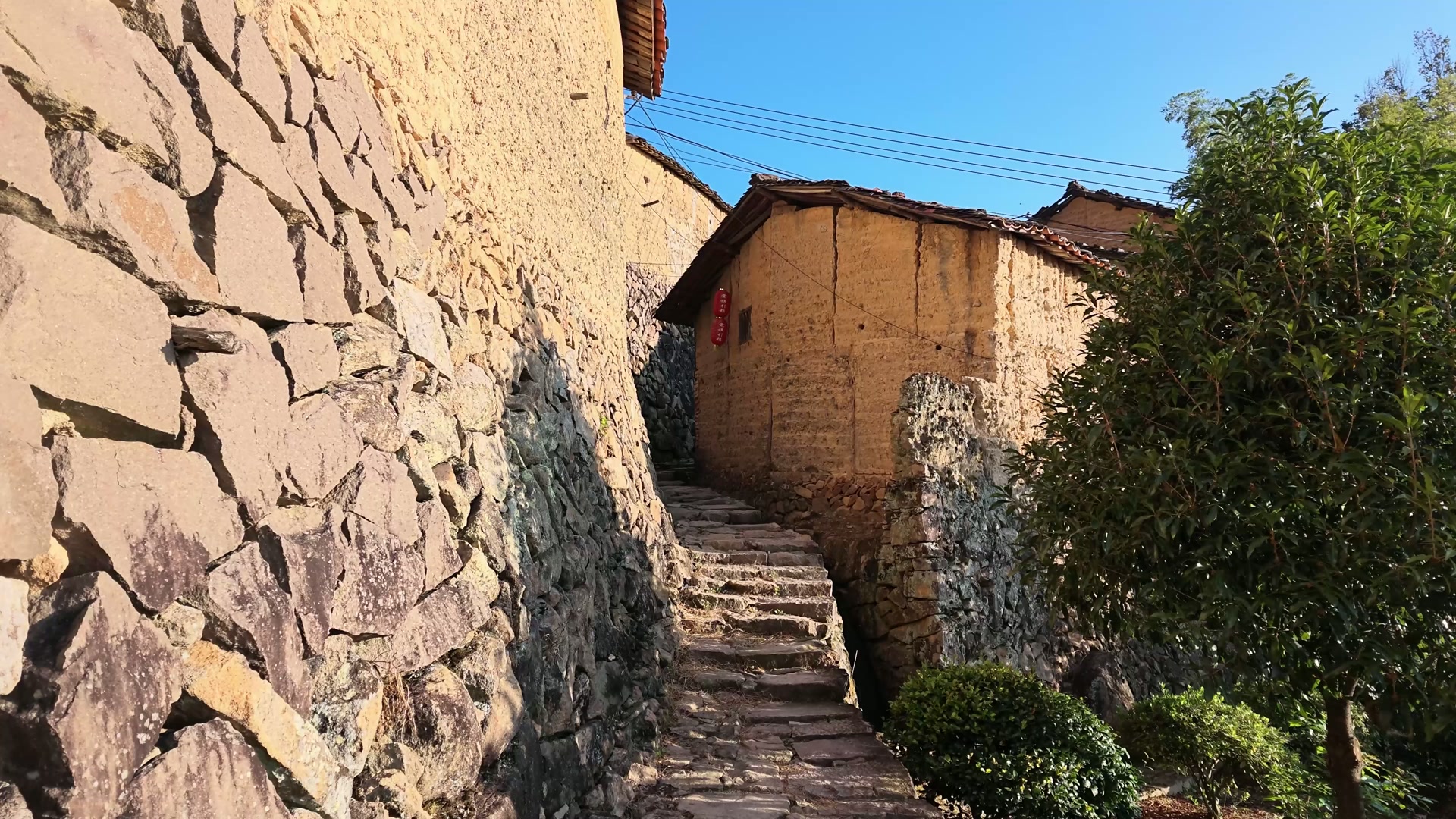
Because every house is set one above the next, the roof of a house becomes the front yard of the one behind. Stand at the top of a lane and you look across a dozen roofs at eye level, each one a little lower than the last.
Two Hundred and Forty Years, and a Listing
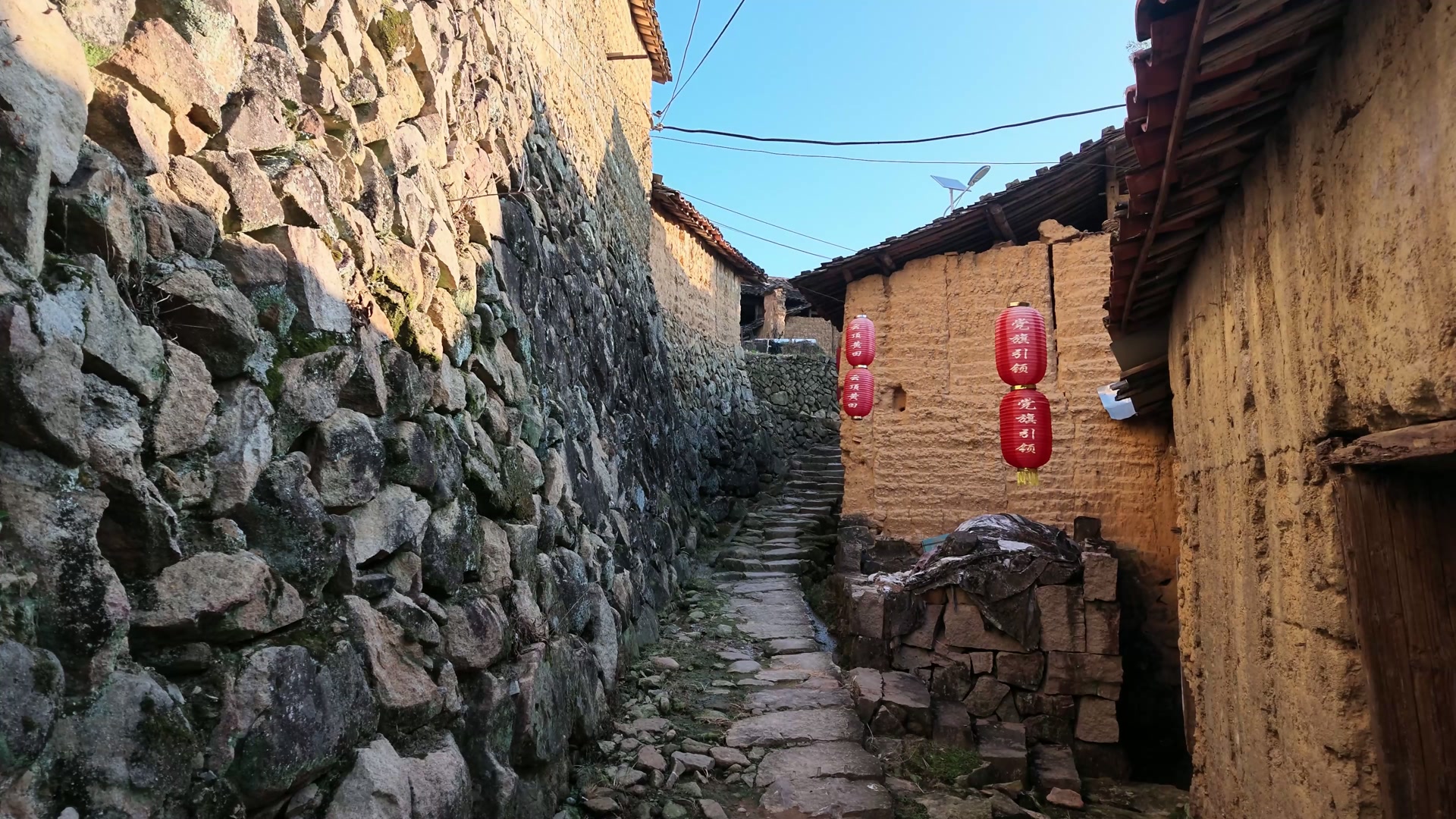
Huangtian was founded in the Qianlong reign of the Qing dynasty, about 240 years ago. In 2014 it was added to the national list of Chinese Traditional Villages, which is the sort of protection that mostly means the roofs stay tile instead of tin.
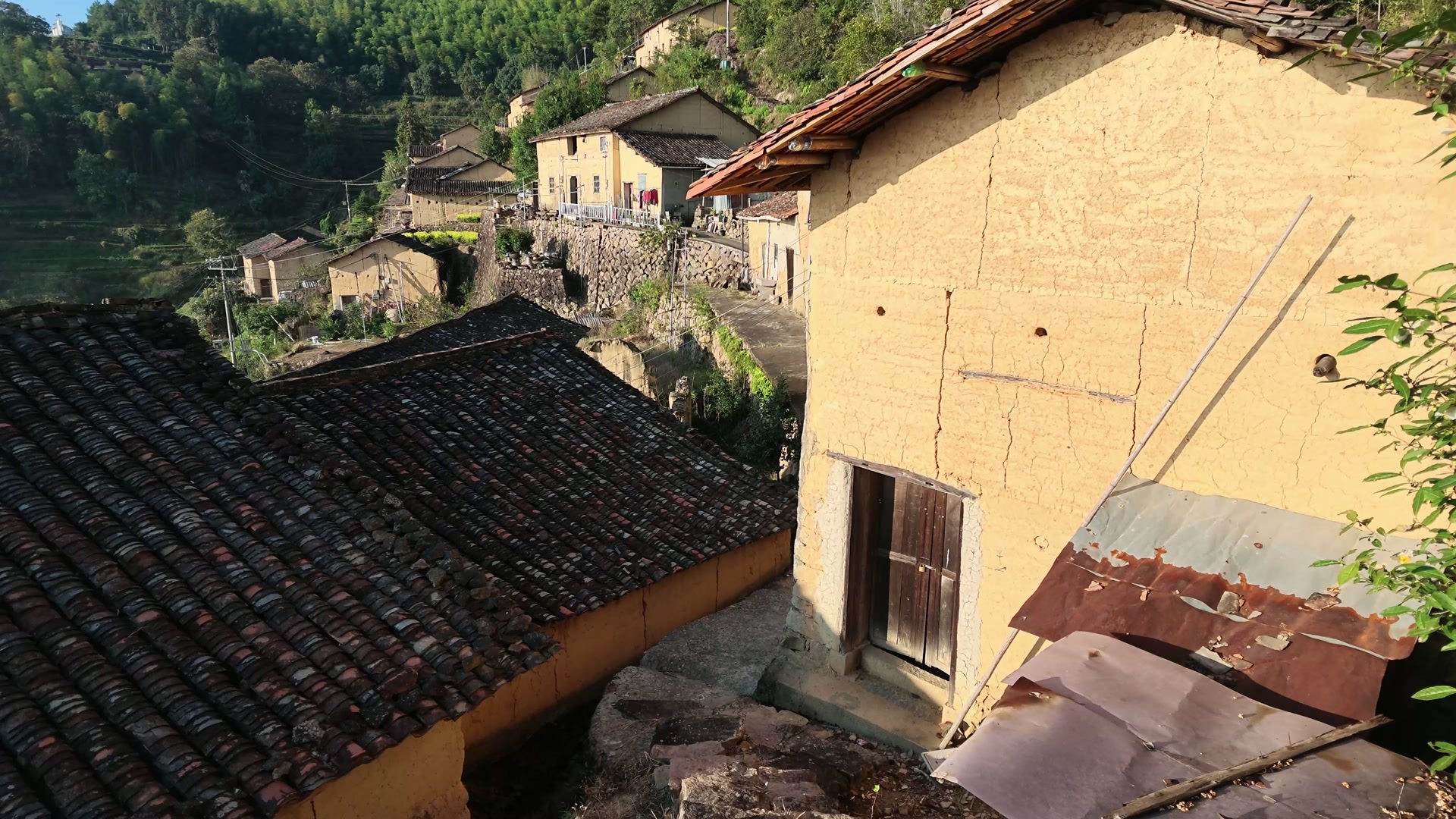
The building material is the local one: rammed earth for walls, timber for frames, grey clay tile for roofs, river stone for the retaining walls and the steps. Nothing is painted. The colour comes from the earth itself, and it runs from pale straw to deep ochre depending on the hour.
What People Still Make Here
Huangtian is a working village rather than a preserved one. Villagers still make incense by hand, and they still cure tobacco in the sun, weave cloth and plait straw sandals. The tea terraces below the houses are worked as well.
None of it is staged. There is no workshop with a sign, no demonstration, no shop at the end of the tour. You see the work as it happens, or you do not see it at all.
The View from the Ridge
Above the last houses the slope opens into tea terraces, and a path continues up to the ridge behind the village. Locals call Huangtian the watchtower of Songyang, and the name is not marketing: from the ridge the Songgu basin lies open below, and a clear day carries the eye across the whole valley.
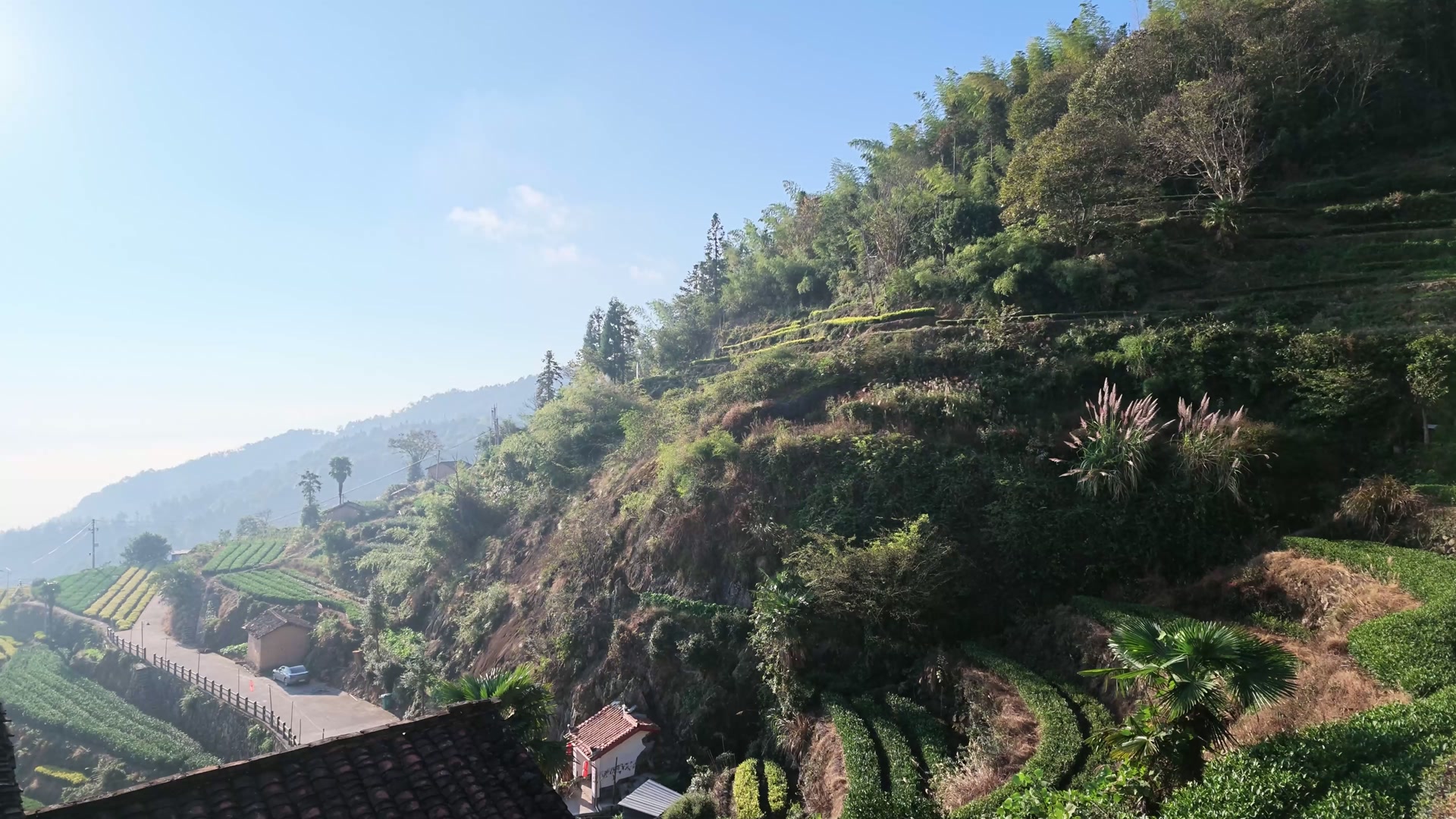
The ridge is also the best place to understand the village. From above the roofline reads as one stepped surface rather than a collection of separate houses.
How Long the Walk Takes
From the car park, the steps climb between two earth walls for a few minutes, then the lanes level out and run sideways along the slope. Height comes in bursts rather than in one long climb, and the highest houses are about twenty-five minutes from the car park.
An hour and a half to two hours covers the village at a walking pace. If you are waiting for light, the last hour before sunset is the good one, when the roofs start stacking shadows.
What to Expect
There is nothing here for visitors: no supermarket, no restaurant, no guesthouse, no sign in English. The fifty-three households go about their day, and the walk is the whole of the attraction.
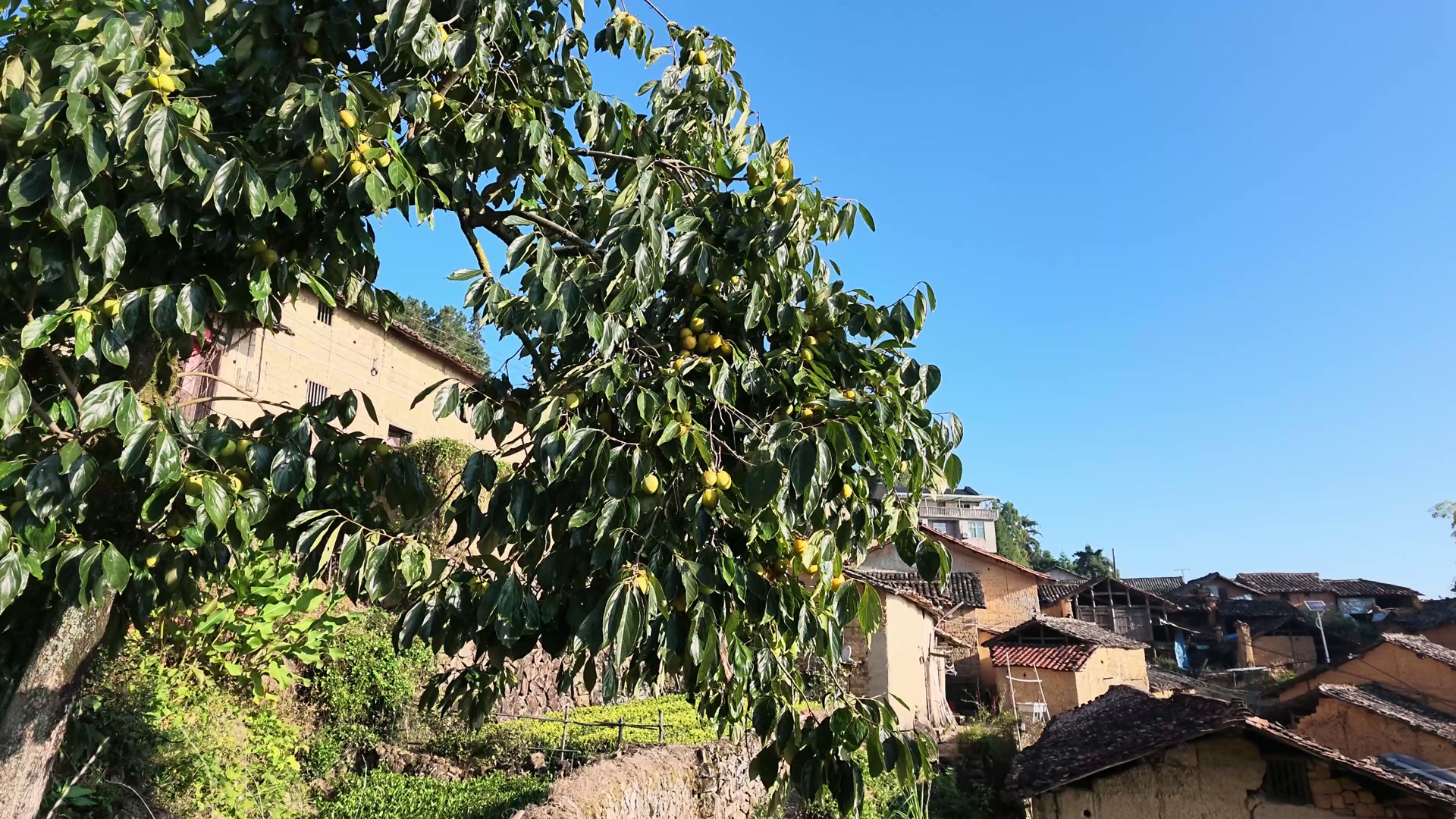
That is the trade-off. You get a village that has not been arranged around tourists, and in exchange you carry your own water and eat somewhere else.
Is It Worth Visiting
Yes, if you want to see how a village solves a slope, or if fifty-odd roofs stepping down a hillside is worth a detour of an hour or two. The architecture is ordinary and consistent, which is what makes it legible at a glance.
Skip it if you need facilities, signage or somewhere to sit down with a coffee. Songyang has many old villages, and this one is for people who came to walk.
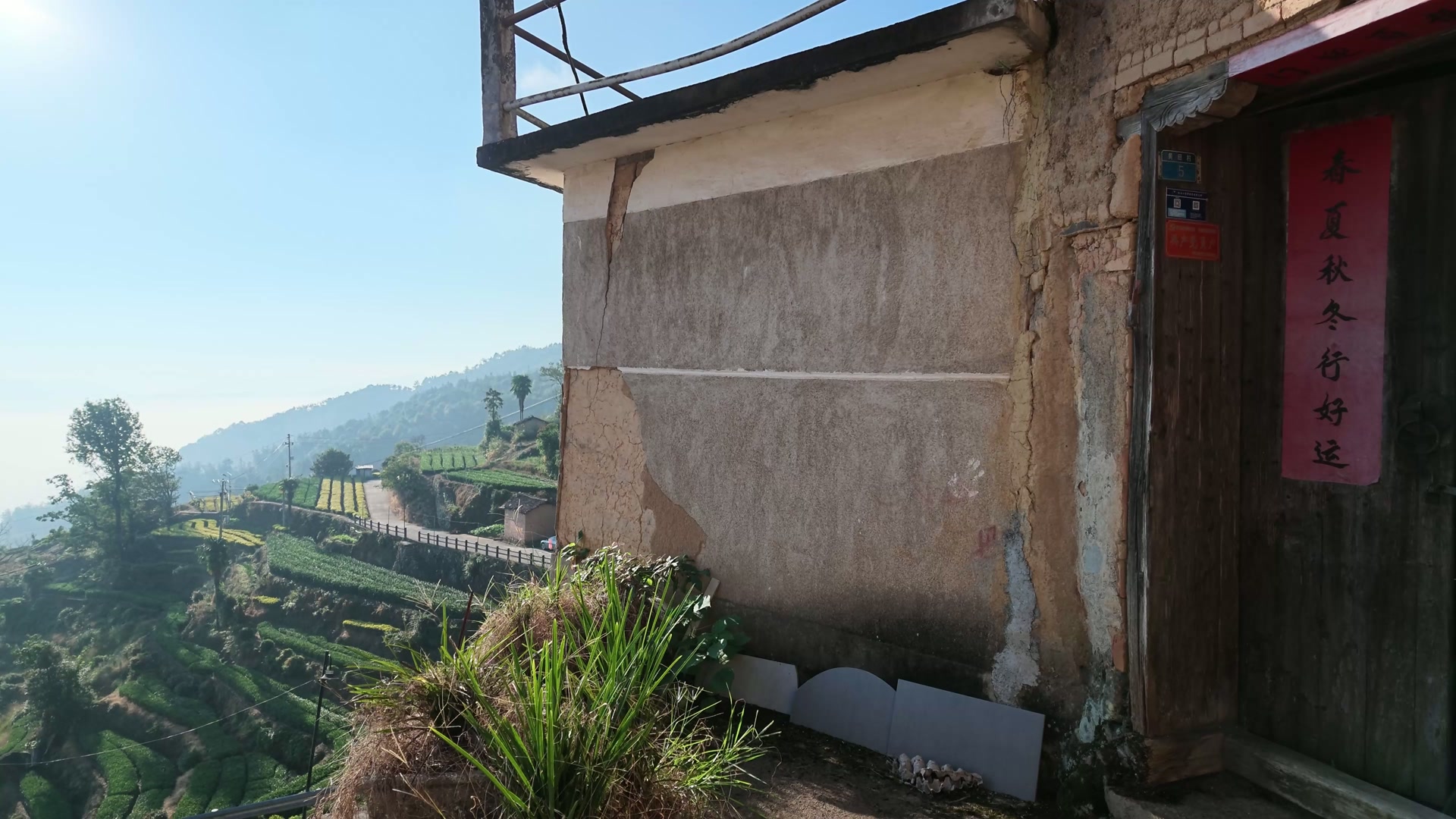
Practical Information
| Item | Details |
|---|---|
| Item | Details |
| Location | Huangtian village, Zhangxi township, Songyang county, Lishui, Zhejiang |
| Type | Hillside village built in steps, facing Maoshan |
| Elevation | About 600 m |
| Founded | Qianlong reign, Qing dynasty, about 240 years ago |
| Status | Chinese Traditional Village (2014) |
| Population | 53 households, just over 180 people |
| Crafts | Hand-made incense, sun-cured tobacco, hand-woven cloth, straw sandals |
| Entry | Free. No ticket office and no gate |
| Parking | Small free car park at the foot of the village |
| Facilities | No supermarket, no restaurant, no guesthouse, no English signage |
| Distance | 1.5 km from the Zhangxi township seat, 5 km by the mountain road |
| Roads | Nearest motorway exit is Gushi on the Longli expressway |
| Time needed | One and a half to two hours on foot |
Visiting Tips
- Eat and buy water before you drive up. There is no supermarket and no restaurant in the village.
- Start in the morning. The slope faces east and the light on the earth walls is best before ten.
- Wear shoes with grip. The stone steps are worn smooth in the middle and get slippery with moss after rain.
- Do not walk into courtyards. Every house here belongs to someone, and this is not a ruin.
- Give the climb time. It is short but constant, and the view changes every twenty metres.
- Stay until the afternoon if you can. After four the roofs start stacking shadows, and the village photographs best from above.
For another Zhejiang village on a slope, one that was paid for by indigo, see Shanxiabao in Wuyi county. For the rammed-earth villages of Anhui, Yangchan is the largest of them.
Drawn from the on-site walk published in October 2026.