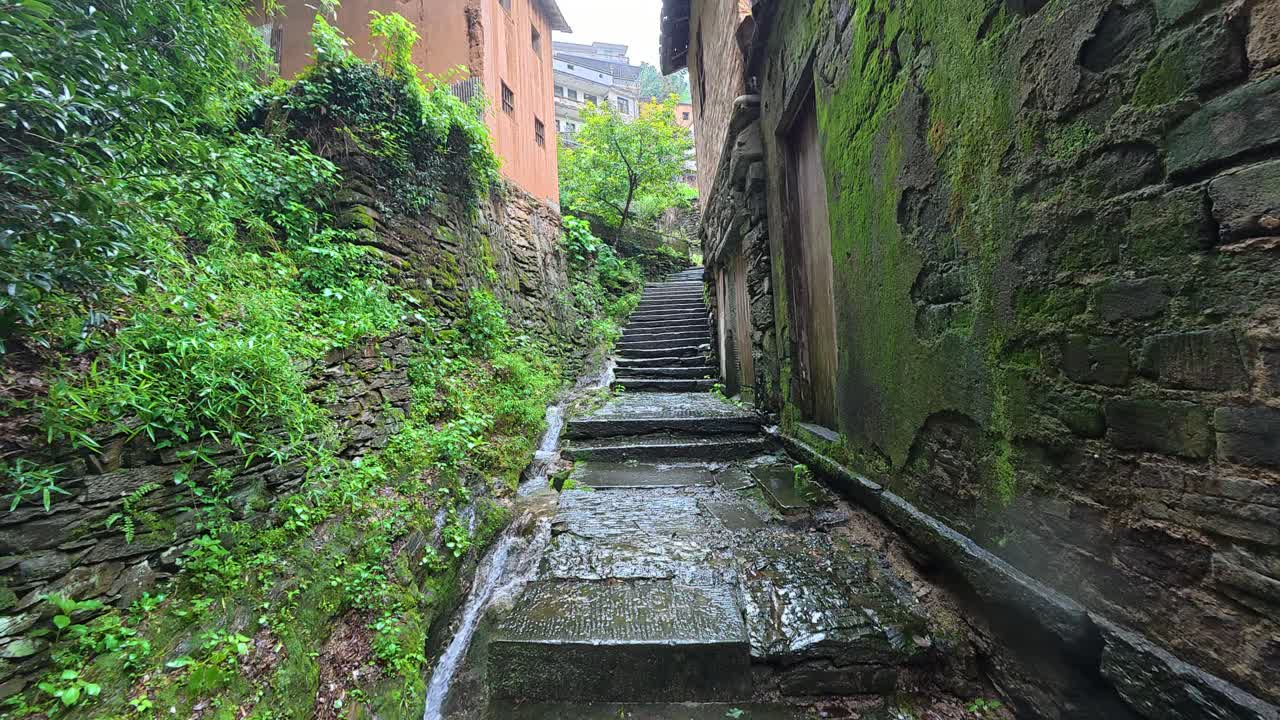
Wancun Village sits in Changxi Township, Shexian (She County), Huangshan City, Anhui Province, hidden in the mountains of southern Huizhou. The houses climb the hillside in stacked rows, one level above another, so that from a distance the whole village looks like terraced steps of roofs and walls. This layered silhouette is why it is often called the “Potala Palace of Huizhou”.
Unlike the famous commercialized Huizhou villages nearby, Wancun is quiet and largely untouched: mountain paths, tea fields, bamboo groves and old houses together form a highland village where daily life continues at its own slow pace.
On-Site Video Record
The film below records a walk through Wancun Village from a first-person perspective.
The walk starts on the road into the village and passes hillside houses, stone-slab lanes, rammed-earth dwellings and the higher quarters of the village. Natural sound is kept throughout: no narration, no background music. The video is there to show the real spaces, paths and atmosphere of the place. If the player does not load, the original is on YouTube.
Location and Transport
Wancun Village belongs to Changxi Township, Shexian County, Huangshan City, Anhui Province. It is best reached by car.
From the ancient city of Huizhou (Shexian county town), drive in the direction of Changxi, then turn onto the mountain road shortly after Changxi village. The final stretch is roughly 5 kilometers of narrow, winding mountain road with several blind bends. Take it slowly and use the horn on blind corners. Parking is available near the village entrance.
The nearest high-speed rail station is Huangshan North (Huangshanbei). From there, the practical options are a hired car or a taxi, roughly one and a half hours door to door. Drivers usually navigate to “万二村” (Wancun Village) in Changxi Township, Shexian.
Village Name Origin
The village was originally called Wang Village. Later, families with the surname Wang (汪) moved in, and because 王 and 汪 sound almost identical in the local dialect, the two characters were eventually blended into the name “Wancun” (万二村) that is used today.
This kind of name evolution reflects the migration of clan lineages into the village and the way family structure shaped its identity over the centuries.
Village History
Wancun was founded in the late Ming dynasty and has a history of more than four hundred years. In 2019 it was included in the fifth batch of the “Chinese Traditional Villages” list, a national designation for villages with well-preserved historic fabric.
Unlike lowland villages that spread across flat ground, Wancun was built upward along the slope. Old houses, lanes and stone steps connect into a continuous vertical settlement. It is one of the clearest examples of a high-mountain Huizhou village.
Architecture and Features
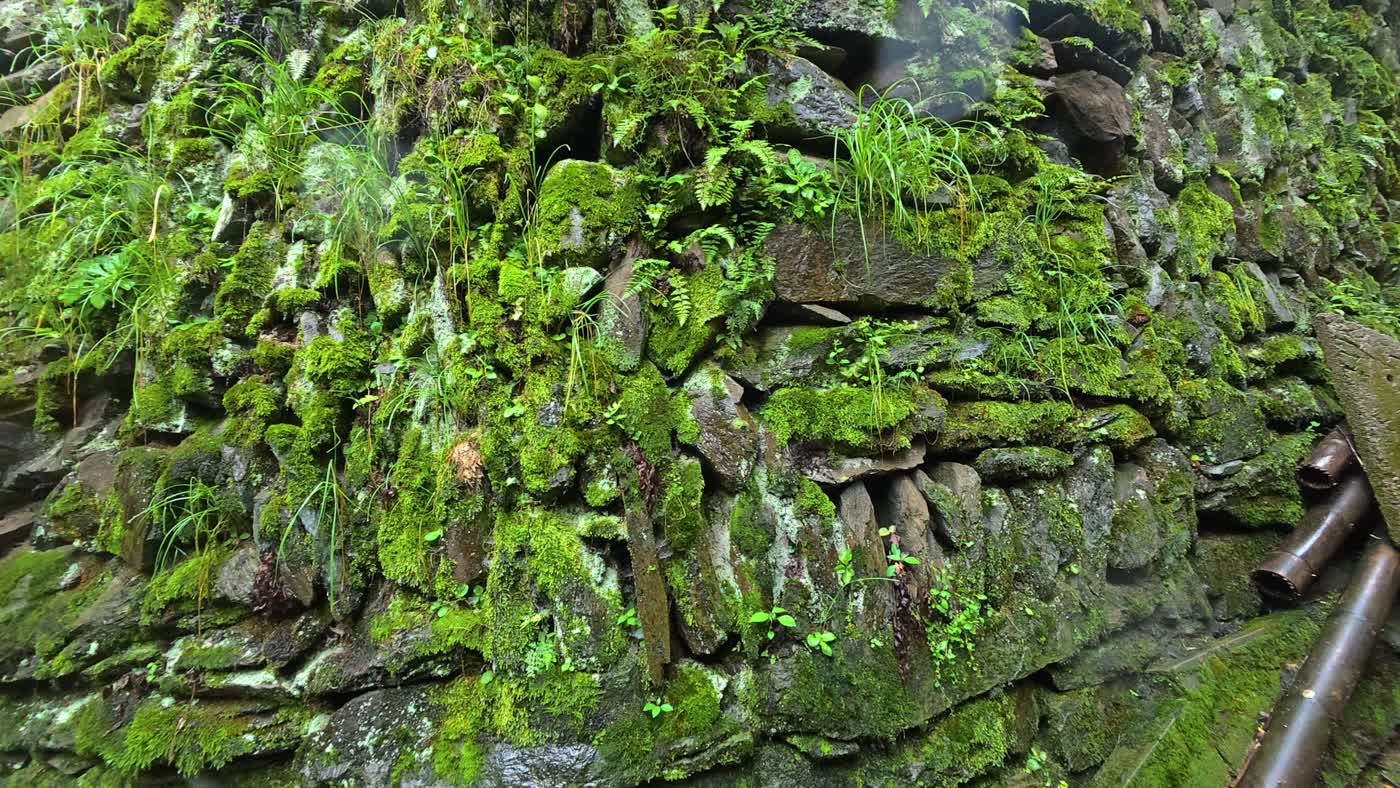
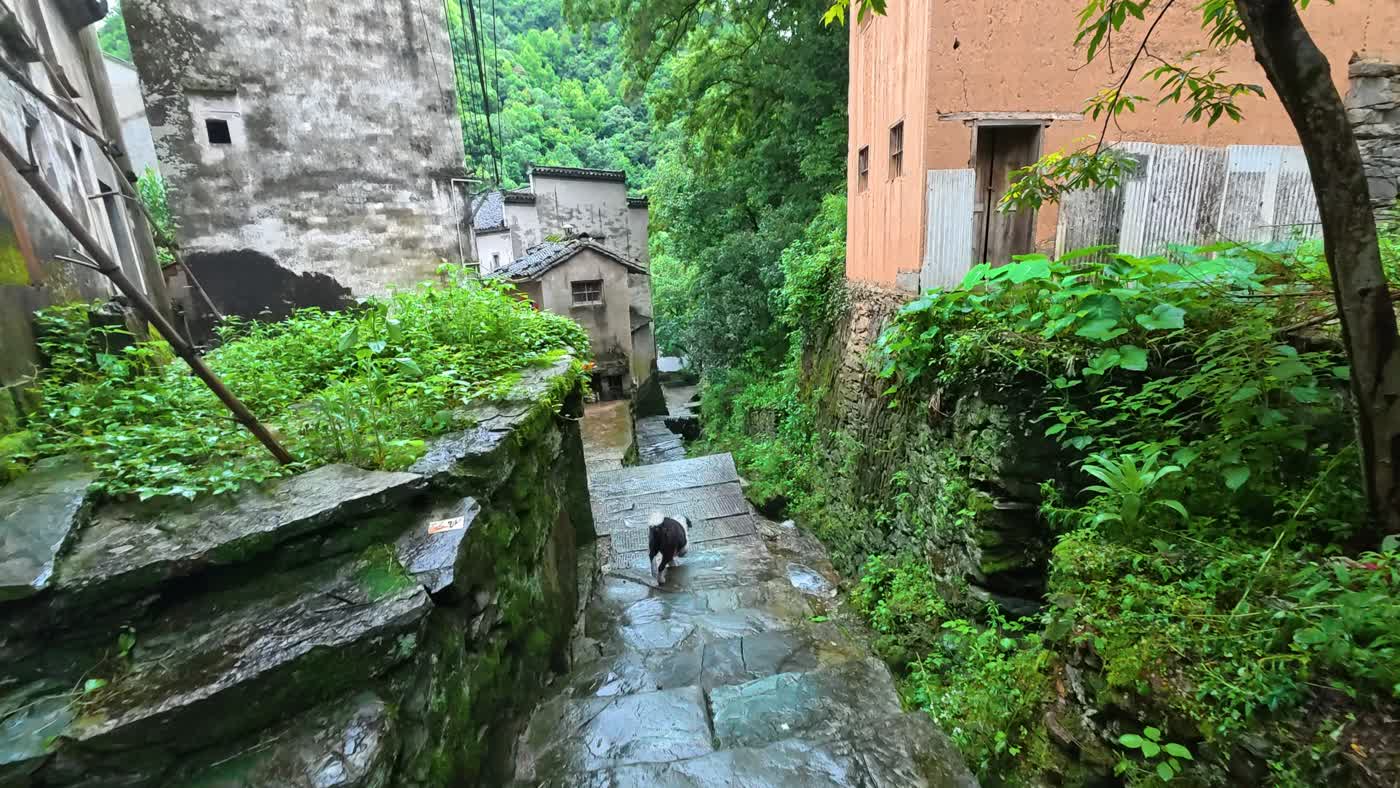
More than a hundred traditional houses survive, built in a mix of Huizhou brick-and-timber style and plain rammed-earth construction. Walls have weathered into uneven shades of ochre, grey and white, and the houses are packed tightly along stone-slab lanes and stairways, in places so narrow that the walls on both sides almost touch.
Carved brick, wood and stone details still appear on door frames, lintels and window surrounds, though many buildings show their age: cracked walls, sagging roofs and courtyards taken over by weeds. The village is not grand. Its appeal lies in these unpolished, lived-in details: old door towers, wooden lattice windows, earthen walls and stone foundations.
A Village Built on the Hillside
The defining feature of Wancun is the way the houses rise in tiers along the slope. Lower roofs never block the houses above, so the village reads as one continuous, layered structure: a vertical panorama rather than a cluster of courtyards.
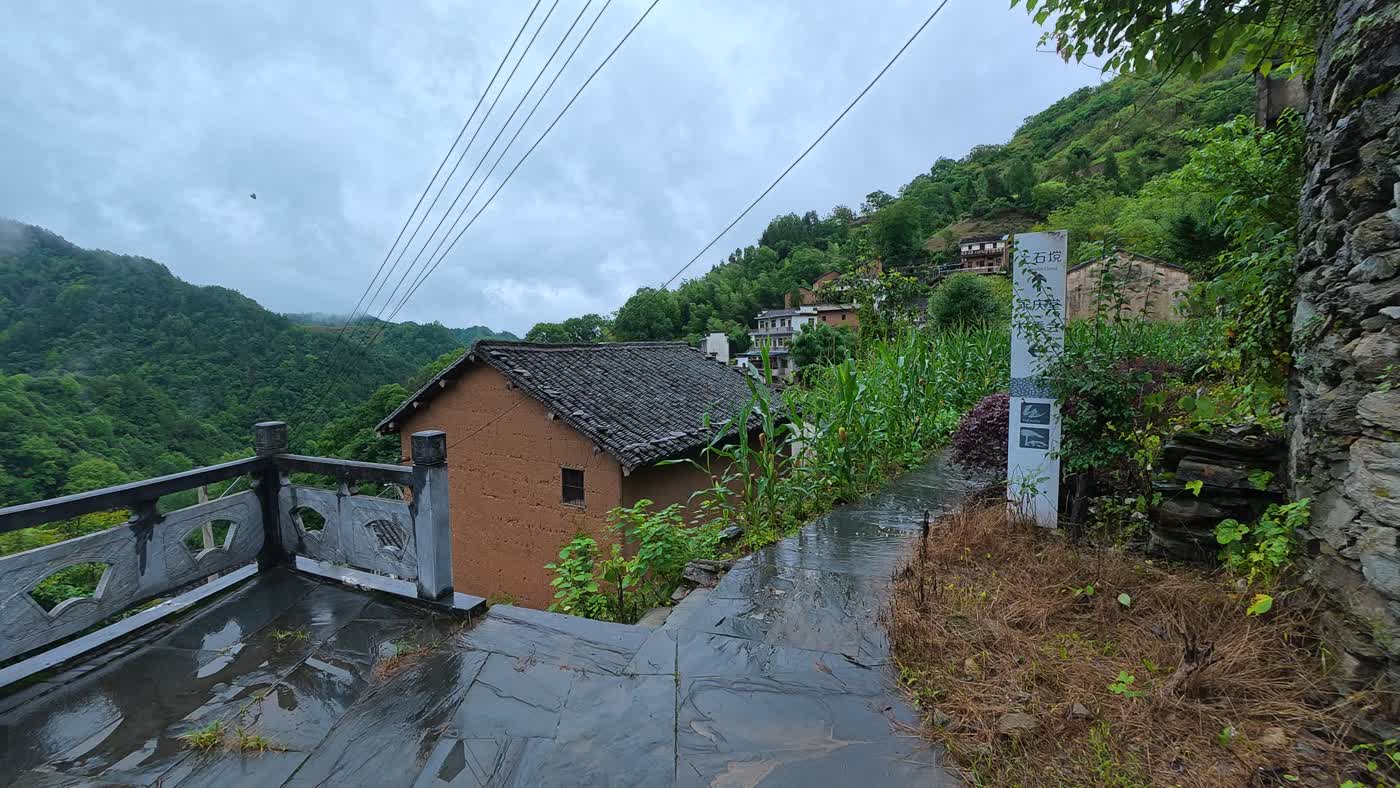
Building this way was partly a response to the terrain: flat land is scarce on the mountainside, and elevated ground avoids flash floods while leaving the lower slopes for farming. The lanes follow the same logic, switching back up the hill as stone steps and narrow passages. Expect constant ups and downs. It is a noticeably more physical walk than a flat village.
The Village Today
As younger residents have moved away, a number of houses now stand empty for most of the year. Others are still clearly lived in: laundry drying over lanes, vegetables in the courtyards, a few elderly residents moving between the houses. Some buildings remain structurally sound; others have leaking roofs, split walls and gates that no longer open.
One hamlet of the village, Shiji, was designated a geological hazard zone, and part of its population has been relocated. High-mountain villages like this face a familiar equation: difficult access and expensive maintenance push people downhill, and the houses slowly empty out.
Wancun is not a ghost village, and it is not an open-air museum either. Visitors should stay on the public paths and open lanes, keep noise down, and never enter private houses or walled courtyards without permission.
Walking Through the Village
Wancun rewards a slow walk. Enter from the village road and work your way upward along the main lanes, passing old houses, stone steps and the tighter alleys, until you reach the higher quarters where the valley and the surrounding mountains open up.
Surfaces underfoot include:
- Concrete village road on the approach
- Stone-slab paving in the lanes
- Stone steps between levels
- Very narrow alley sections
- Steep sloped passages
After rain, the stone slabs and steps get slippery. The lanes are steep in places, so wear shoes with real grip rather than hard or smooth soles. Walking only the main route takes about an hour; if you stop to photograph the lanes and the hillside views, plan for two or more.
Is It Worth Visiting
Wancun is not a developed tourist site. There are no ticket gates inside the village, no rows of souvenir shops, and no restored show street. Its value is the combination of hilltop setting, layered village form, traditional houses and a genuine living environment.
It is a good match for:
- Travelers who prefer traditional villages to commercialized scenic areas
- Anyone interested in Huizhou architecture and vernacular buildings
- Photographers: the layered rooftops are the signature shot
- People who enjoy quiet, slow walks in mountain villages
- Visitors curious about rural change and village depopulation
If you are looking for restaurants, hotels and staged performances, Wancun is not that kind of place. If what you care about is the village itself, its form, its buildings and its atmosphere, then it is well worth the drive up the mountain.
Visiting Tips
- The access road is narrow with many bends, so drive slowly and carefully.
- Lanes are steep with many steps; wear non-slip walking shoes.
- Stone paths are slippery after rain; slow down.
- Families still live in the village: keep noise low and do not enter houses or courtyards.
- Mountain weather changes fast; bring rain gear if you plan a longer stop.
- There are no shops or restaurants in the village, so bring water and food. A few guesthouses exist, but they stay shut unless you call ahead to book.
Filming Notes
| Item | Details |
|---|---|
| Location | Wancun Village, Changxi Township, Shexian (She County), Huangshan City, Anhui Province |
| Village type | Hillside traditional village; Huizhou architecture and rammed-earth houses |
| Highlights | Stacked hillside houses, rammed-earth walls, stone-slab lanes, Ming and Qing dwellings |
| Suggested walking time | About 1 hour for the main route; longer for photography |
| Difficulty | Moderate; steep lanes and many steps |
| Commercialization | Low. No shops or restaurants; a few guesthouses that only open if booked by phone in advance |
Two other villages work as a longer trip from here: Zhaji, a valley settlement with forty stone bridges, and Yangchan, where 367 rammed-earth houses stack up a cliff.
Written from a single visit and the county’s public records. Paths, buildings and access conditions change over time, so always treat what you find on the ground as authoritative.