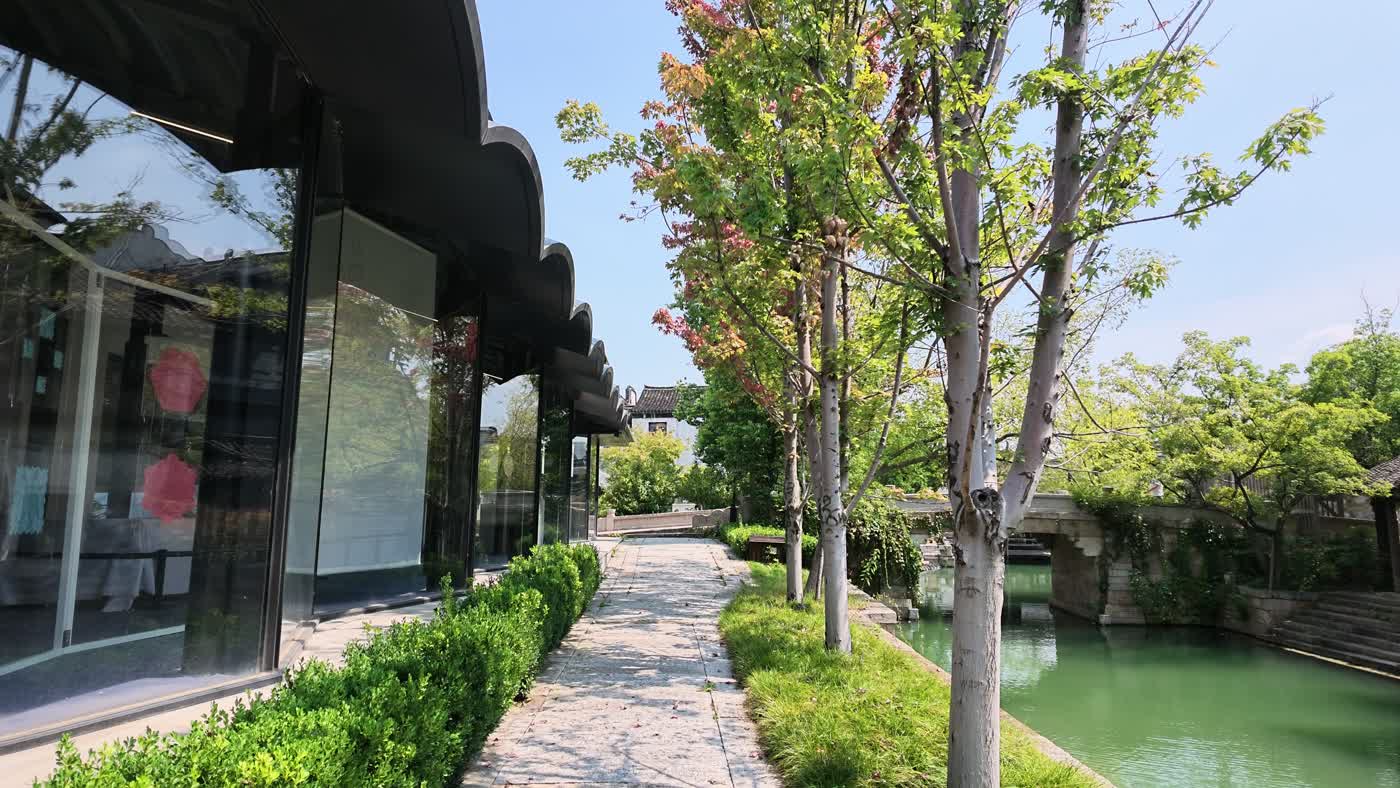
Puyuan (濮院) is the first ancient town the Grand Canal passes after leaving Jiaxing, and one of the strangest and most interesting water towns in the Yangtze Delta. Puzhen has been a textile town for centuries and is today one of China’s largest knitwear centres, so when the local government rebuilt the old quarter it did not aim for a museum piece. It branded the result a “fashion ancient town”: whitewashed lanes and stone bridges on one side, black steel and glass facades on the other.
The scale is the other surprise. The town spreads across a large site with several distinct quarters, and on a weekday you can walk for half an hour without meeting another visitor.
On-Site Video Record
The film below is a continuous first-person walk through Puyuan, following the lanes from the outer quarters towards the water street and the temple. No narration, no music: just the sound of the place.
Player not loading? The same walk is on YouTube.
Where It Is and How to Get There
Puyuan sits in Tongxiang, Jiaxing, Zhejiang, about an hour by car from Hangzhou and 1.5-2 hours from Shanghai. The nearest high-speed rail station is Tongxiang; from there a taxi takes 30-40 minutes (around CNY 50), or bus 游3 runs to the entrance for CNY 2 in about 40 minutes.
By car, navigate to the Puyuan Fashion Ancient Town car park; parking is CNY 10-20 per day, with an overflow multi-storey car park opposite on holidays.
A Water Town Built for the 2020s
It is worth being clear about what Puyuan is: this is not a preserved Ming-Qing village like Zhaji or a hillside settlement like Wancun. It is a large, deliberately designed water town, built on the bones of an old textile town and finished to a very high standard. Lanes are laid in neat stone, bridges are new but shaped by old rules, and courtyards are planted with single specimen trees.
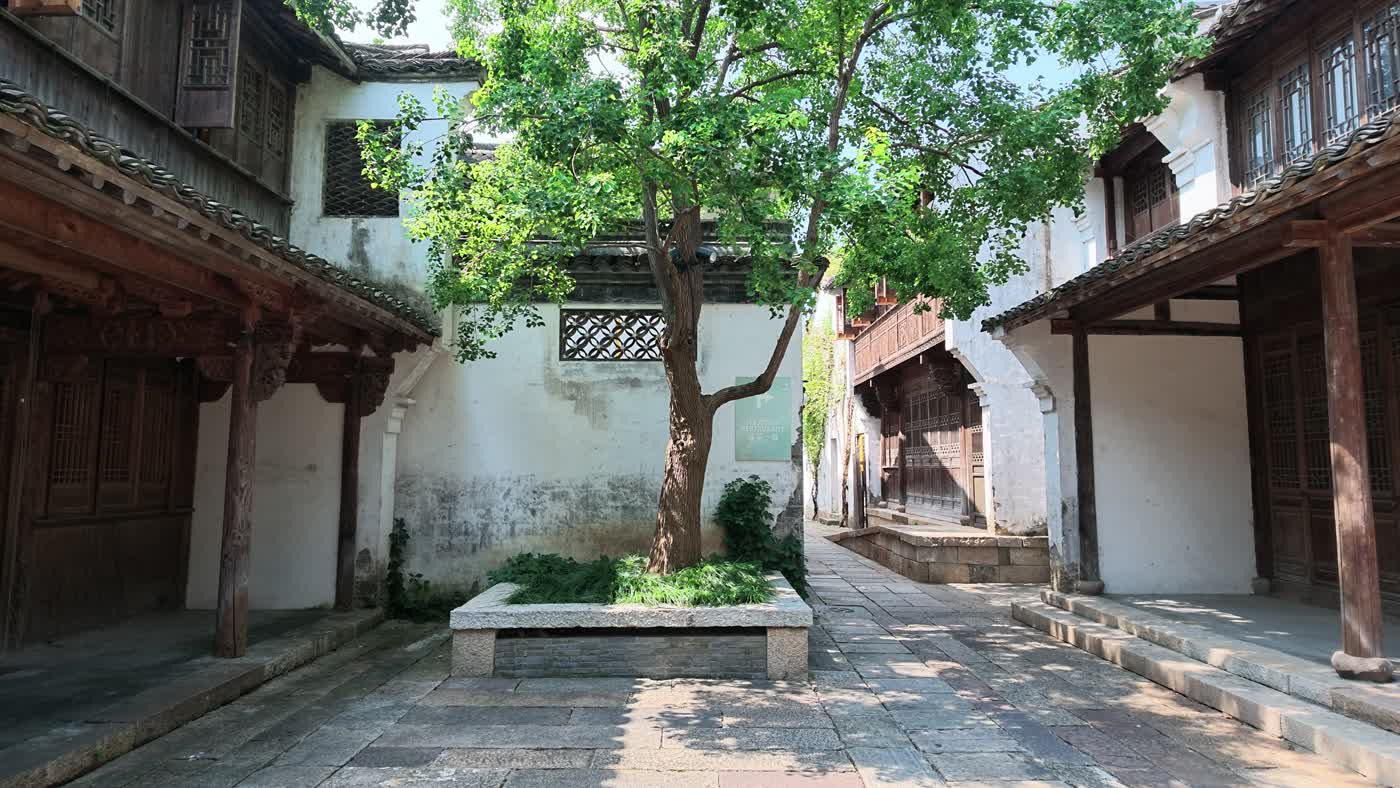
What makes it interesting is the collision. Within a few minutes you walk past carved timber window screens and then a black glass shopfront; a stone balustrade ends at a concrete colonnade. Some visitors find this thrilling, others find it artificial. Either way it is not boring, and it is very photogenic.
Architecture: Old Forms, New Materials
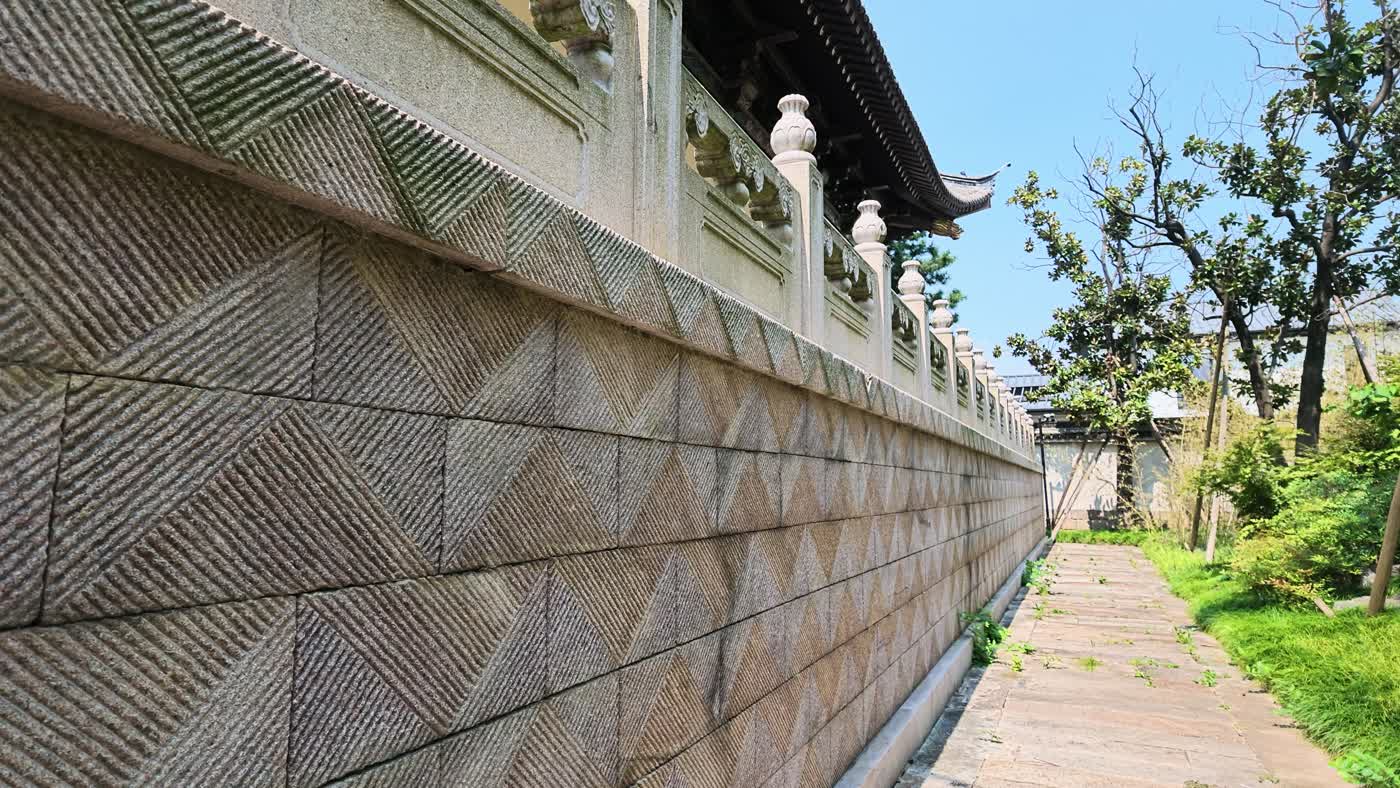
The builders clearly studied Huizhou and Jiangnan precedents. You will see stepped horse-head gables, whitewashed walls streaked by rain, lattice windows in dark timber, and walls of diamond-patterned stone blocks laid with visible craft.
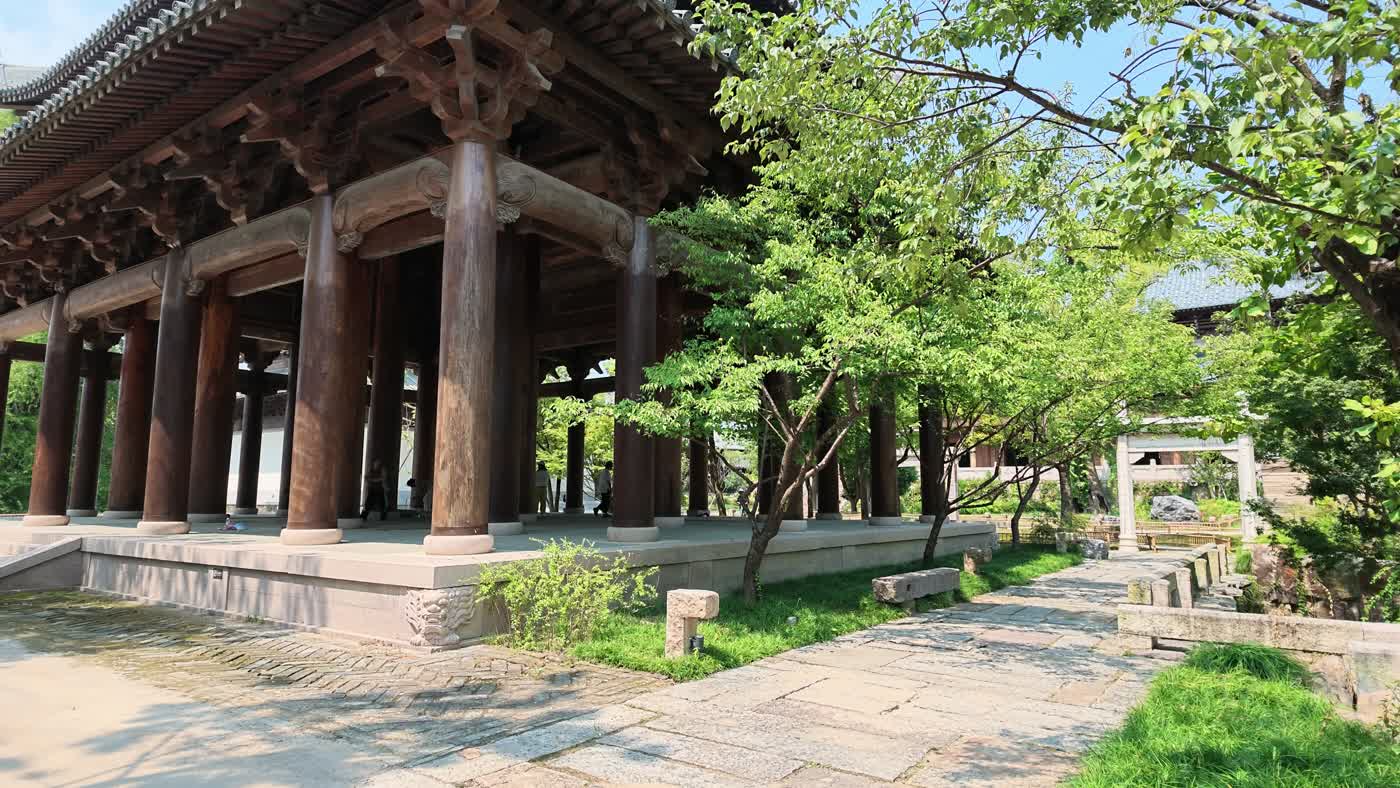
The larger halls go further: thick round columns, deep eaves, bracket sets, and stone platforms raised above the lanes.
The Lanes and the Water Street
The heart of the walk is the lane system. Narrow passages between high white walls open without warning onto a gate, a bridge, or a stretch of water. Doorways are hung with vines; door frames carry carved lintels; in places the lanes are barely two people wide.
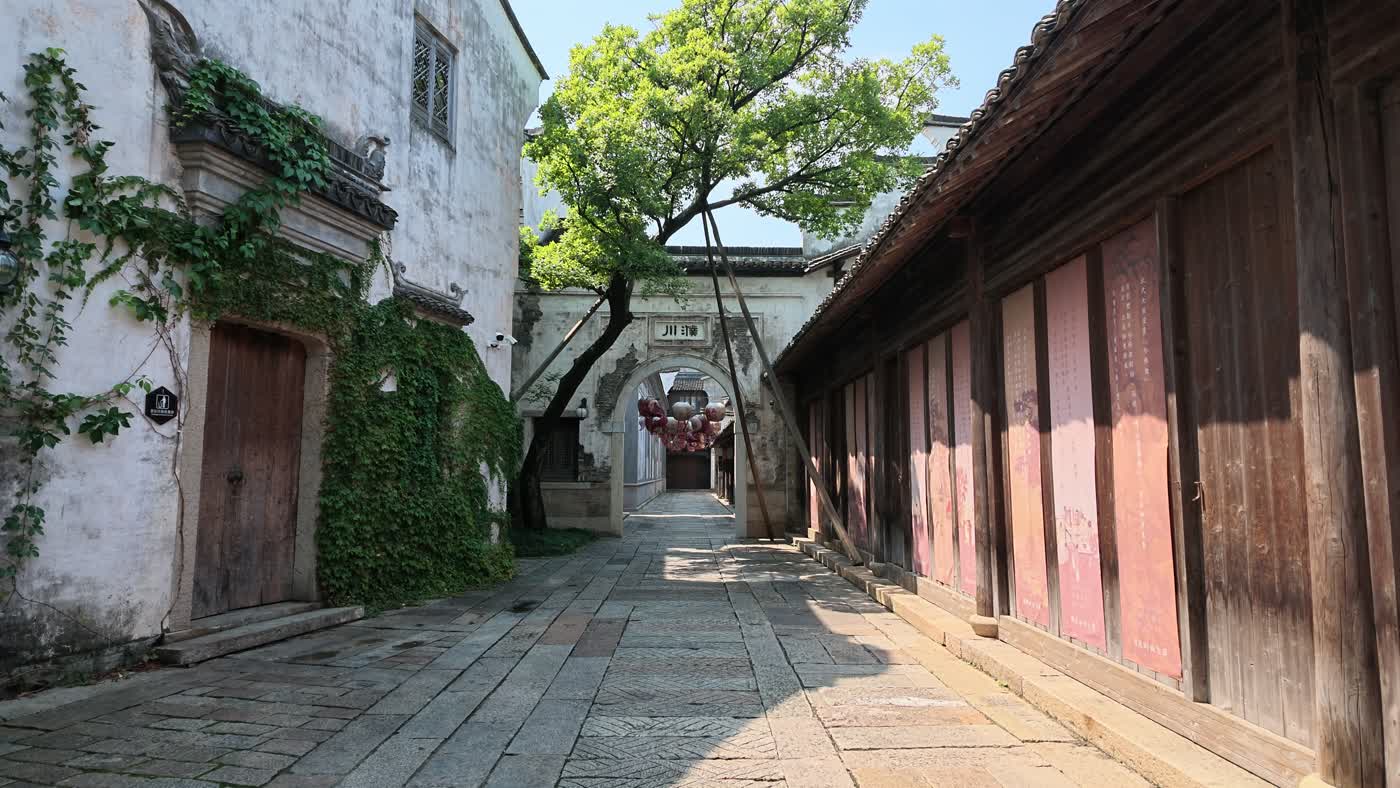
The water street is the social centre: boats, teahouses, snack stalls and, at night, lit bridges and reflections. If you only have an hour, walk the water street and one loop of lanes; the rest of the town is quieter residential-style quarters.
What to See
- Fushan Temple (福善寺): the town’s oldest element, with a ginkgo said to be nearly 900 years old and planted by the founder and his bride; it turns gold in late autumn.
- Shufang Garden (漱芳禅园): a small classical garden that releases mist every few minutes; the most photographed corner of Puyuan.
- Beigeng Tower (北更楼): climb it for the only elevated view over the roofs and canals.
- Water Street (水街): boats, teahouses, snack stalls; busiest at dusk.
- Wool Museum (毛线博物馆): the town’s industrial identity in one room; Puyuan is China’s knitwear capital.
The Evening Programme
Puyuan is built for after dark. Molten-iron throwing (打铁花), a large-scale staged show, lantern parades and lit boat rides run through the evening, and the lanes are strung with lights. If you can only visit once, arrive in the afternoon and stay until the lights come on.
Food and Local Specialities
Snacks cluster around the water street and the older snack quarter: deep-fried radish cakes (油墩子) for a few yuan, osmanthus rice cakes, braised mutton noodles, shaomai and stinky tofu. Local specialities to take home are knitwear (obviously) and Tongxiang chrysanthemum tea.
Is It Worth Visiting
Puyuan works if you want a beautiful, calm, highly walkable water town with modern comforts, good food, decent night lighting and very few crowds. It is excellent for photography, for families, and for anyone who has already seen Wuzhen and Zhouzhuang and wants something less packed.
It is less suitable if your interest is authenticity: the fabric is new, the shops are curated, and there is no lived-in village life behind the walls. For that, go to Zhaji in Anhui or the abandoned villages of Zhejiang instead. Puyuan is a designed experience, and honest about it.
Practical Information
| Item | Details |
|---|---|
| Location | Puyuan Fashion Ancient Town (濮院时尚古镇), Puzhen Town, Tongxiang, Jiaxing, Zhejiang |
| Type | Large purpose-built water town; Jiangnan lanes, canals and bridges with contemporary architecture |
| Ticket | CNY 120 adult; CNY 60 for students, children 1.2-1.5 m and visitors aged 60-69; free for under 1.2 m and over 70. Free entry if staying inside the town |
| Opening hours | 09:00-22:00 (09:00-22:30 in summer) |
| Boat ride | CNY 60 per person, about 25 minutes; private boat CNY 500 for up to 10 |
| Getting there | High-speed rail to Tongxiang, then 30-40 min by taxi (about CNY 50) or bus 游3 (CNY 2) |
| Suggested time | 3-5 hours by day; add the evening for the night programme |
| Crowds | Low on weekdays; unusually quiet for a water town of this size |
Visiting Tips
- Come on a weekday if you can: the emptiness is the luxury here.
- Enter in the afternoon and stay for the night programme; the town is at its best after 18:00.
- Buy tickets online; combos with the boat ride are cheaper than buying separately.
- The boat ride takes about 25 minutes, best at dusk when the lights come on.
- Wear comfortable shoes: the site is large and the paving, while smooth, is stone throughout.
- Staying inside the town waives the ticket, which makes a two-day visit genuinely good value.
- Bring a light layer; the water street is exposed and breezy in the evening.
Puyuan pairs well with Wuzhen and Xitang, both within an hour, and with Tongxiang’s textile markets if you are curious about where the “fashion” in the name comes from. For the opposite of a planned town, Anchang in Keqiao is a working canal street where the entire 1,747 metres sit under one continuous roof, with no ticket gate at either end.
If you want another water town in the same region, Dongpu in Shaoxing is smaller, older, and free to enter.
Written from a single visit to the site and public records. Ticket prices, show times and boat schedules change seasonally, so confirm before travelling.