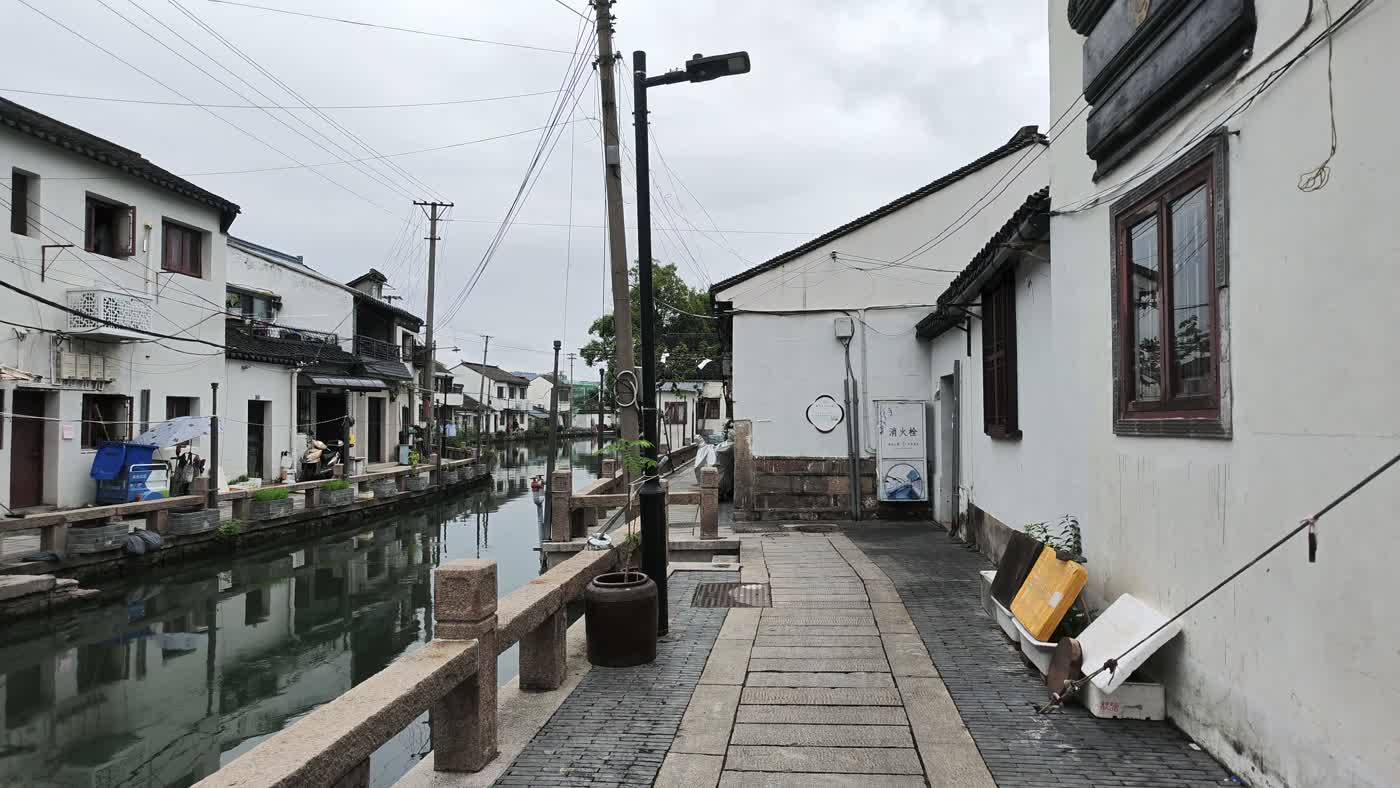
In 825 the poet Bai Juyi was posted to Suzhou as prefect. The canal from Changmen to Huqiu had silted up and the path beside it was mud, so he had the channel dredged and the silt piled on the north bank and paved. That embankment became Shantang Street.
Twelve hundred years later the street is 3.7 kilometres long, still runs beside the same canal, still free to walk, and still busy with people going about their day. It is the longest continuous stretch of old canal-side street left in the city.
On-Site Video Record
A walk along the middle and western sections on an overcast weekday, from the quiet end towards the crowds. Only the sound of the street.
If the embed fails, the original is on YouTube.
A Street Made of Dredging
The engineering was modest and the result was permanent. A canal for boats, a road on the spoil, and houses built along the north side facing the water. The pattern that came out of that work, water and street running parallel with homes between them, is the same one you see in Suzhou old town today.
People also call it Baigong Dyke, after Bai Juyi. At the east end there is a small memorial hall to him, and near the middle a stele pavilion carries a Qianlong inscription praising the street. Shantang is listed as a historic and cultural street, a national 4A site, and a heritage point on the Grand Canal.
Getting There
Take metro Line 2 to Shantang Street station and leave by exit 3. The entrance is a few minutes on foot. From Suzhou railway station it is one stop, which makes this the easiest old street in the city to reach.
Entry is free and there is no reservation. If someone at the entrance offers to sell you a ticket for the street itself, walk past them: the street has never had one.
Three Sections, Three Different Streets
The street changes character along its length, and that is the main reason to walk all of it rather than stopping at the entrance.
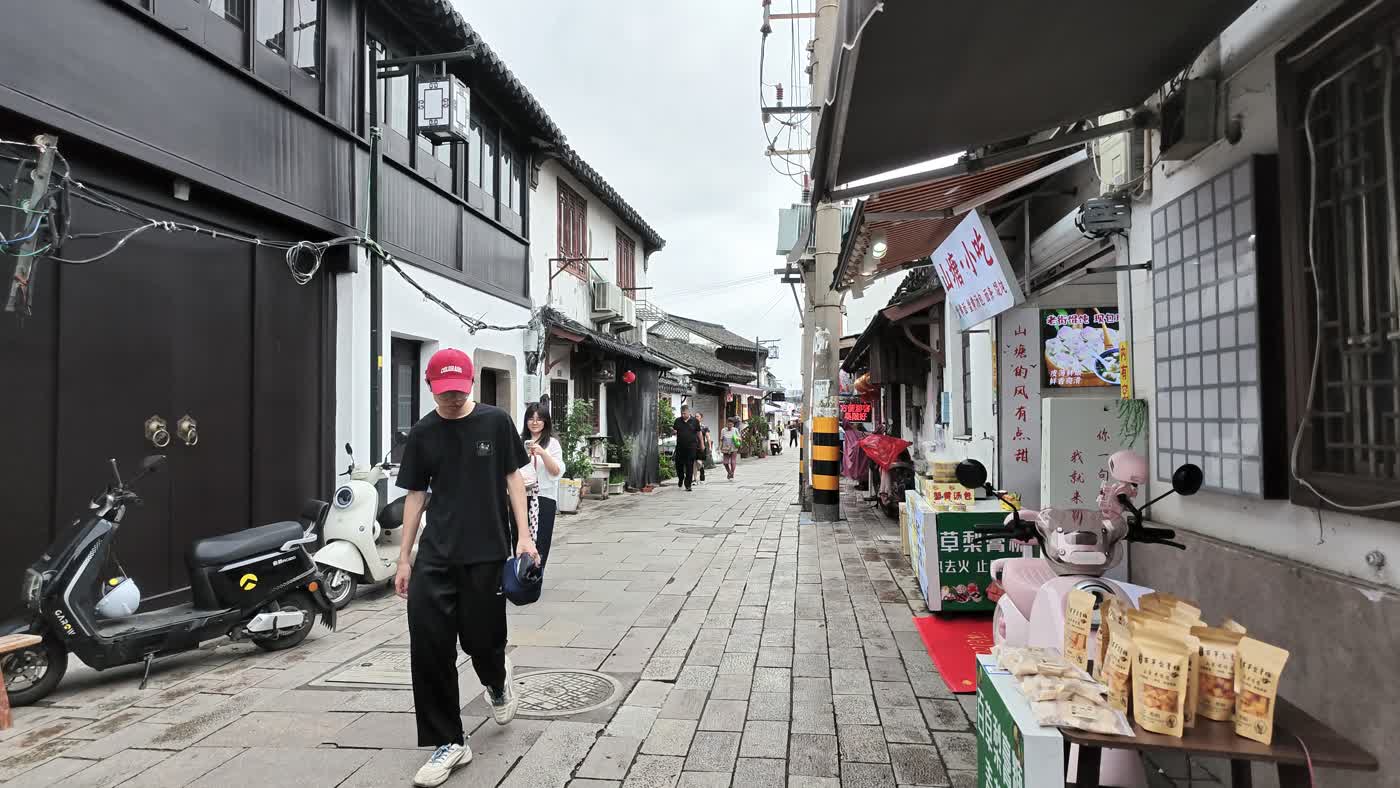
At the west end, beyond Xinmin Bridge, it is a residential lane. Doors open onto the paving, laundry hangs above head height, and the shops are for the neighbourhood. There is almost no tourism here at all.
The middle stretch turns commercial. Snack shops, banners, roast meat counters, seasonal produce, and a steady flow of locals buying dinner.
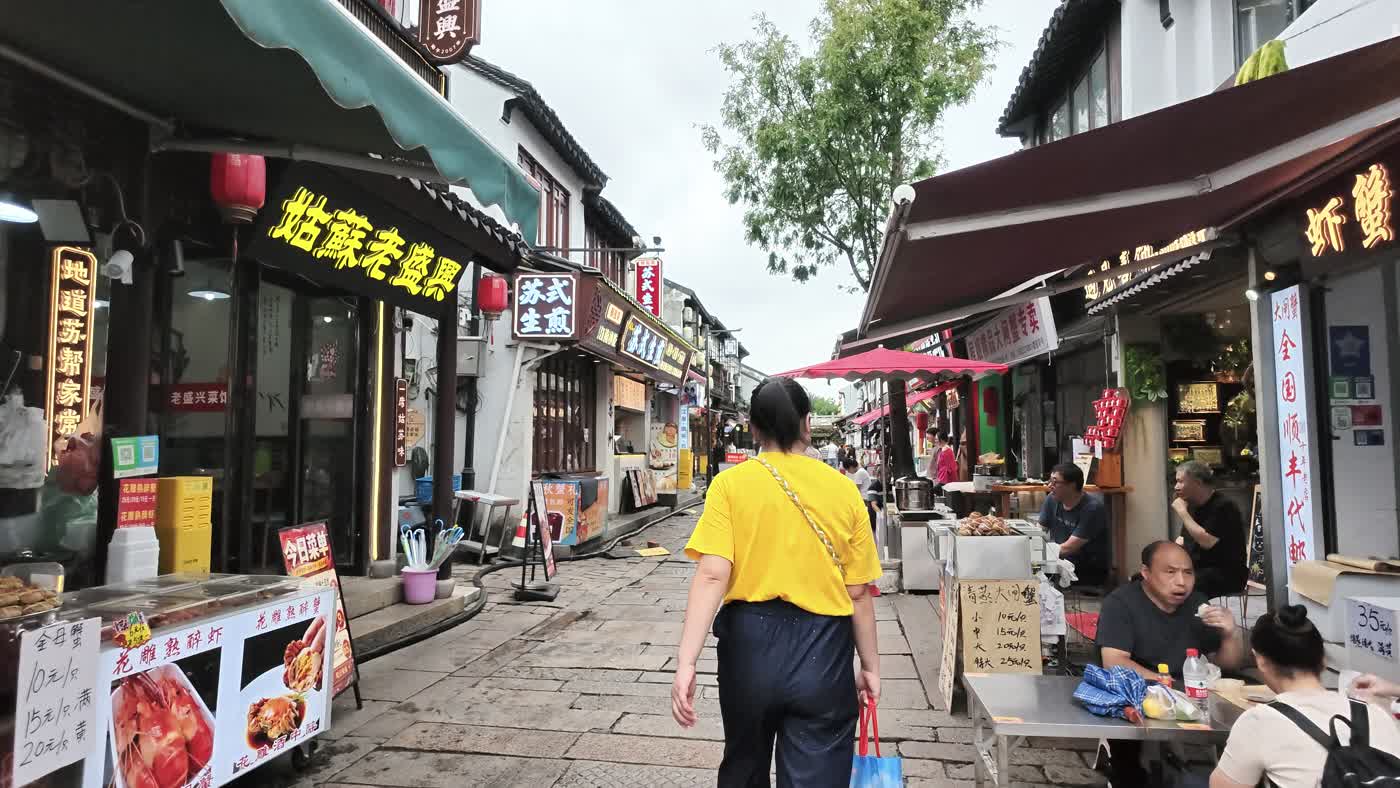
The east 360 metres, closest to Changmen, is the part on postcards. Yuhantang mansion, the old stage, the densest shops, and the crowds.
The Bridges
Seven stone bridges cross the canal and eight more stand along the street, most of them Ming or Qing. Tonggui Bridge, a granite arch, is the classic photograph: the arch and its reflection make a full circle when the water is still. Xinmin Bridge marks the shift from tourist street to residential street and gives the best long view down the canal.
A local name for the street is Qili Shantang, seven li of Shantang. Folklore says seven stone lions were placed at seven bridges to hold down the dragon-shaped canal, a story told with more conviction by tour guides than by historians.
What to See
- Yuhantang (玉涵堂): the former residence of Ming minister Wu Yipeng, the largest old mansion outside the city wall. CNY 30, and worth it for the brick carving.
- The old stage: free pingtan and kunqu performances at intervals; the singing carries down the street.
- Bai Juyi memorial: a small hall at the east end recording the dredging that created the street.
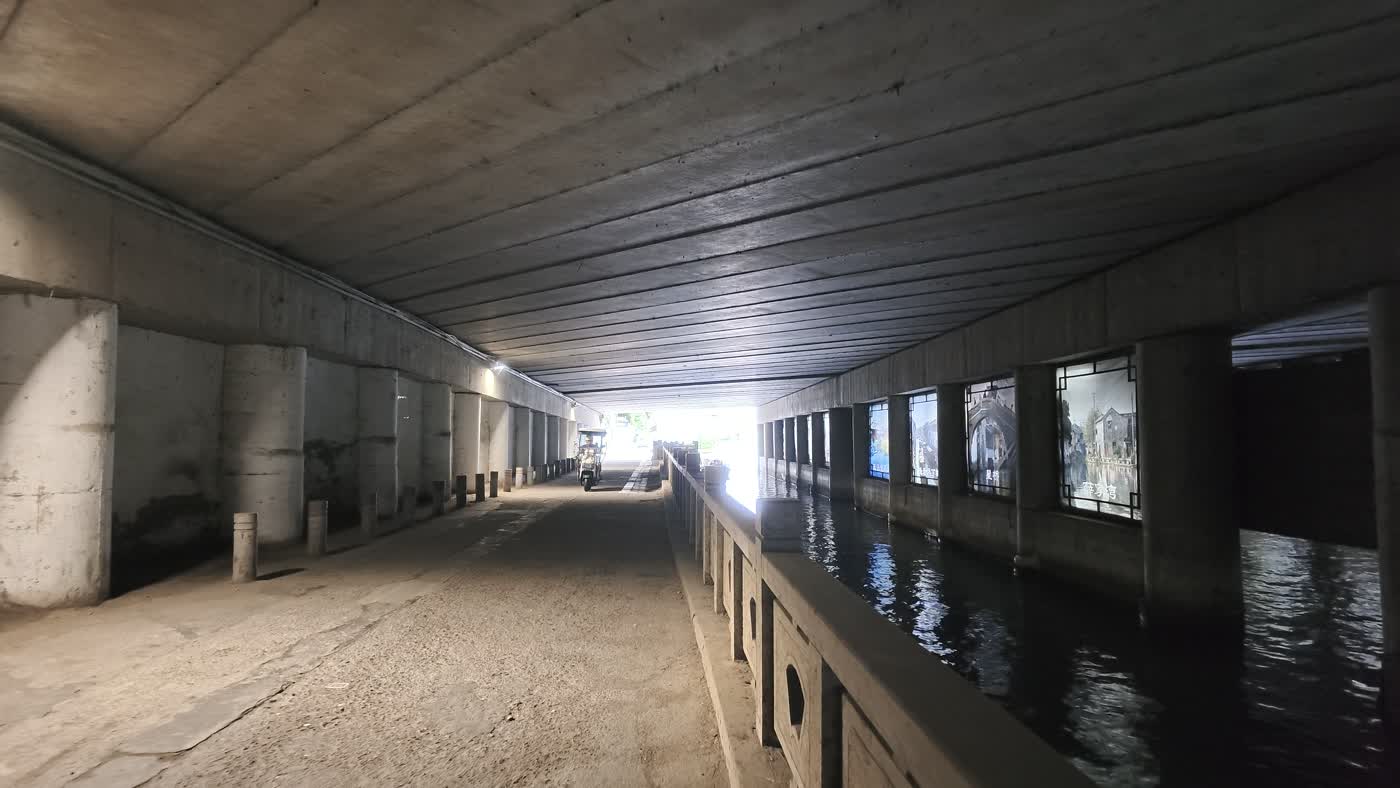
- The canal walkway under the road bridges: the path ducks under each crossing, with old photographs of Suzhou on the walls.
Food
Two kinds of eating here. The famous restaurants, Songhelou and Deyuelou, serve full Suzhou dishes. The snack shops are cheaper and more interesting: oil-fried rice balls at Rongyanglou, plum cakes, begonia cakes, crab-shell pastries, and sweet red-bean gruel. Old pastry names like Huangtianyuan and Caizhizhai have shops on the street.
The Evening
Lanterns come on around 17:30, and the canal turns into a strip of reflections. If you only have one evening in Suzhou, this is where to spend it. Boats run until later at night and cost about CNY 60.
Is It Worth Visiting
Yes, with one adjustment. The first 360 metres are as commercial as any old street in China, and at weekends they are shoulder to shoulder. Walk west to east instead: start at the quiet residential end, pass through the market stretch, and finish at the crowded core just as the lights come on.
Because entry is free, it is a low-risk stop. It also sits between two other Suzhou anchors, Huqiu at the west end and Changmen at the east, so it works as a connecting walk rather than a destination on its own.
Practical Information
| Item | Details |
|---|---|
| Location | Shantang Street and Shantang Canal, Gusu District, Suzhou, Jiangsu |
| Length | About 3.7 km, from Dujiaqiao near Changmen in the east to Wangshanqiao at Huqiu in the west |
| Entry | Free. The street is a public road and is open around the clock |
| Metro | Line 2 to Shantang Street station, exit 3, then 3-5 minutes on foot |
| Paid extras | Yuhantang mansion CNY 30; combo tickets about CNY 45; canal boat CNY 50 by day, 60 at night |
| Busiest part | The first 360 metres at the east end, and the snack street in the middle |
| Lights on | Around 17:30, when the lanterns come on along the canal |
| Time needed | 2-3 hours, or a full evening if you walk the whole length |
Visiting Tips
- Enter from the west end if you want the quiet half first.
- Wear shoes with grip; the stone paving is polished and slippery after rain.
- Skip anything sold at the entrance as a street ticket.
- Eat in the middle section rather than the eastern core, where prices are highest.
- Stay for the lanterns; the street is at its best after 17:30.
- If you take the boat, board at the Bai Juyi wharf for the longest stretch of canal.
For a smaller, older water town in the same region, Dongpu in Shaoxing is an hour away by rail; Puyuan is the newer, larger alternative north of here. Anchang, in Keqiao, is the covered-corridor version of the same idea: 1,747 metres of street under one continuous timber roof, free to walk.
Written from a walk along the street, with details checked against public records.