Changkeng sits in a fold of the mountains in Huangshan, Anhui, at the end of a road that narrows until it stops. The name means long pit, and the village is exactly that: a narrow slot between two ridges, houses on both slopes, and the ridge line closing the sky at either end.
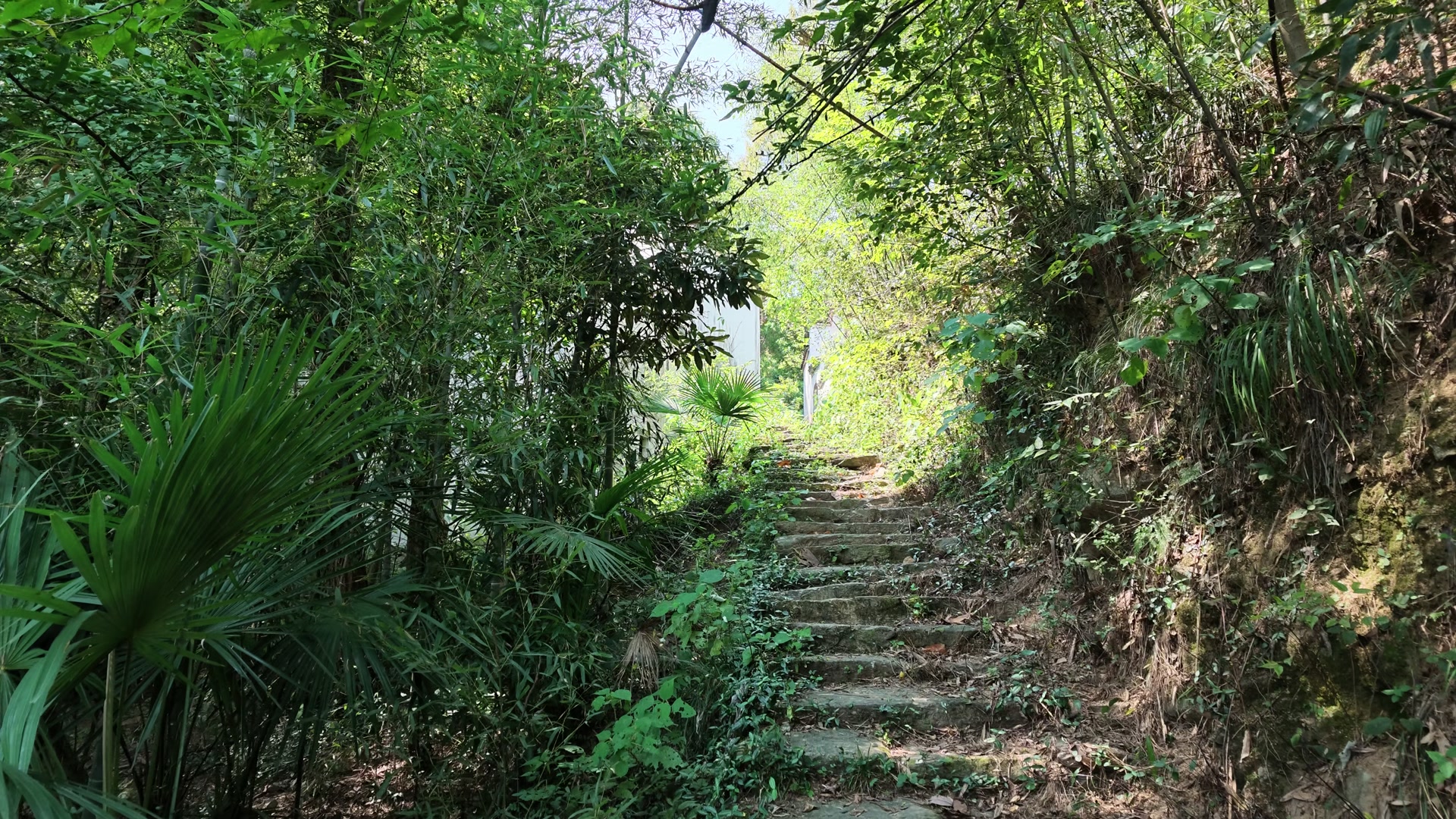
One street runs through it, and that street is a staircase. A hundred metres of stone slabs, laid end to end, from the bottom of the village to the top. Every other lane in Changkeng is stone too, and the unpaved side paths have been overgrown with grass.
On-Site Video Record
Thirty minutes of walking up through Changkeng in September: the lower lanes, the main staircase, the empty houses and the ridge path out of the village. Ambient sound only, no commentary.
If the embed fails, the original is on YouTube.
Where It Is and How to Get There
Changkeng is deep in the mountains of Huangshan, far enough in that the last stretch is a single-lane road. Navigation apps find it under Changkeng village. There is parking at the entrance, and entry is free: no ticket office, no gate, no opening hours.
The other way in is on foot. The Changkeng Ridge old trail runs about 7 km from Hongqin village in Xiakeng town, over the ridge and down into the village. That walk is the mountain scenery people come for.
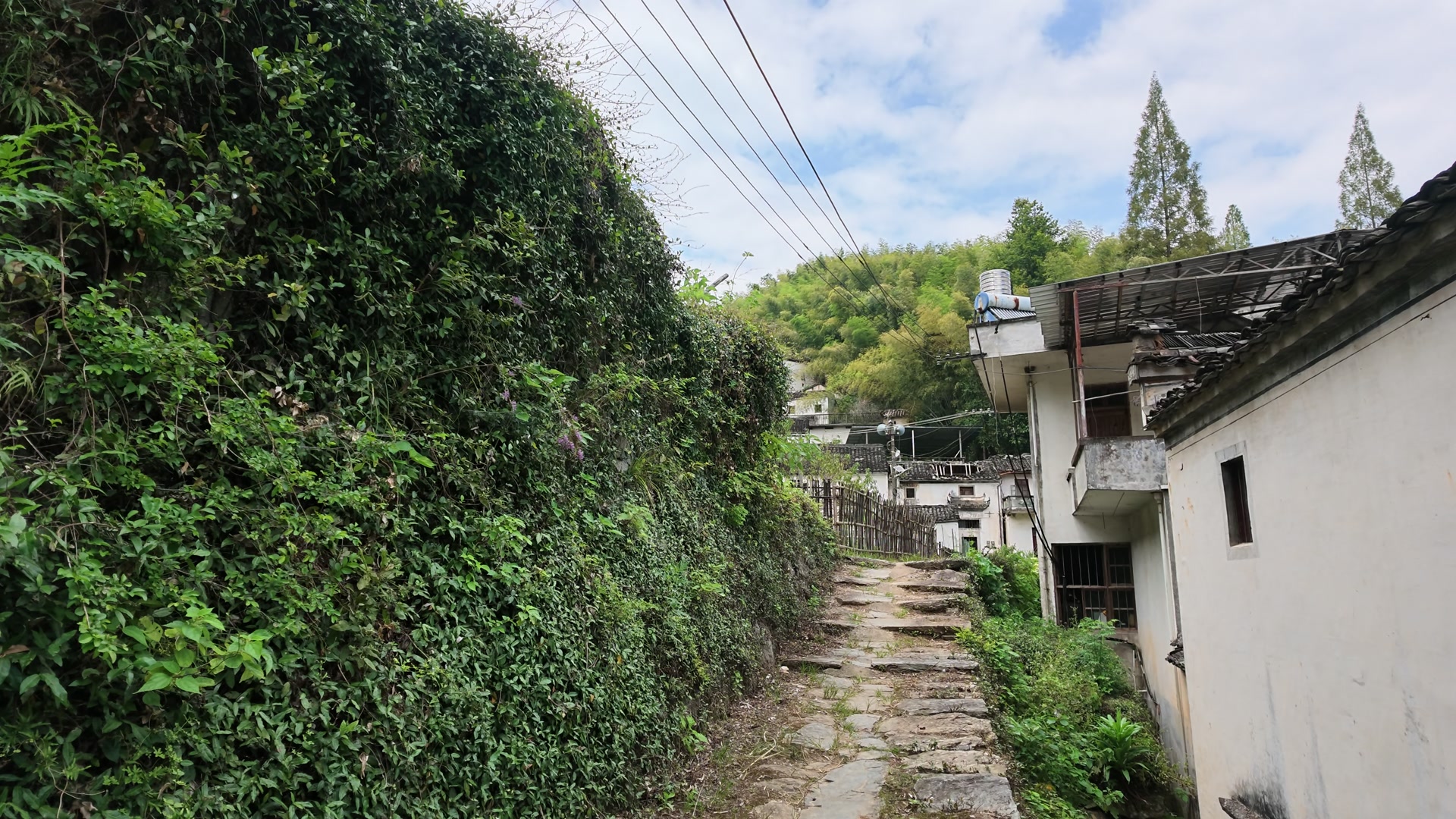
The Main Street Is a Staircase
Changkeng is built on a slope steep enough that flattening a road was never an option. What it got instead is a single flight of stone-slab steps, roughly a hundred metres long, running from one end of the village to the other.
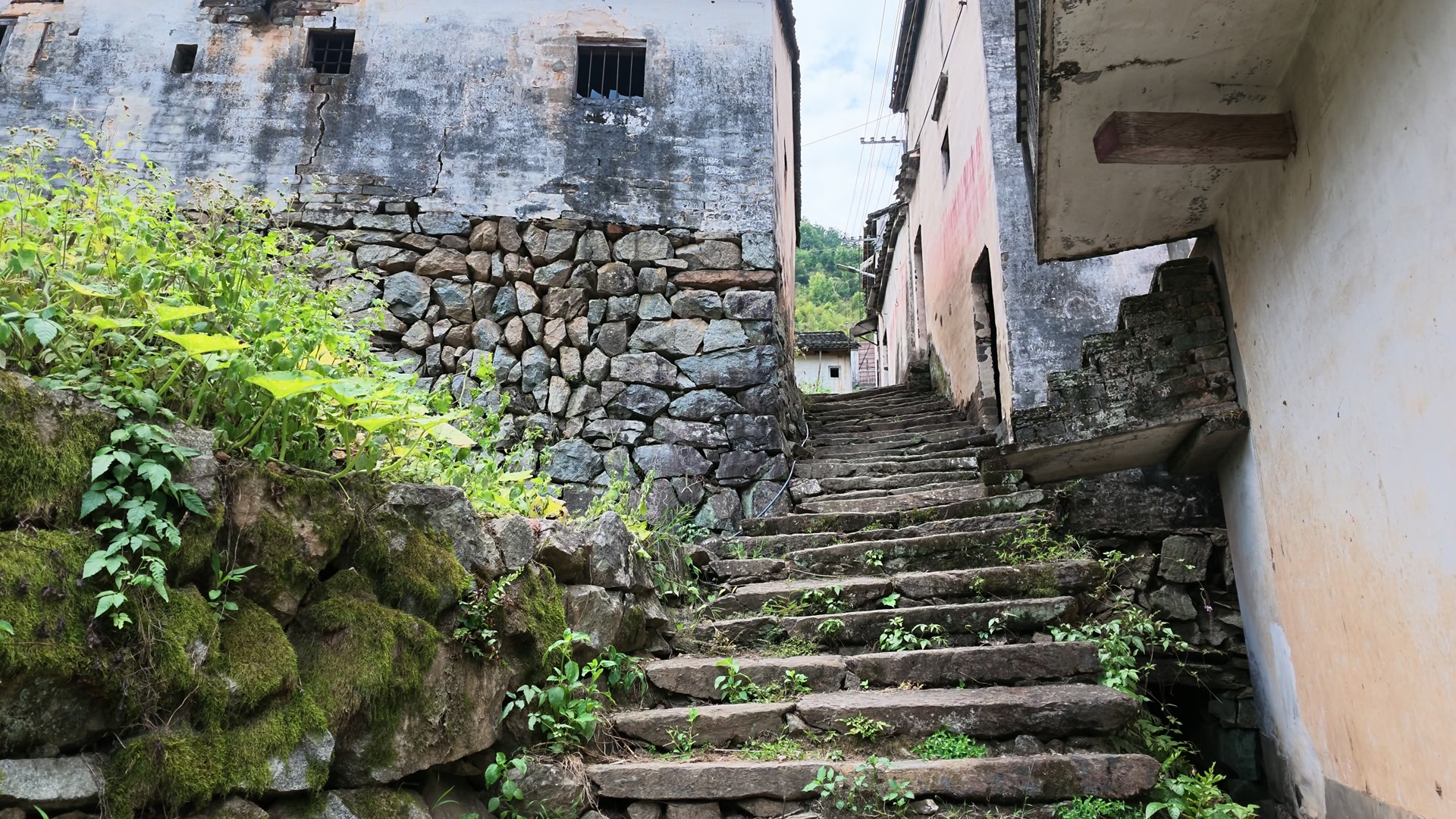
Houses sit on both sides at different levels, so the street doubles as the roofline of the row below it. Side lanes branch off and climb between the houses, and most of them are shaded by trees and bamboo that have grown back over the last twenty years.
Three Hundred Years of the Wang Clan
The village was founded by the Wang clan at the end of the Ming and the beginning of the Qing, around three hundred years ago. It is a classic single-surname Huizhou settlement centered on its ancestral hall, with houses packed tightly along both sides of the ravine.
The Wang ancestral hall still stands, along with several other clan buildings. In 2019, Changkeng was added to the fifth batch of China’s Traditional Villages.
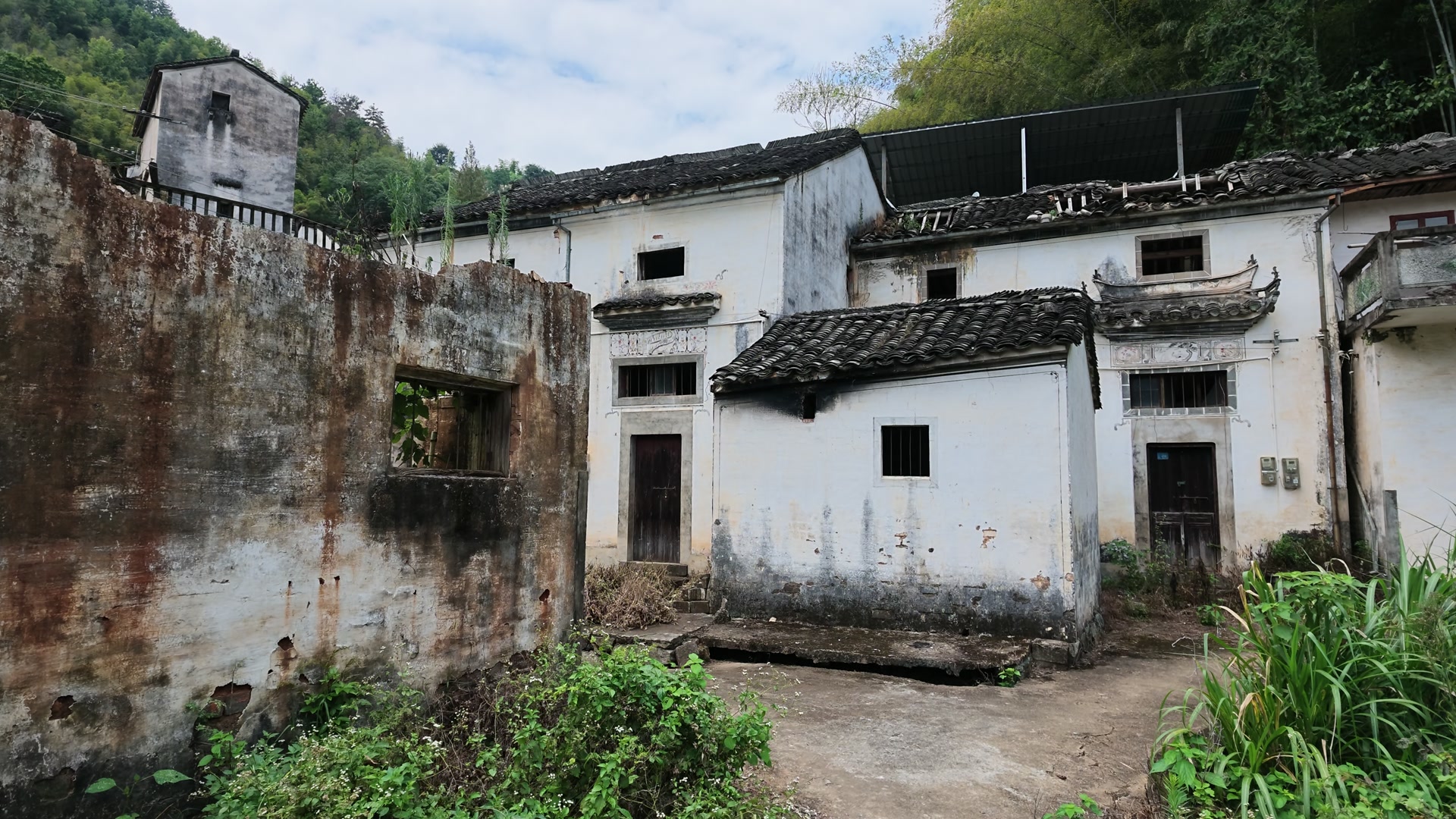
White Walls and Horse-Head Gables
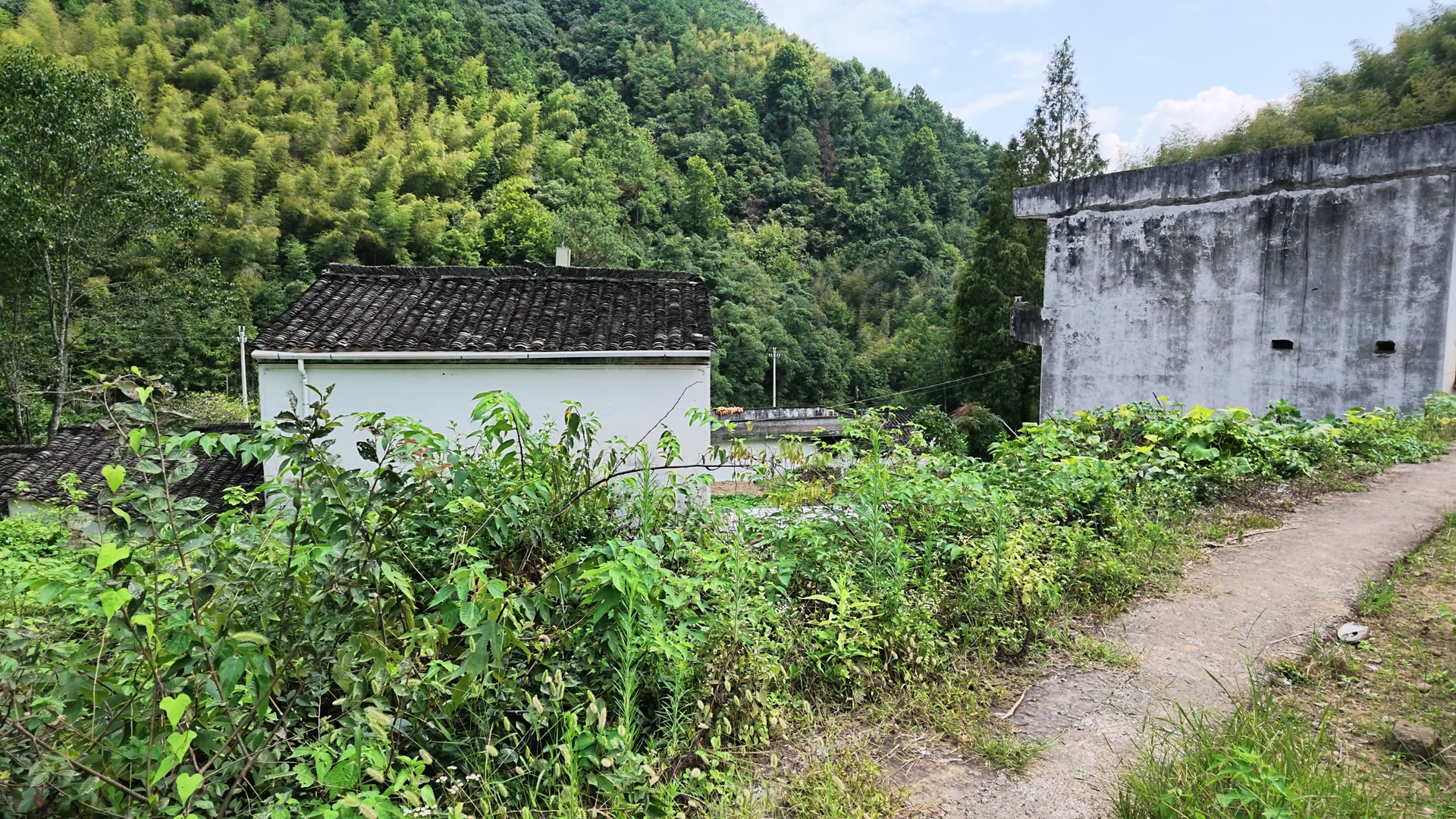
Huizhou architecture is easy to read once you know two signals. The walls are whitewashed, then streaked grey and black by rain. The gable walls step up above the roofline in stages, which is what people mean by horse-head gables. Changkeng has both, in every direction.
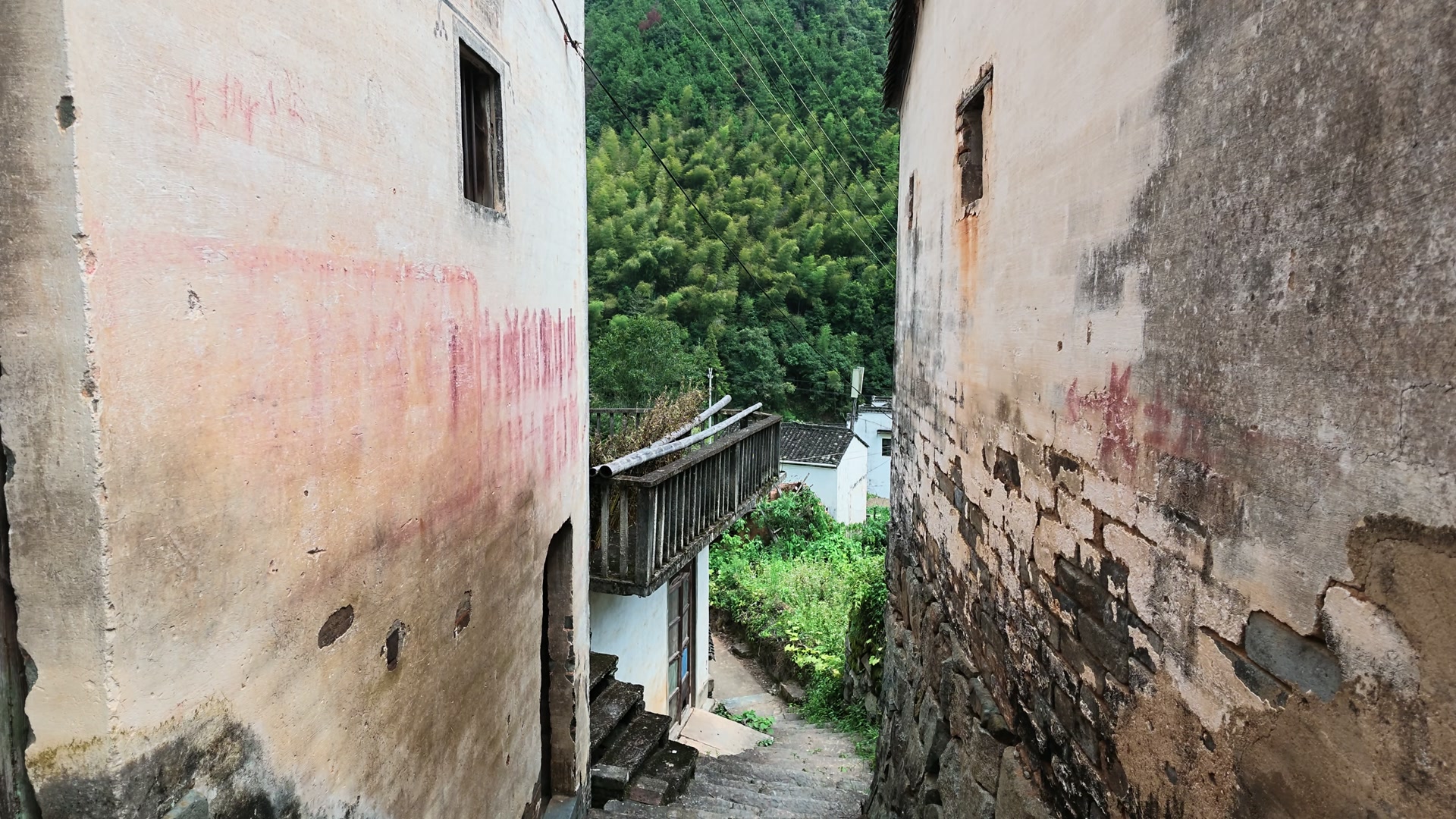
Because almost nothing new has been built, the old fabric survives: stone thresholds, timber lintels, carved brackets under the eaves, and door frames cut from single blocks of stone.
What Is Left, and Who Is Left
Almost everyone who lives here is elderly. Younger people have gone to Hangzhou and Shanghai for work, and come back for public holidays. Many have left for good. In the houses that have stood empty for years, the tiled roofs give way first and the walls follow.
You will walk past buildings that have half collapsed, right on the main street. The mix of intact white gables and half-collapsed roofs gives the lane its quiet, weathered character.
Is It Worth Visiting
Yes, if you want a Huizhou village with no ticket gate, no souvenir shops and no tour groups, where the main street is a stone staircase rather than a road. It is also one of the better places in this part of Anhui simply to walk: the lanes climb, the view opens, and there is nobody to queue behind.
Skip it if you need facilities. The village has no supermarket, no restaurant and no guesthouse. Bring water, and eat before you come or after you leave.
Practical Information
| Item | Details |
|---|---|
| Location | Changkeng village, Huangshan, Anhui |
| Type | Huizhou clan village built into a narrow mountain slope |
| Founded | Late Ming to early Qing, about 300 years ago |
| Clan | Wang |
| Status | Chinese Traditional Village, fifth batch (2019) |
| Architecture | Whitewashed walls, dark tiles, stepped horse-head gables, stone-slab lanes |
| Main street | About 100 m of stone steps from one end of the village to the other |
| Entry | Free. No ticket office and no gate |
| Facilities | No supermarket, no restaurant, no guesthouse |
| Getting there | Drive to Changkeng village; or walk in about 7 km from Hongqin village on the Changkeng Ridge old trail |
| Parking | At the village entrance |
| Time needed | One to two hours on foot |
Visiting Tips
- Bring water and food. There is no supermarket and no restaurant in the village.
- Wear shoes with grip. The slabs are polished in the middle and slick after rain.
- Walk the main staircase from the bottom up, then take the side lanes back down.
- Empty houses are not open to visitors. Some are unsafe, and the rest belong to families who are away.
- Weekends here are no busier than weekdays. The village fills up on public holidays, when families come back from Hangzhou and Shanghai.
- If you have the legs, walk out on the Changkeng Ridge trail toward Hongqin. Seven kilometres of ridge, and the best view of the valley.
Changkeng is one of several Huizhou villages in these mountains with almost no visitor infrastructure. Wancun is the most dramatic of them, built on a ridge above Changxi township, and Yangchan is the rammed-earth exception in a region of white walls.
Drawn from the on-site walk published in September 2026.