Shanxiabao sits at the bottom of a narrow valley in southern Wuyi county, where two streams meet and the hills close in on three sides. The name means “below the mountain, the Bao family”, and it is accurate on both counts: the Bao settled here first, and the village has been built into the slope ever since.
Two things make it unusual among Chinese villages that look like this. It is genuinely free, with no ticket gate and no souvenir street. And it is still lived in, though so few residents remain that the quiet of the lanes stands out immediately.
On-Site Video Record
One continuous walk through the village in late May: the entry square, the cobbled lanes, the stream bank, and the hall courtyards. Only the sound of the place.
If the embed fails, the original is on YouTube.
Where It Is and How to Get There
Shanxiabao belongs to Daxikou township in Wuyi county, Jinhua, in the mountains of central Zhejiang. The last stretch is a single mountain road with tight bends, and the drive from Wuyi county town takes about 80 minutes. There is free parking at the entrance.
By rail, get off at Wuyi North and take a taxi, which takes around an hour and costs CNY 80 to 100. Local buses do run, but only two or three times a day, so they work for arriving and badly for leaving.
A Village That Grew Out of Indigo
The settlement is old, traced back to the Song dynasty, but its wealth arrived in the Qing. In the Yongzheng period a man named Tu Guowen came from Changting in Fujian, married into the village, and started planting indigo.
Indigo was a cash crop with an industrial process attached: steeping, fermenting and settling the dye in stone vats. The Tu family built those vats, added tung oil and timber trading, and by the eighteenth century the valley was exporting colour to the rest of the province. Several of the indigo tank sites are still visible in the village.
Thirty-One Buildings and a Hall from 1741
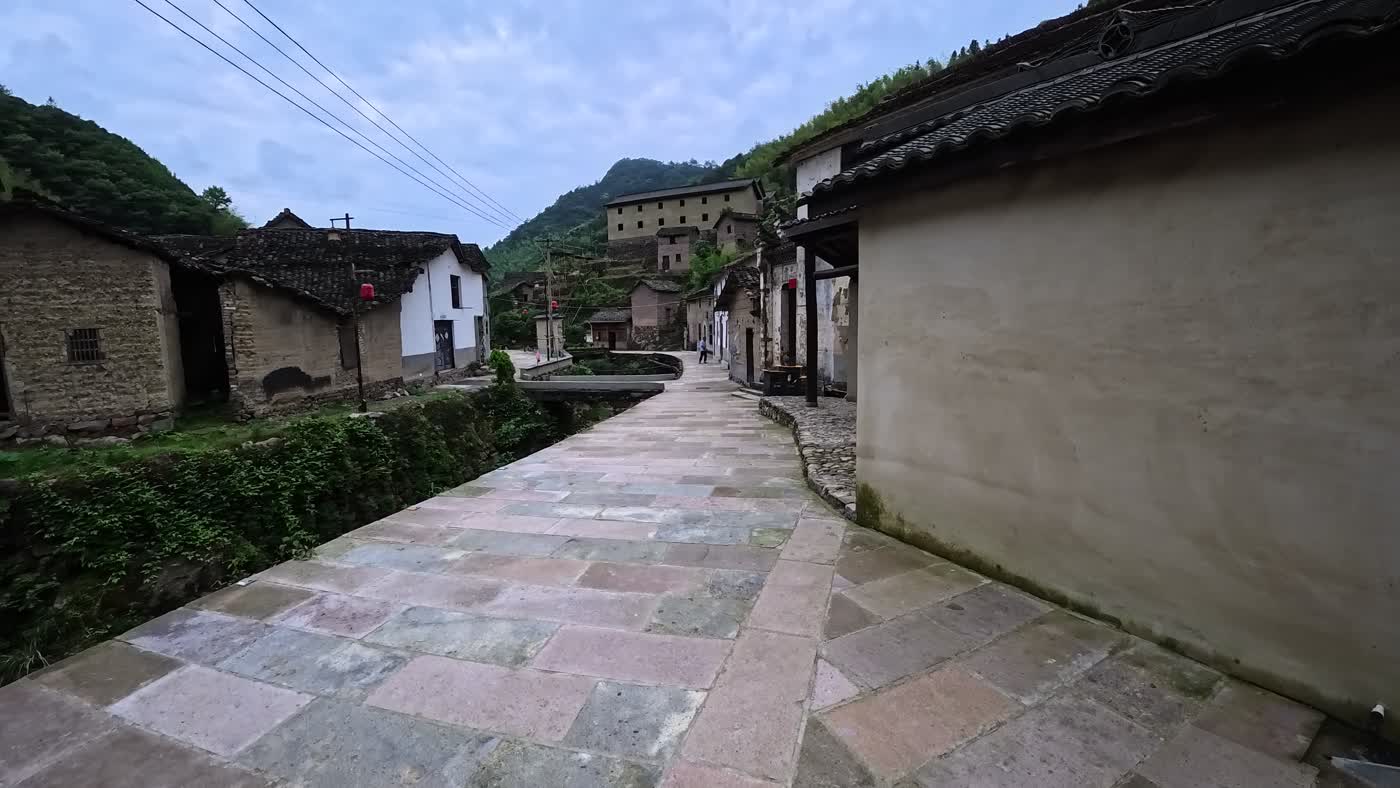
What the indigo paid for is still standing: thirty-one buildings from the Qing and the Republican period, most of them courtyard houses with stone bases, timber frames, whitewashed walls and grey tile. The lanes between the houses are paved with rounded river cobbles rather than flat flagstones.
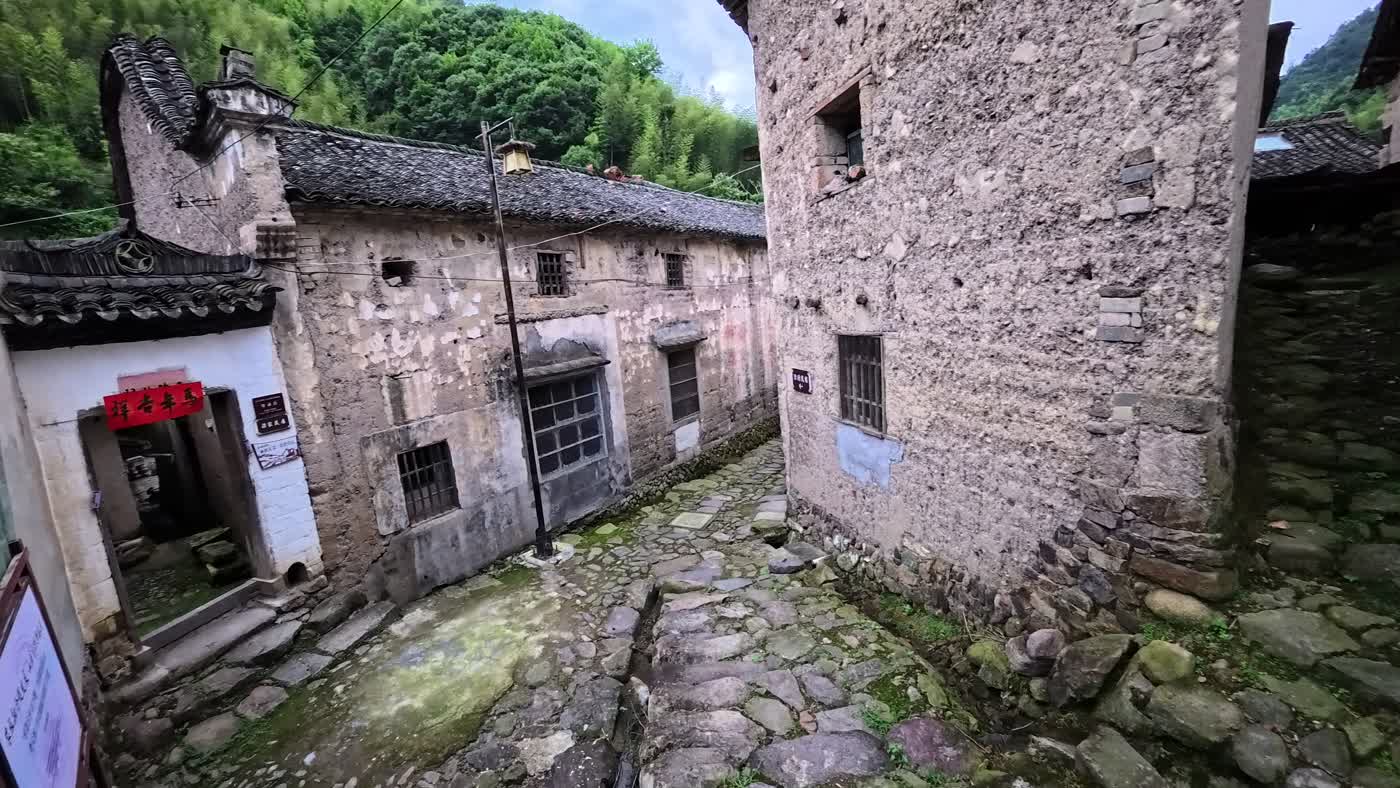
The two buildings worth finding are the Tu ancestral hall, with its painted door guardians and carved beams, and the Tu family hall, dated to the sixth year of the Qianlong reign, which is 1741. The carving on the brackets and beams is the finest work in the village.
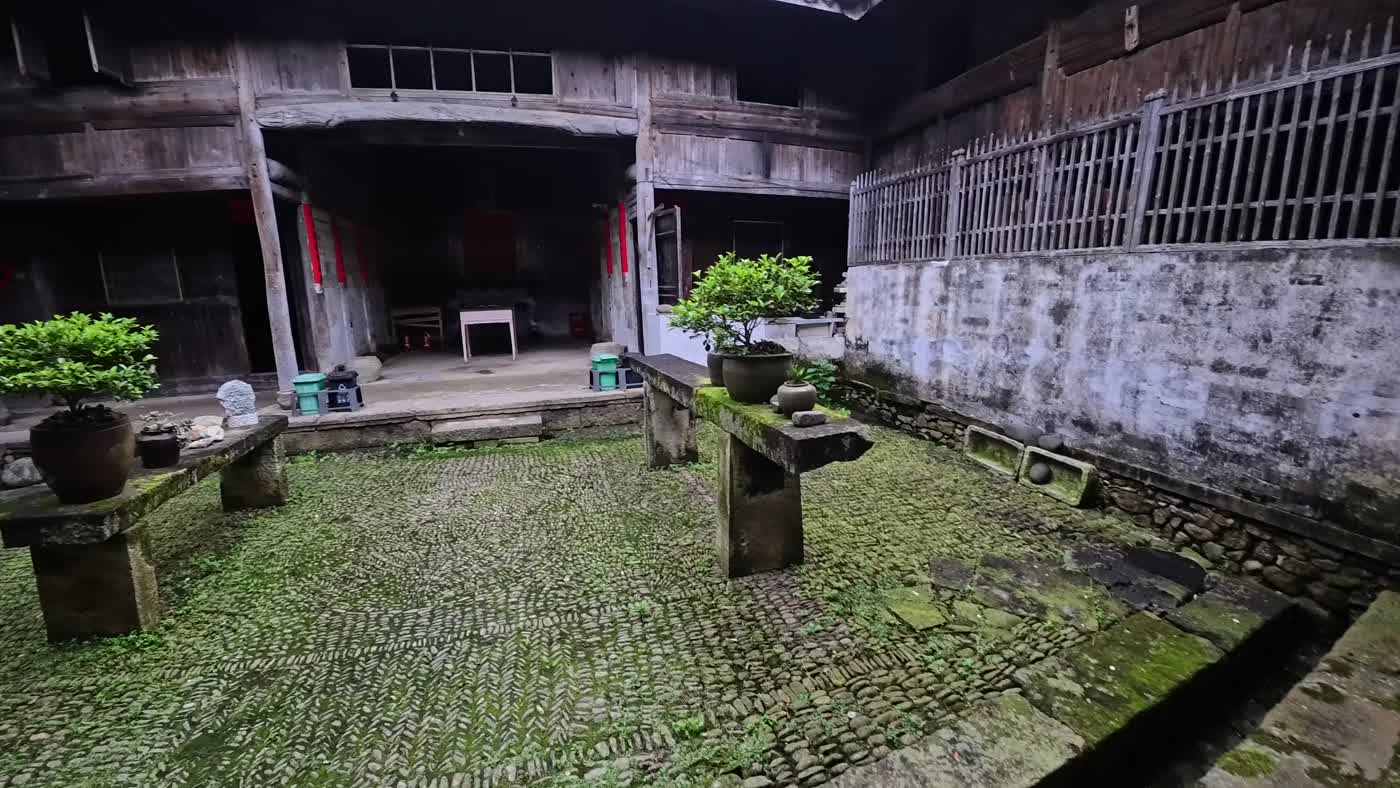
The Stream Runs Through It
The Jin stream and the Gangtan ravine meet at the village, and the houses are arranged along the water rather than around a square. Banks are revetted in stacked river stone, with steps down to the water at intervals, and the sound of it is constant.
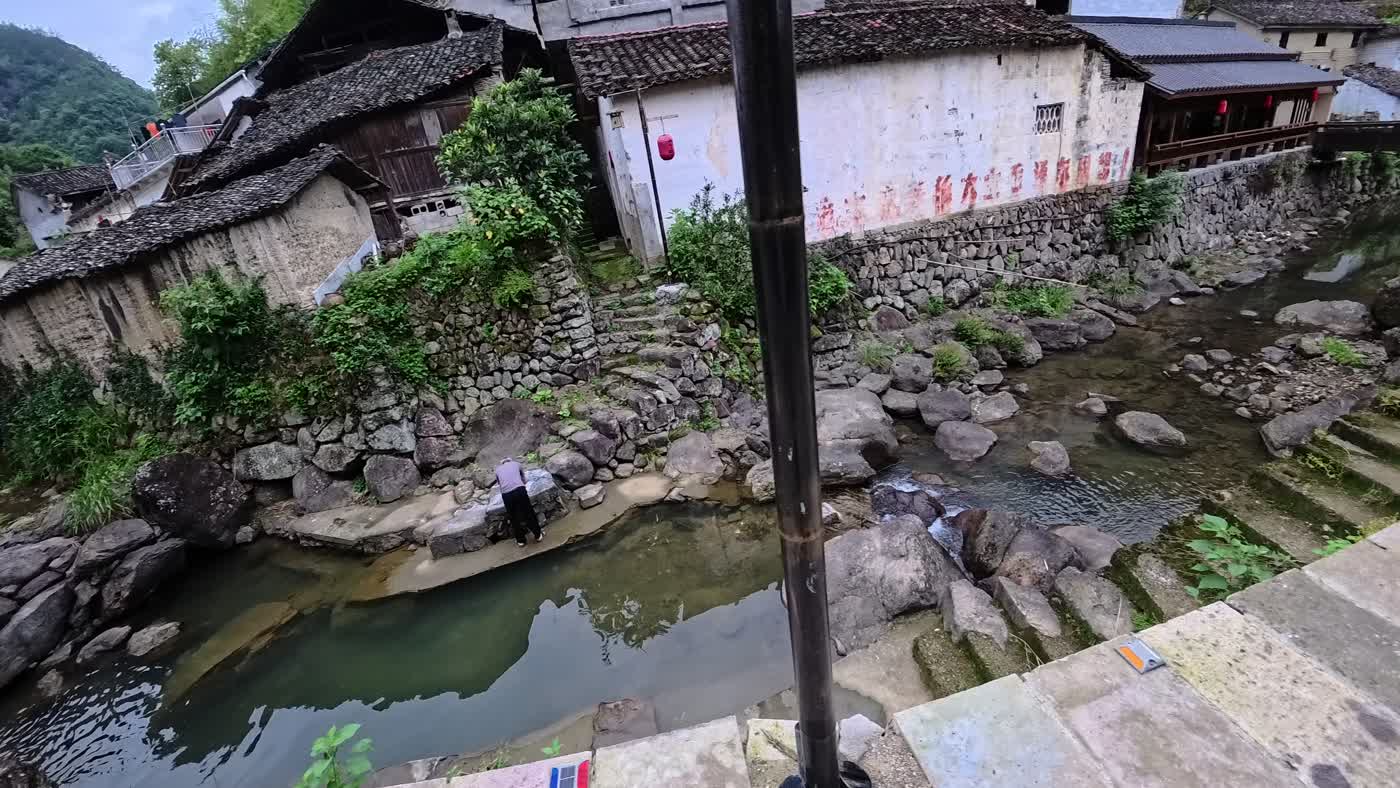
This is where the village is most alive. On an ordinary morning someone is washing something at the steps, a bench has been pulled into the shade, and laundry hangs under the eaves.
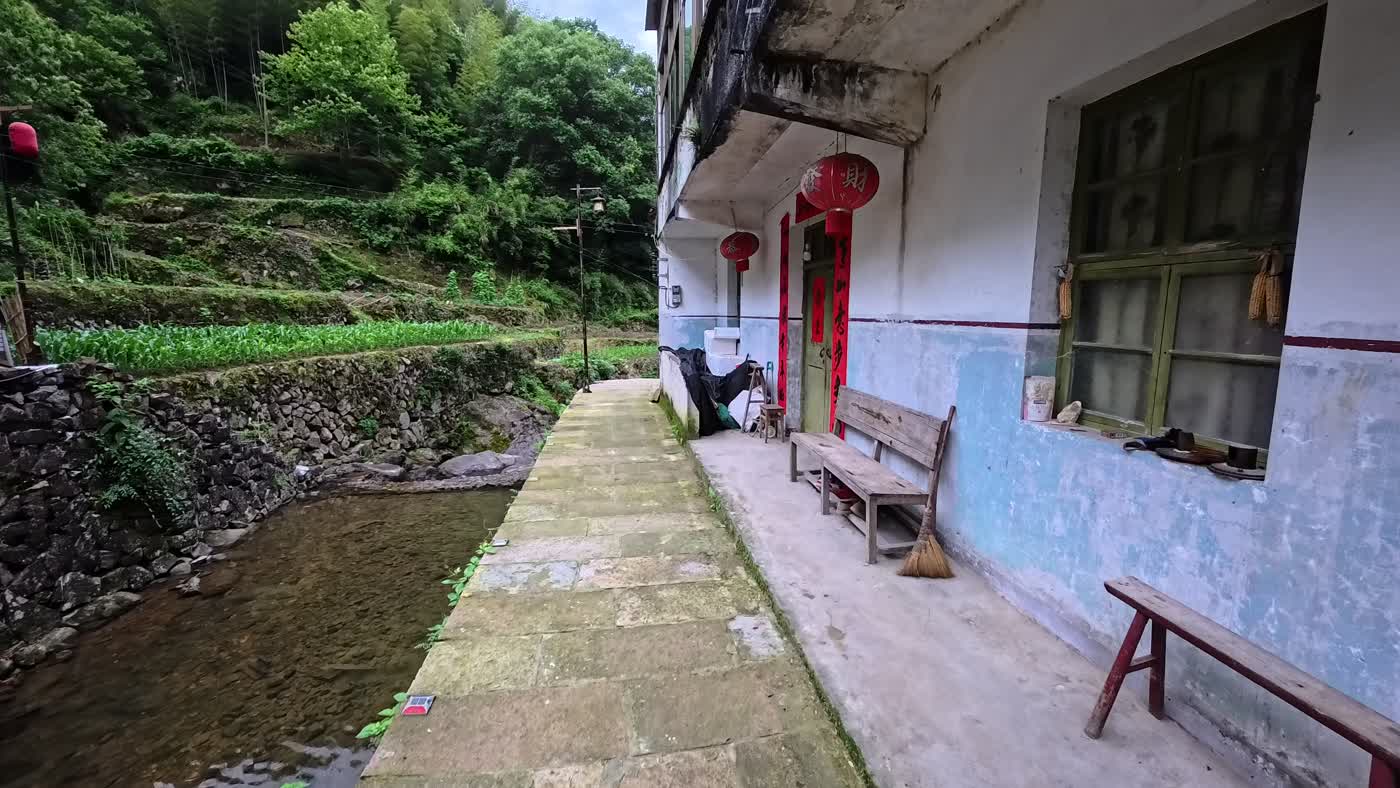
Sixty People
Roughly sixty people live here now, and almost all of them are past sixty themselves. The young have gone to Wuyi, Jinhua or further; the houses they left behind are locked, or used for storage, or slowly losing their roofs.
The village is not a museum and not a ruin. It sits in between: a place where a shrinking group of people keeps up the parts of the fabric they still use, and lets the rest go. Several unoccupied old houses are open for visitors to look inside, while occupied family courtyards should not be entered.
The Viewpoint Above
From beside the Jin bridge, stone steps climb the slope for about twenty minutes to a platform above the village. From there the roofs read as one continuous grey surface folded into the valley, which is the image the village is known for.
Go early or late. In the middle of the day the light is flat and the roofs lose their depth.
What to Eat
Small farm kitchens in the village serve mountain food: free-range chicken stewed with dried bamboo shoots, river fish, tofu made locally, preserved greens and rice wine. Around the county there are also Xuangping wontons, a local speciality worth ordering.
Village kitchens cook local dishes and the guesthouses take overnight guests, so food and a bed are not a problem.
Is It Worth Visiting
Yes, if you want a village that has kept its shape without being turned into a product, and if you are willing to drive two hours of mountain road to reach it. The architecture is good, the setting is better, and the absence of a ticket gate is rare at this quality.
It is a poor fit if you need signage, interpretation or English menus. There are guesthouses and farmhouse restaurants, and not much else.
Practical Information
| Item | Details |
|---|---|
| Location | Shanxiabao, Daxikou township, Wuyi county, Jinhua, Zhejiang |
| Type | Hillside village in a narrow valley, where the Jin and Gangtan streams meet |
| Built heritage | 31 Qing and Republican-era buildings, including the Tu ancestral hall and a hall dated 1741 |
| Entry | Free. No ticket office, no gate, no commercial street |
| Status | First batch of Chinese Traditional Villages (2012) |
| Population | About 60 permanent residents, nearly all elderly |
| Getting there | Drive from Wuyi county town, 1 hour 20 minutes on mountain roads; or Wuyi North HSR station plus a 1-hour taxi (CNY 80-100) |
| Buses | Roughly three a day. Not a practical option without a car |
| Facilities | Guesthouses and farmhouse restaurants; no English menus |
| Time needed | Two to three hours on foot, plus 20 minutes up to the viewpoint |
Visiting Tips
- Wear shoes with grip. The cobbles are round, polished and slippery when wet, which is most of the year.
- Come in the morning. The light is better and the few residents you meet are out.
- Climb to the viewpoint, then walk the stream bank slowly on the way back down.
- A few empty houses are open to visitors and you can walk through them. Do not enter courtyards where people live.
- You do not need to carry food in. There are guesthouses and farmhouse kitchens in the village.
- Combine it with Yuantou Temple at Taoxi, the Yuan dynasty hall that Liang Sicheng surveyed in 1934, about 40 minutes away.
For a village on a similar slope that is still fully inhabited, see Yangchan in Anhui; for a canal town instead of a mountain valley, Dongpu in Shaoxing is a different world entirely.
Written from a walk through the village in late May, with historical details checked against local government and provincial heritage records.