Yanguan is a walled town on the north bank of the Qiantang, in Haining, an hour east of Hangzhou. It has two thousand years behind it: the name comes from a salt official posted here in the Western Han, and the town grew rich on salt, on the river, and on the tide that runs past it twice a day.
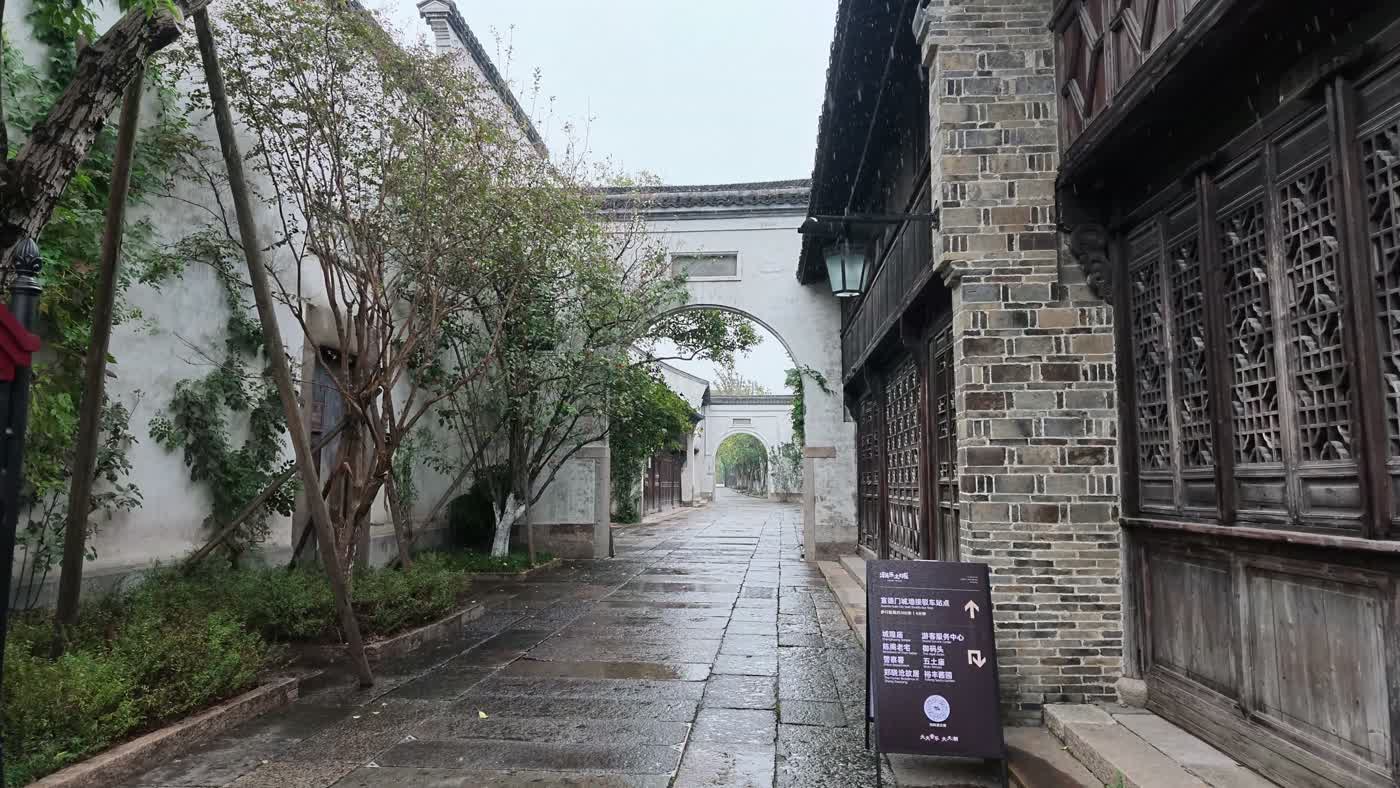
The version you walk through now is new. In 2024 the old quarter reopened as a resort called Tides and Music: rebuilt walls, a canal running through the middle, two stone arches across the main street, and a full set of restaurants and hotels behind the facades.
Knowing this upfront helps you plan the visit properly: Yanguan is a managed scenic town rather than a residential village.
On-Site Video Record
One continuous walk through the walled town on a wet autumn day: in through the arch, along the canal street, into the courtyards and back out. Only the sound of rain and the street.
If the embed fails, the original is on YouTube.
The Entry Rule Nobody Explains
This is the single most useful thing to know before you book. You cannot walk in for free. Entry to the walled town is CNY 60, single entry, valid for one day, and the sites inside are all included: Sea God Temple, Chen Gelao Residence, Wang Guowei’s house, Jin Yong Academy, the Confucian Temple. Pay CNY 80 and the tide-watch park is added.
Single entry is the important part. Walk out of the gate and the ticket is finished; coming back means paying again. So do not plan to leave for lunch and return in the afternoon.
A hotel inside the walls solves it. You register your face at check-in and can come and go as often as you like until you check out the next day.
Where It Is and How to Get There
Yanguan belongs to Haining in Jiaxing, Zhejiang. By high-speed rail, get off at Haining West and take a taxi for 20 to 30 minutes. The Hanghai intercity line also has a Yanguan stop, with a shuttle from there.
By car it is about 40 minutes from Hangzhou and 1.5 to 2 hours from Shanghai. Park at the P4 car park, which costs around CNY 10 a day.
Seven Sites on One Ticket
The combi ticket covers the places worth paying for:
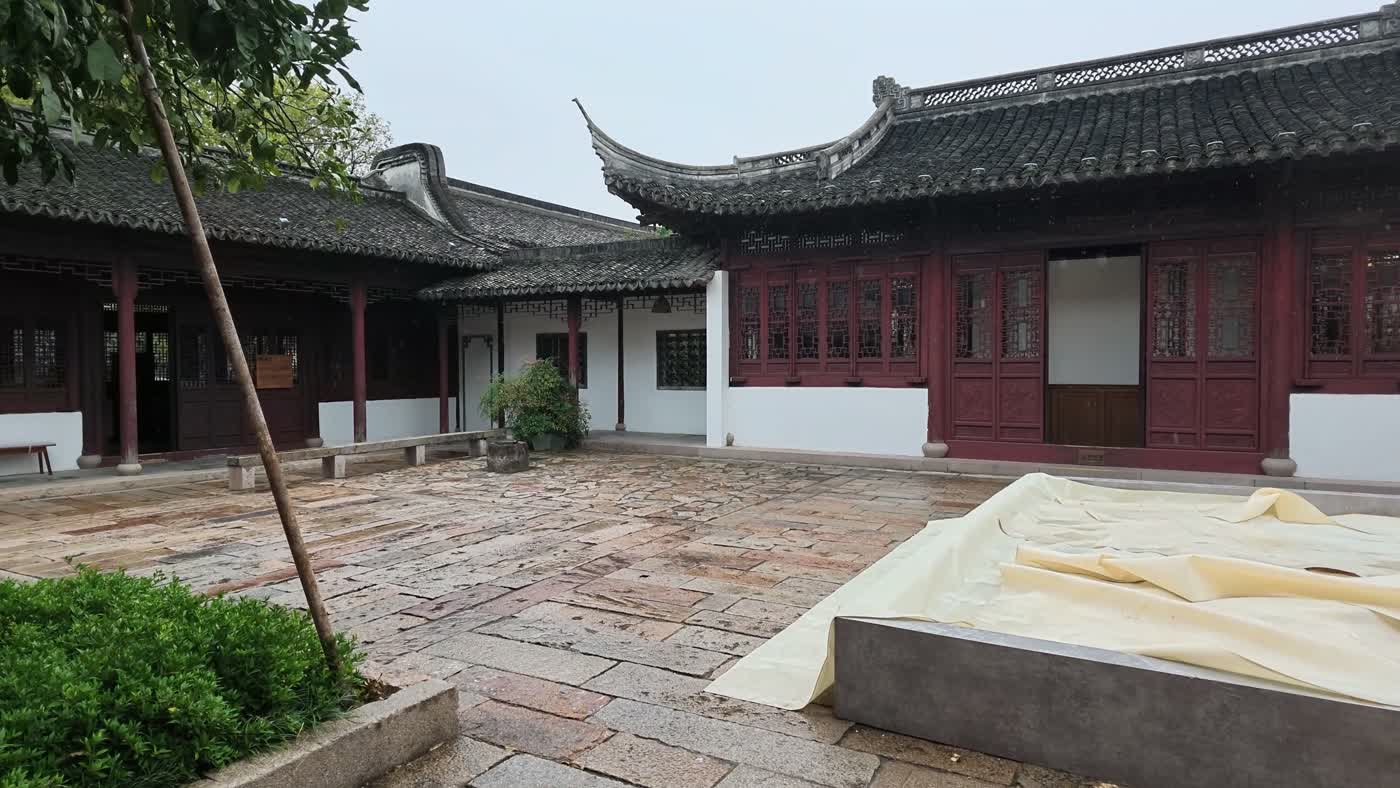
- Sea God Temple (海神庙): built by imperial order in 1729, laid out like a reduced Hall of Supreme Harmony, with red walls and glazed tile. The best light is late afternoon.
- Chen Gelao Residence (陈阁老宅): the mansion of a Qing grand secretary. Qianlong is said to have stayed here four times on his southern tours, which fed a long-running local story about his parentage.
- Former Residence of Wang Guowei (王国维故居): the scholar who wrote on aesthetics and on the oracle bones, born here in 1877.
- Jin Yong Academy (金庸书院): a garden and reading rooms dedicated to the martial arts novelist, who was also from Haining.
- Confucian Temple (孔庙学宫): red walls, a stone terrace, and almost no visitors even when the main street is full.
- Tide Watch Park (观潮胜地公园): the river bank, the Zhan’ao Pagoda, and the fish-scale stone sea wall that has held this bank since the Qing.
The Tide, and How to Time It
The reason Yanguan exists is the bore. The Qiantang funnels a rising tide into a narrowing estuary, and the result arrives as a single white line moving faster than a person can run, which is what the Chinese call the one-line tide.
The arrival time of the bore shifts every day with the lunar calendar. Spring tides fall on lunar days 1 to 6 and 15 to 20, and the daily time shifts about 50 minutes later each day. Check the tide app or the Qianjiang tide mini-programme on the morning you go, then arrive an hour early.
The autumn tide around the 18th of the eighth lunar month is the biggest of the year, and the park fills up for it. On an ordinary weekday you can stand at the rail on your own.
Why Rain Is the Best Weather
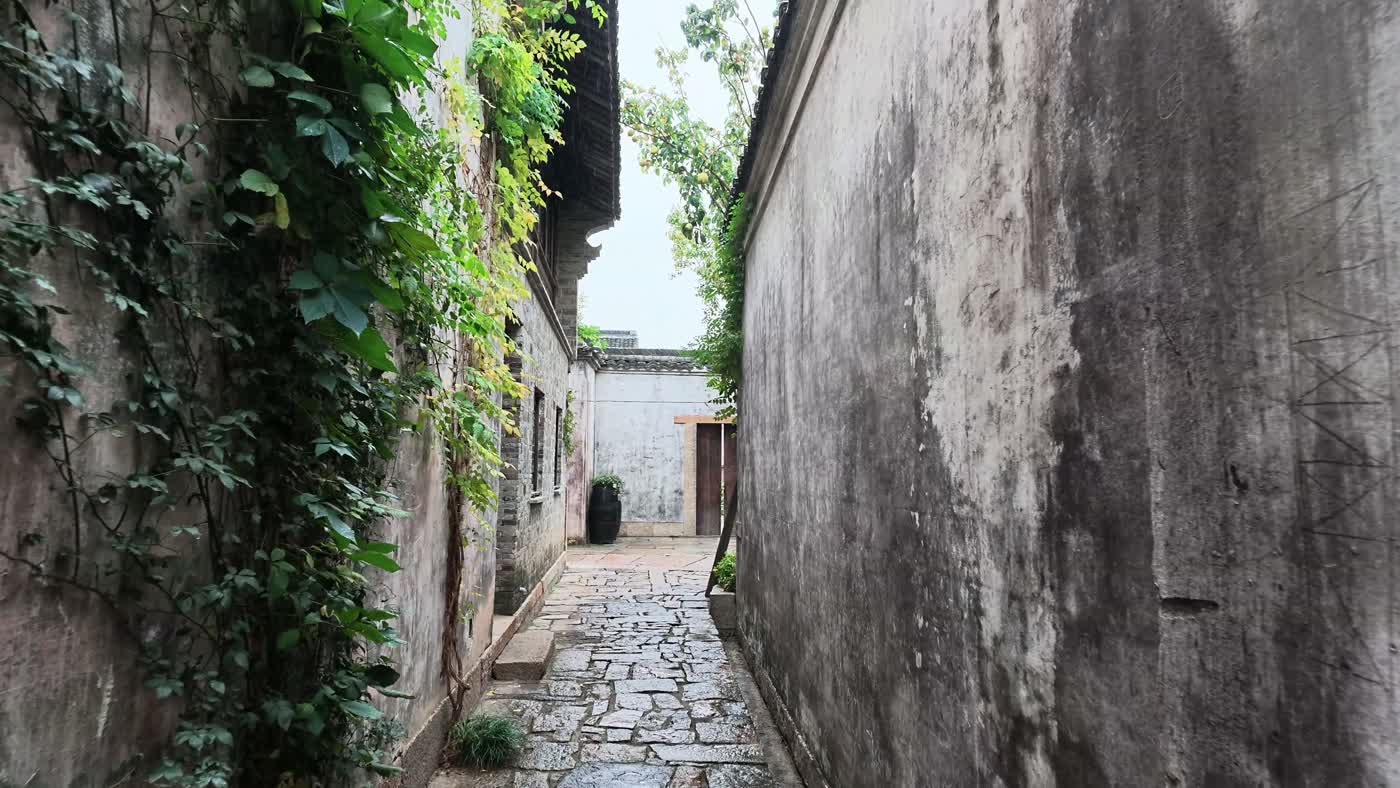
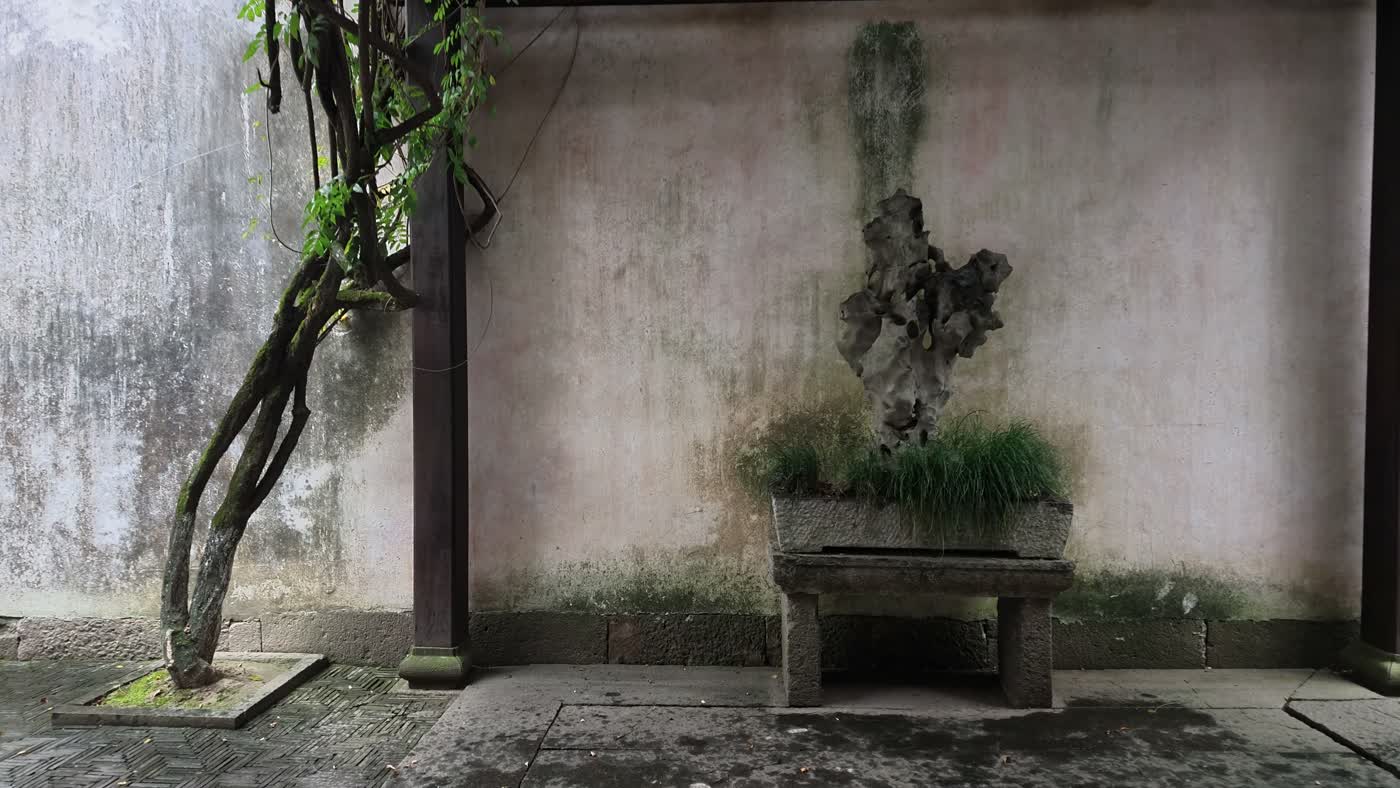
A rebuilt town has one weakness: it looks like a film set when the sun is out and the shops are open. Rain fixes that. The flagstones go dark, the white walls stain, the stone arches look out over wet flagstones, and the few people left are carrying umbrellas.
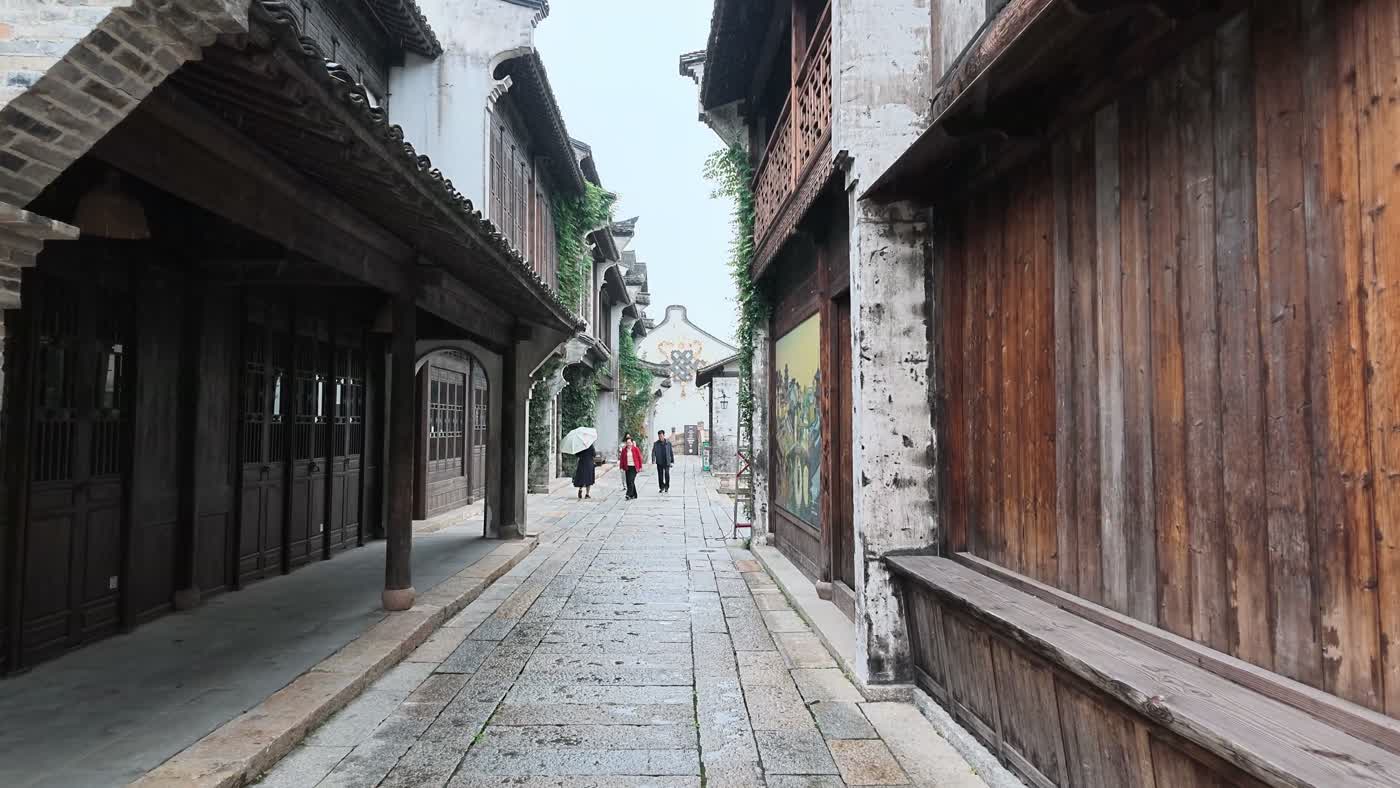
It also empties the place. On a wet weekday we walked for an hour and met perhaps a dozen people. At the weekend, the same street takes twice as long to get through.
Eating and Sleeping Inside
Food inside is limited: a few restaurants, noodle shops and cafes, and a handful of hotels. Prices sit at resort level rather than town level.
Two local dishes are worth ordering: Haining braised pork cooked in a clay pot, and crab pickled in yellow wine. Since the ticket only lets you in once, plan to eat inside.
Is It Worth Visiting
Yes, if you want a quiet, well-built walled town with a river through it, and you are willing to pay resort prices for the convenience. The architecture is convincing, the tide is genuinely worth seeing, and on a weekday the emptiness is the attraction.
No, if you are looking for a lived-in old town. The residential quarters were relocated and the streets were rebuilt as a unified scenic town. If that is what you want, go to Anchang or Shantang instead.
Practical Information
| Item | Details |
|---|---|
| Location | Yanguan, Haining, Jiaxing, Zhejiang, on the north bank of the Qiantang River |
| What it is | A walled town rebuilt as a resort (opened as “Tides and Music” in 2024). Not a preserved village |
| Entry | You need a ticket to enter the old town: CNY 60, single entry within one day |
| What it covers | CNY 60 includes the sites inside the town. CNY 80 adds the tide-watch park. Single entry, one day |
| Hotel guests | Face registered at check-in; unlimited entry and exit until you check out the next day |
| Ticket holders | One entry only. Leaving means buying again |
| Crowds | Almost empty on weekdays. Busy at weekends |
| Getting there | Haining West HSR station plus 20-30 min taxi; or the Hanghai intercity line to Yanguan |
| Tide | Spring tides on lunar days 1-6 and 15-20; check the daily time, it shifts about 50 minutes later each day |
Visiting Tips
- If you plan two days, book a room inside: face registration gives you unlimited entry and exit.
- With a ticket, plan one continuous visit. Do not walk out for lunch.
- Check the tide time the morning you go. It moves later every day.
- Come on a weekday, as weekends bring much larger crowds.
- Rainy weather suits the town well: bring an umbrella and you can walk the streets in peace.
- Park at P4 for about CNY 10 a day rather than hunting for street parking.
For a water town that is still lived in, see Dongpu in Shaoxing, half an hour further south.
Written from a walk through the town in the rain, with ticket rules and tide timings checked against current published information.