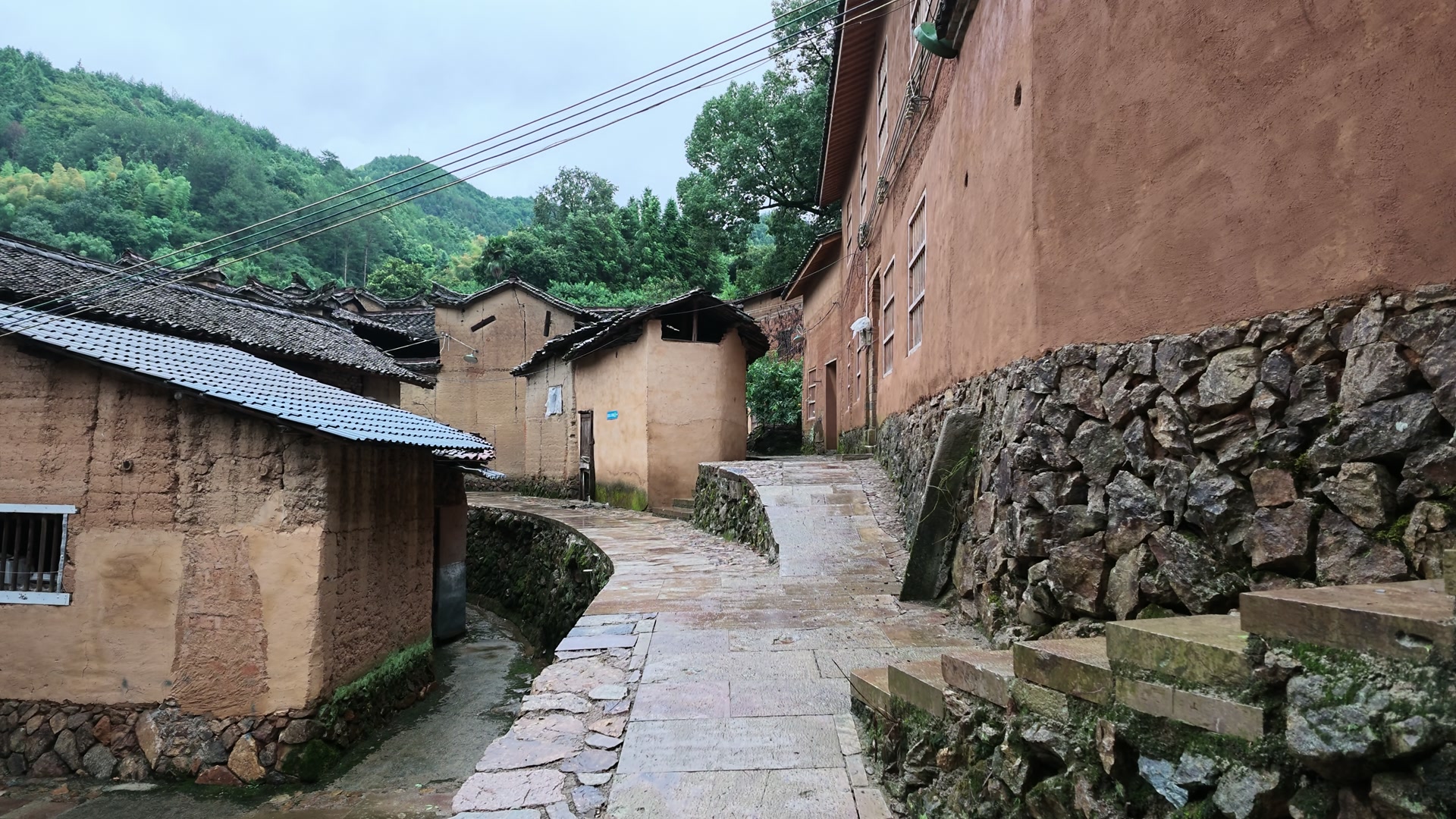
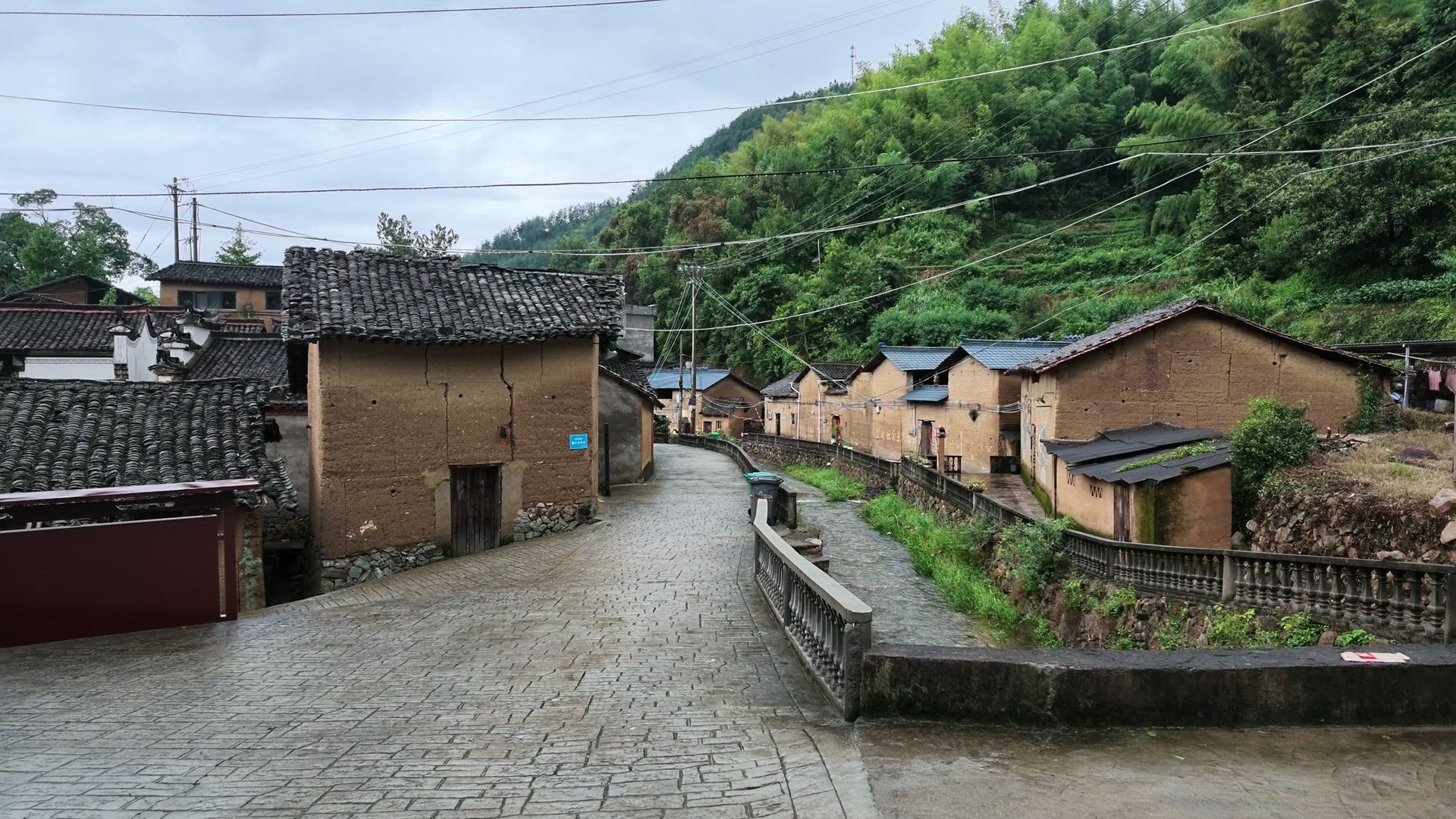
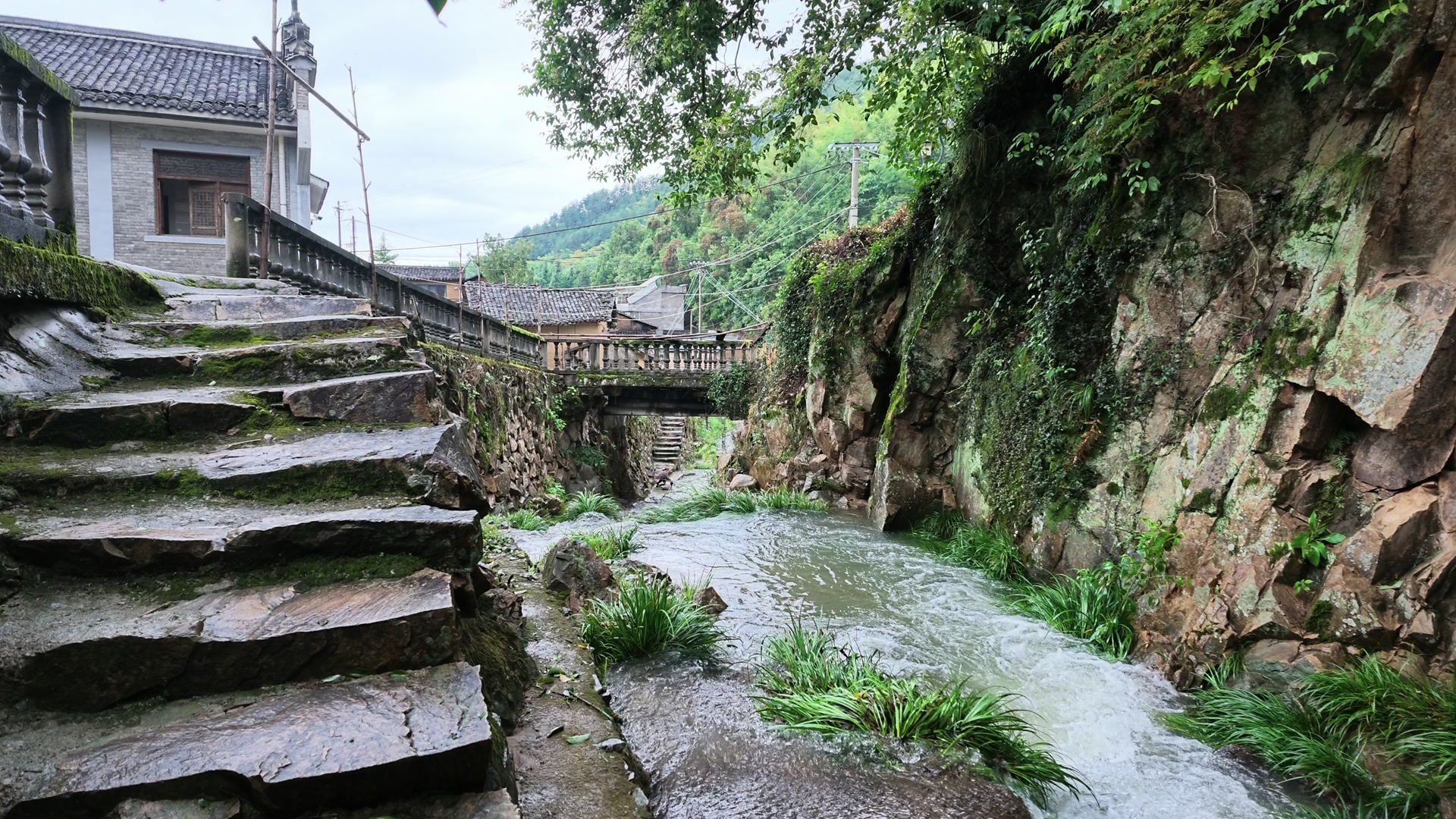
Houwan Village sits in a ring-shaped mountain hollow in southeastern Sandu Township, Songyang County, Lishui. Five wooded hills close around the basin, and a clear mountain creek runs straight through the middle of the settlement, splitting the houses into two halves joined by low stone bridges.
Roughly 112 households, about 366 people in the register, belong to the village. While neighbouring Songzhuang and Yangjiatang draw crowds of weekenders and boutique-hotel guests, almost nobody stops in Houwan. Walk five hundred metres down the old trail from Youtian and the road noise drops away completely.
On-Site Video Record
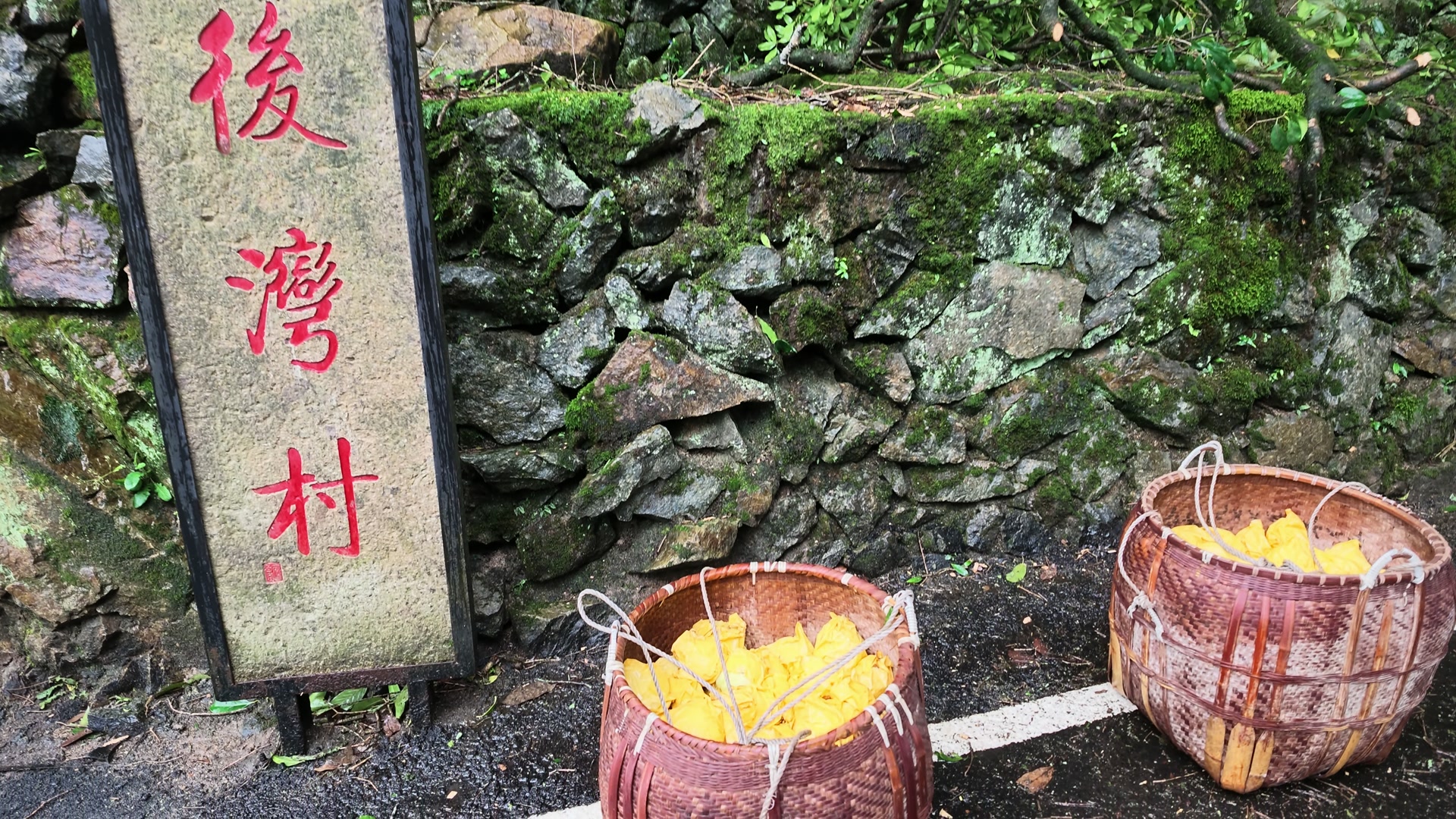
Nineteen minutes of walking through Houwan in August after rain: the wooden village sign at the entrance, the stone lanes along the creek, the rammed-earth walls and the bridges between the two halves of the village. Original sound only, with no voiceover.
If the player above does not load, watch it directly on YouTube.
Where It Is and How to Get There
Houwan belongs to Sandu Township in Songyang County, in the mountains of southwest Zhejiang. It sits on the old mountain trail between Youtian Village above and Songzhuang Village below. From Youtian, the walk down the stone path is less than 500 metres and takes ten to fifteen minutes. Continuing down the old trail to Songzhuang is another 2 kilometres on foot.
If you are driving from Songyang county seat, follow the Sandu loop road past Yangjiatang and Youtian. No public bus reaches the village. Entry is free, and there is no gate or ticket booth.
A Ring of Five Hills and a Bird-Shaped Plan
According to the Songyang place-name gazetteer, the settlement took its name from its position at the bend of the stream behind Niaolingtou Hill. Five hills ring the hollow like the petals of a lotus: Menkou Hill, Shuiwang Ridge, Shuikou Hill, Futian Ridge and Fengshan Ridge.
Seen from the western slope or on a satellite map, the two arcs of houses and the curve of the stream trace the outline of a bird resting in the valley. The water powered grain mill at the upper water inlet marks the beak facing the rice terraces, a former stone arch bridge ten metres downstream sat at the throat, and the channel winds past the doors before leaving at the southwestern outlet.
Rammed Earth, Stone Blocks and a Creek Down the Middle
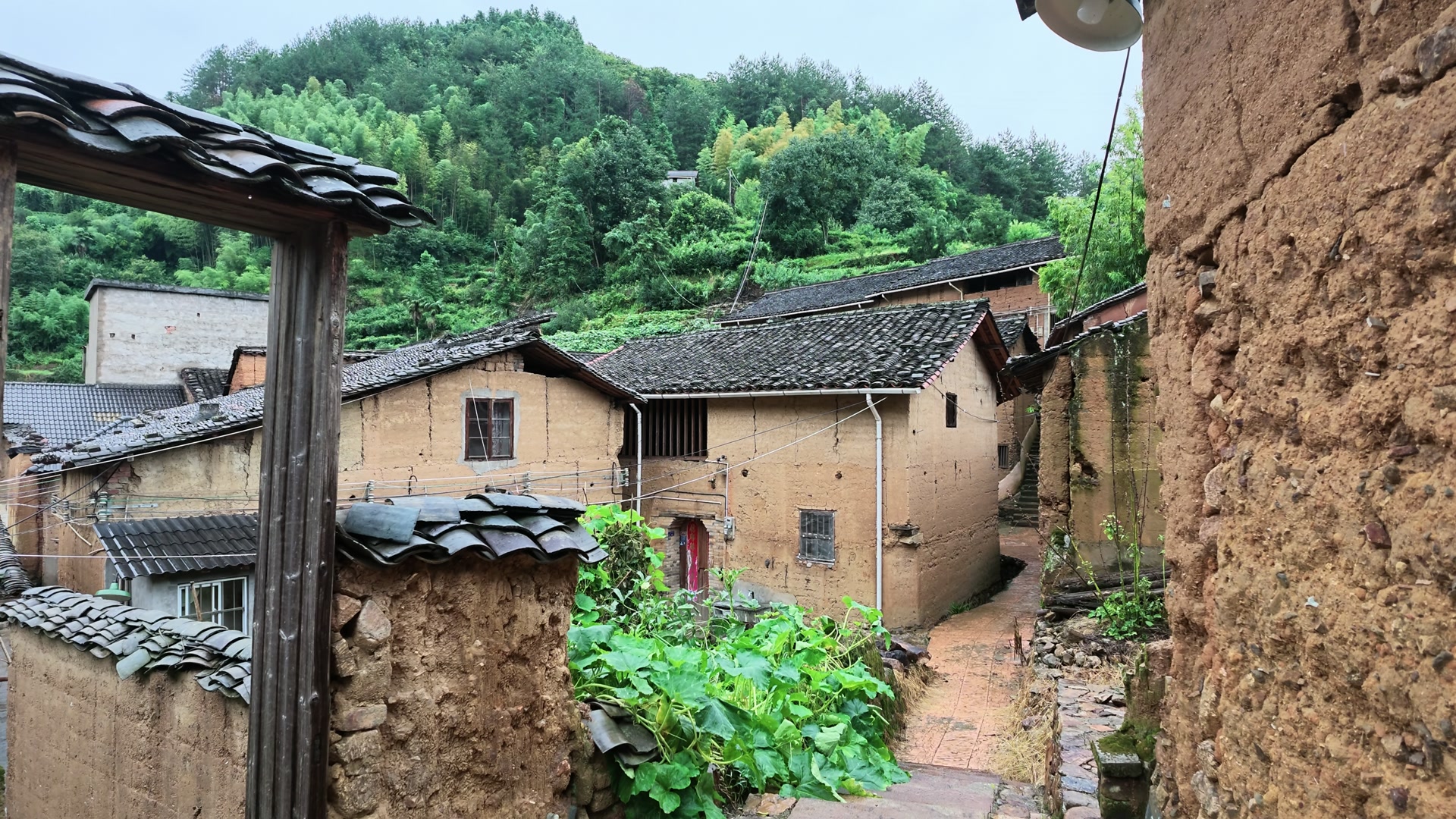
In December 2016 Houwan was placed in the fourth batch of Chinese Traditional Villages. More than twenty houses from the Qing dynasty and the Republic period survive across the valley, alongside the Song and Wu ancestral halls, incense halls, the Baihe Wuhou Hall and the village shrine.
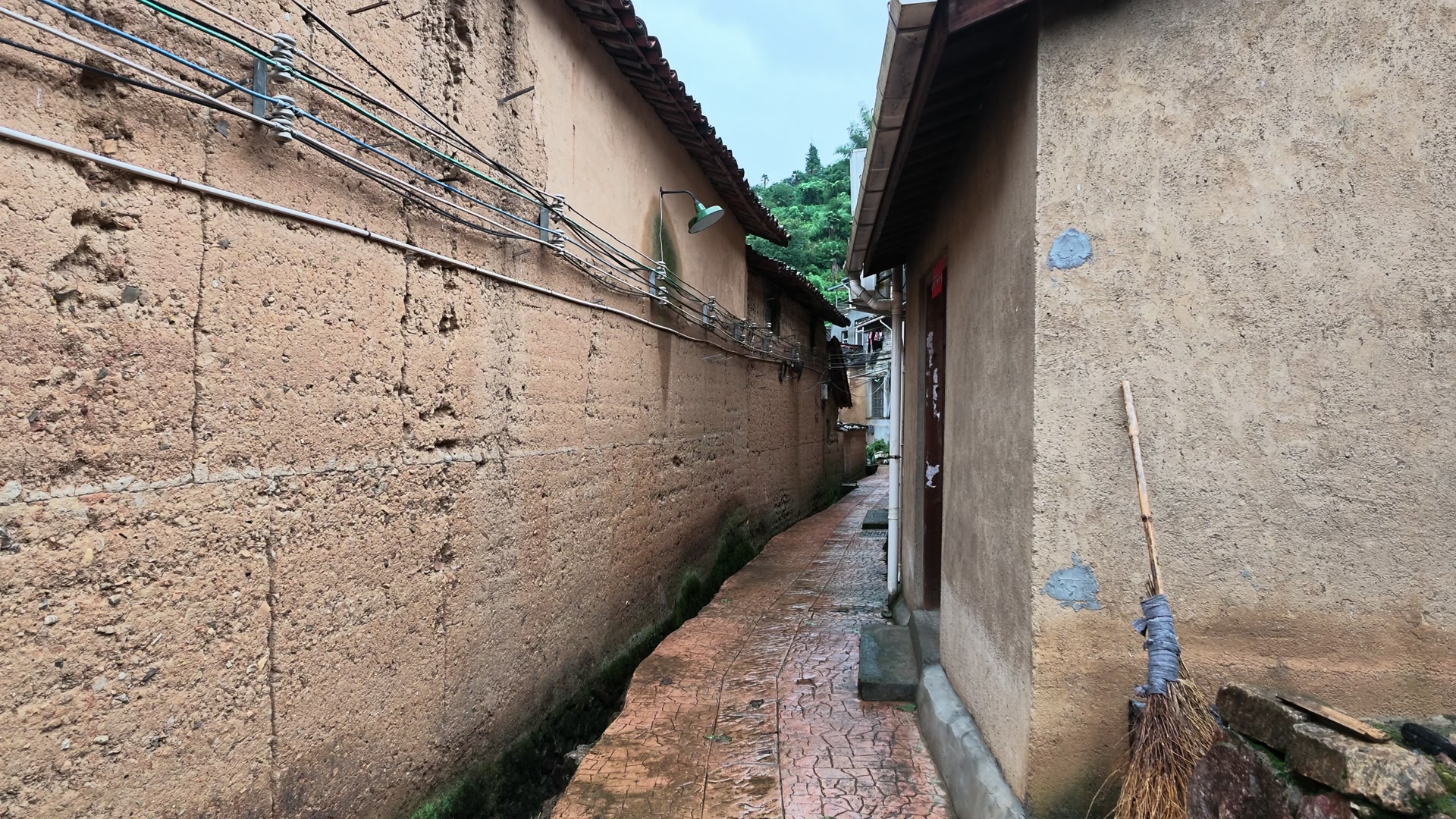
Unlike the bright yellow mud walls of nearby Yangjiatang, the walls here are rammed from deeper red-brown mountain earth resting on high river-stone footings. Lanes are paved with rough stone blocks, and after rain the wet slabs pick up the colour of the walls beside them.
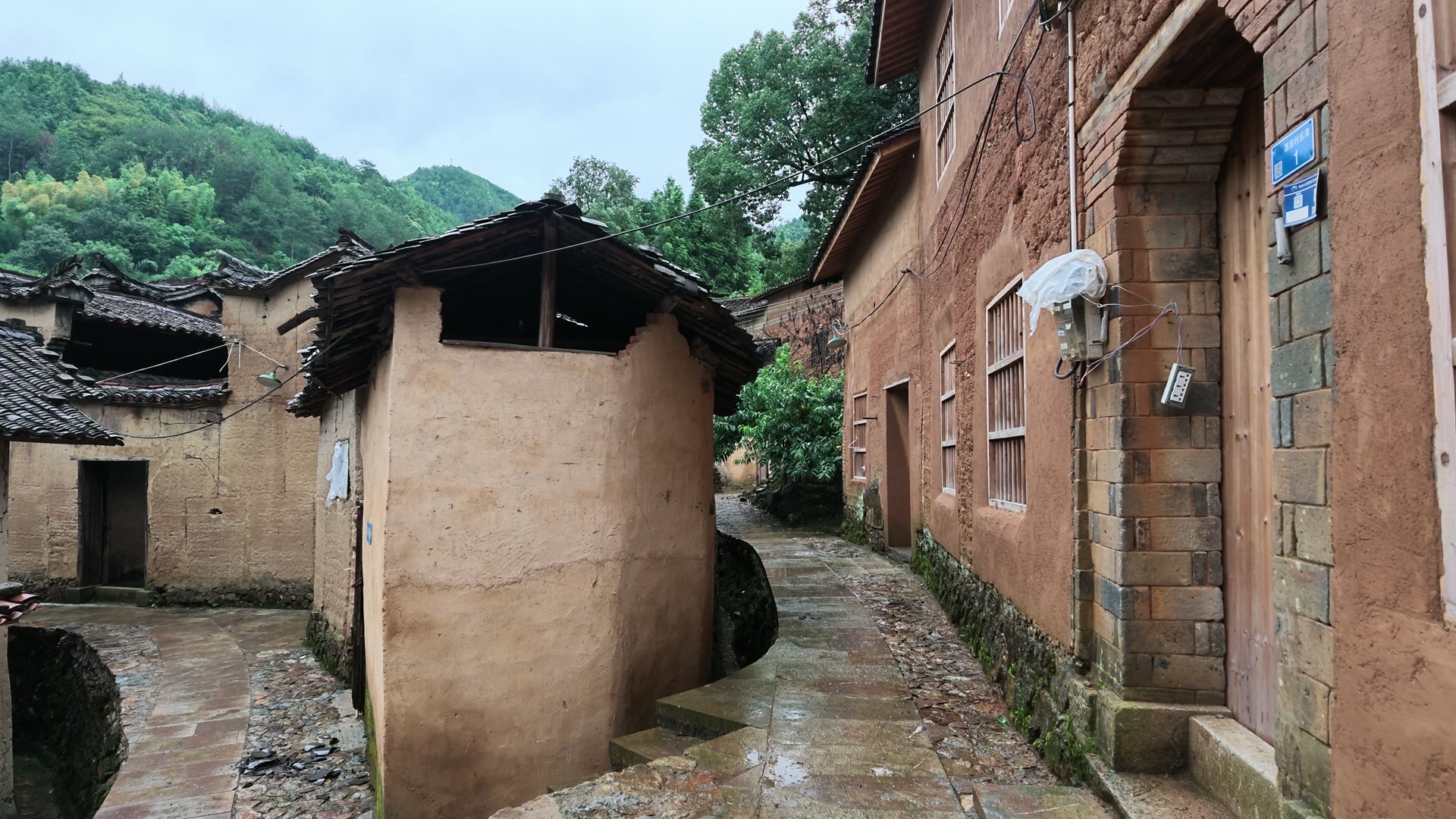
The Houwan stream is the spine of the village. Even after a stretch of the channel was straightened in the 1980s, nearly every lane still follows the water or drops down to it by stone steps.
Spring Blossom and the Old Trail
Villagers plant peach and pear trees around the courtyards and along the slopes above the stream. Every March the peach and pear blossom opens in turn across the hollow, making early spring the liveliest season for colour.
What Is Here Today
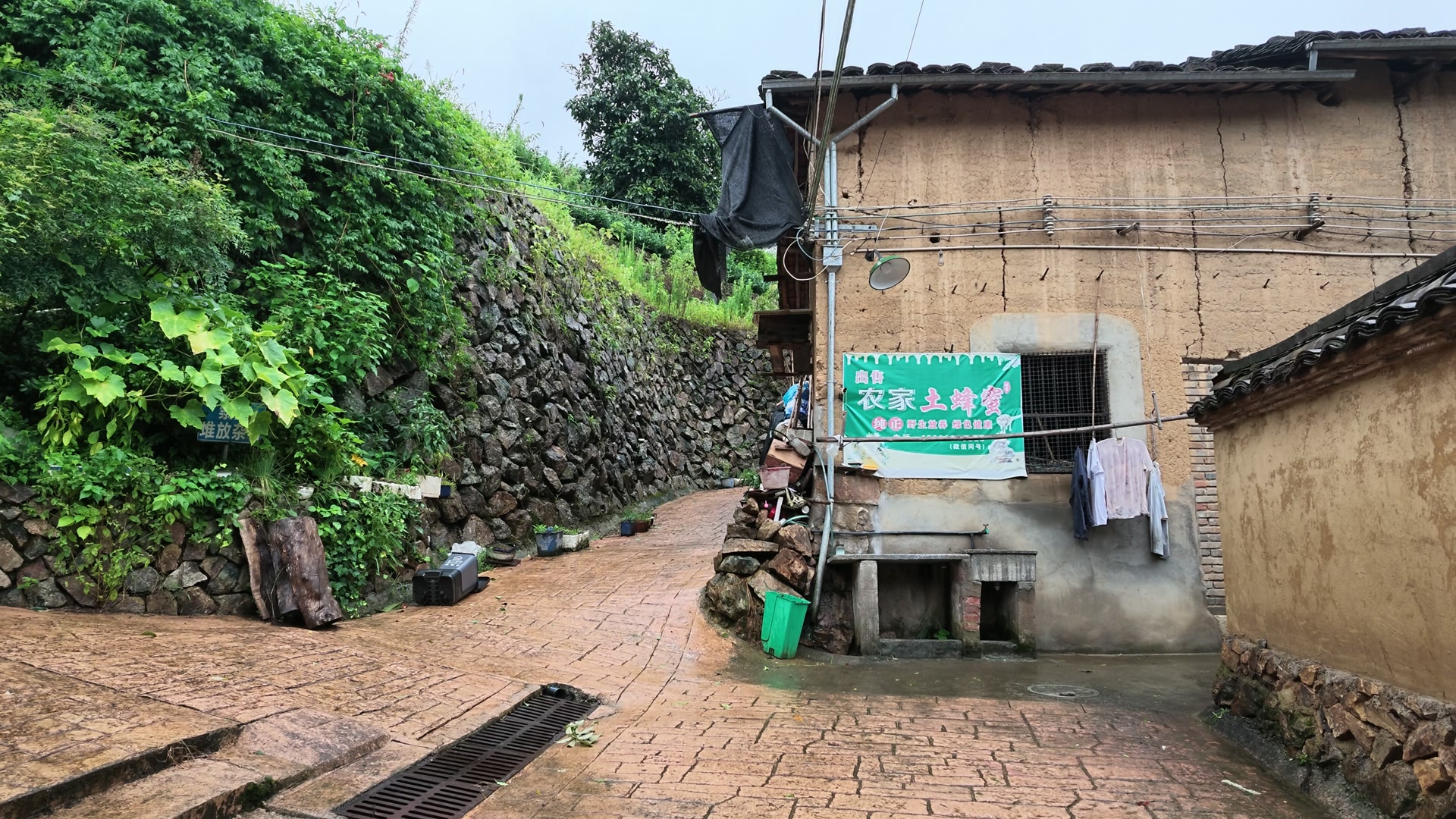
Houwan has not been turned into a resort village. Walking the lanes, you will not find a grocery shop, a restaurant or a tourist guesthouse. The houses that are still occupied belong to local families, and the only commercial sign along the main lane is a green banner on an old mud wall where a resident sells wild mountain honey.
If you need a meal, a coffee or a room for the night, neighbouring Youtian Village is fifteen minutes up the hill and Songzhuang Village is half an hour down the trail, and both have guesthouses and places to eat.
Is It Worth Visiting
Yes, if you are already in Sandu Township and want to see what a Songyang mountain village looks like without cafés and weekend crowds. Because it sits right between Youtian and Songzhuang, linking the three on foot makes one of the best half-day walks in the county.
Skip it if you want shops, cafés or a lively street scene. The whole village takes thirty to forty minutes to walk through, and its appeal is precisely that nothing has been staged for visitors.
Practical Information
| Item | Details |
|---|---|
| Location | Houwan Village, Sandu Township, Songyang County, Lishui, Zhejiang |
| Type | Streamside mountain village in a ring-shaped hollow |
| Status | Chinese Traditional Village (4th batch, December 2016) |
| Population | 112 households, about 366 registered residents (main surnames Song and Wu) |
| Historic buildings | Song and Wu ancestral halls, Baihe Wuhou Hall, over 20 Qing and Republican houses |
| Entry | Free. No ticket office and no gate |
| Facilities | No grocery shop, no restaurant, no guesthouse in the village; meals and rooms available in nearby Youtian or Songzhuang |
| Hiking links | Under 500 m (10 to 15 min walk) from Youtian; about 2 km on foot to Songzhuang |
| Best season | March for peach and pear blossom; rainy days for wet stone lanes and mist |
| Time needed | 30 to 45 minutes in the village, or 1.5 to 2 hours hiking the Youtian, Houwan and Songzhuang trail |
Visiting Tips
- Carry drinking water and eat in Youtian or Songzhuang before or after your walk, as Houwan has no shops or restaurants.
- Combine Houwan with Youtian and Songzhuang on the old trail: walk downhill from Youtian through Houwan to Songzhuang for the easiest grade.
- Wear shoes with good grip. The rough stone blocks and creekside steps get slick with moss after rain.
- Do not walk into occupied courtyards. People still live in these houses, and there are no museum exhibits inside.
For another Songyang mountain village built in stacked tiers above tea terraces, see Huangtian Village in Zhangxi Township. For a larger stone-and-earth village in central Zhejiang, see Shanxiabao in Wuyi.
Drawn from the on-site walk published in September 2026.